

Maddy summaryHR 6490 establishes a pilot program (the "Push-Text Initiative") for members of the Marine Corps stationed at installations in Okinawa, Japan, and their adult dependents. The program automatically enrolls eligible participants using their provided contact information (with an opt-out option) to send text messages containing specific, timely information. Key topics covered include military spouse employment resources, childcare services, TRICARE benefits, and updates on DOD policies affecting service members and dependents. The Secretary of Defense must report on the program's implementation, participation, costs, and potential for Department-wide expansion by October 2027.
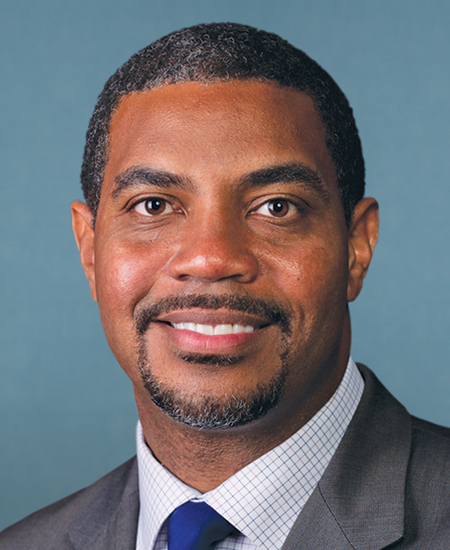
Rep. Steven Horsford
Sponsored bills
Maddy summaryThe Expanding Cybersecurity Workforce Act of 2025 establishes a new program under CISA to promote cybersecurity careers to underrepresented groups, including racial and ethnic minorities, veterans, formerly incarcerated individuals, people with disabilities, older adults (40+), and those from low-income or nontraditional educational backgrounds (like community colleges or HBCUs). The program requires CISA to tailor outreach to regional needs, partner with schools, unions, and community organizations, and report annually on workforce impact. It authorizes $20 million annually for fiscal years 2026-2031 to support these efforts, aiming to diversify the cybersecurity workforce through targeted recruitment and training.
Maddy summaryThe Dignity for Detained Immigrants Act establishes minimum standards for detention facilities operated by the Department of Homeland Security, requiring them to follow the American Bar Association's Civil Immigration Detention Standards. It mandates annual unannounced inspections by the DHS Inspector General, with penalties including fines for noncompliant private facilities and transfers of detainees from noncompliant facilities. The bill requires DHS to publicly report on facility compliance, phase out private detention facilities over three years, and prohibit solitary confinement. It also ensures detainees have access to legal orientation, counsel, and more frequent custody review hearings. The bill directly affects all individuals detained in DHS custody, including immigrants, asylum seekers, and refugees held in facilities operated by or contracted to DHS.
Maddy summaryHR 5652, the Wildfire Recovery Act, increases federal reimbursement for wildfire response by setting a minimum 75% federal cost share under Section 420 of the Stafford Act, directly benefiting states, local governments, and Tribal governments that deploy firefighting resources. It requires FEMA to develop rules within three years to determine when the federal share could exceed 75% based on a state's financial impact from wildfires. The bill also updates FEMA policy to allow reimbursement for predeployment of fire assets (like crews or equipment) before a fire occurs. These changes aim to provide more predictable and timely federal support for wildfire recovery efforts.
Maddy summaryThis bill updates securities laws to expand exemptions for retirement plans used by charities and educational institutions. It specifically modifies definitions in the Investment Company Act, Securities Act, and Securities Exchange Act to include 403(b) plans meeting certain conditions - such as being subject to ERISA, having employer fiduciary oversight, or being governmental plans. These changes reduce regulatory hurdles for organizations offering these plans, making it easier to administer retirement benefits for their employees. The bill directly affects charities, schools, and other non-profits that sponsor 403(b) retirement plans.
Maddy summaryThis bill creates a new loan forgiveness program for public service workers with federal student loans taken out after its enactment. It provides 15% forgiveness after 24 months of qualifying public service employment, with additional 15% increments at 48, 72, and 96 months, totaling 100% forgiveness after 120 months (10 years) of service. Only borrowers with new federal Direct Loans made after the bill passes qualify, and the bill simplifies employment certification through self-certification forms or automatic verification. Interest accrued during the application process is also canceled.
Maddy summaryHR 6255, the Affordable Insulin Now Act, requires health insurance plans (including employer-sponsored and individual plans) to cover specific insulin products starting in 2026. It caps out-of-pocket costs for these insulin products at $35 per 30-day supply or 25% of the negotiated price, whichever is lower, with no deductibles applied. The bill defines "selected insulin products" to include at least one of each dosage form (like vials or pumps) and type (such as rapid-acting or long-acting) available from the plan. This directly affects people with diabetes who rely on insulin, ensuring more predictable and affordable access to essential medications under their health coverage.
Maddy summaryThis bill modifies eligibility rules for two federal loan programs (TIFIA and RRIF) to better accommodate residential and mixed-use development projects. It requires that such projects meet creditworthiness standards jointly determined by the Transportation and Housing and Urban Development secretaries, ensuring standards protect program finances while aligning with HUD's existing housing requirements. The changes apply to projects seeking loans under these programs after a 180-day effective date. The bill does not create new funding but adjusts how housing projects qualify for existing federal loan assistance.
Maddy summaryHR 6204 extends funding authorization for large-scale water recycling projects by changing the Infrastructure Investment and Jobs Act's Section 40905(k) from a 5-year to a 10-year period. This procedural bill directly affects existing water recycling projects currently funded under the Infrastructure Investment and Jobs Act (Public Law 117-58). The key provision is simply the extension of the authorization period, providing longer-term stability for these projects without creating new programs or altering eligibility.
Maddy summaryHR 6181, the John Lewis Every Child Deserves a Family Act, prohibits child welfare agencies receiving federal funds from discriminating against children, youth, or prospective foster/adoptive parents based on religion, sex (including sexual orientation and gender identity), or marital status. It directly affects LGBTQ youth in foster care - overrepresented at 30% of the system - who face higher risks of trauma, group home placements, and suicide attempts compared to non-LGBTQ peers. Key provisions require agencies to collect data on sexual orientation and gender identity, establish a National Resource Center for LGBTQ youth support, provide cultural competency training, and eliminate discriminatory practices. The law aims to improve safety, permanency, and placement stability by expanding access to family-based care and ensuring equitable services for all children in the system.