

Maddy summaryHRES 1097 is a procedural resolution requesting federal agencies to provide specific documents to the House of Representatives. It directs the Treasury and Homeland Security Secretaries to share records about how they implement an existing agreement (the "Memorandum of Understanding") for sharing taxpayer information related to non-tax criminal enforcement. The resolution specifically asks for documents concerning access to IRS systems containing taxpayer data, policies for handling such information, and any violations of privacy rules. This request does not create new law but seeks transparency about current agency practices involving sensitive taxpayer information.
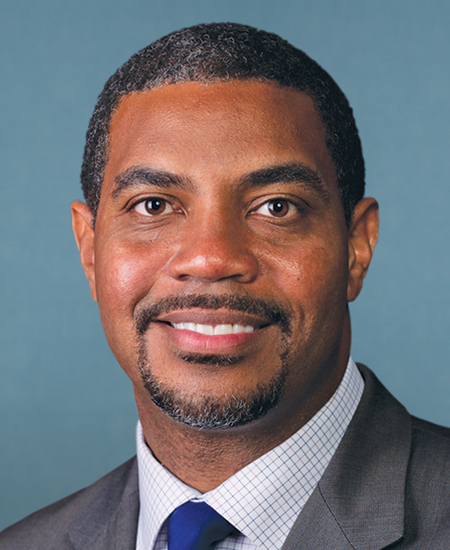
Rep. Steven Horsford
Sponsored bills
Maddy summaryThe MINT Act modifies rules for federal home loan banks backing tax-exempt bonds used in community development projects. It removes a 2010 deadline for certain bond issuances and shifts safety requirements to be set by the Federal Housing Finance Agency Director, rather than fixed standards. This directly affects community development organizations and local governments using tax-exempt bonds for housing or neighborhood revitalization. The changes apply to guarantees issued after the bill's enactment, streamlining how these bonds are secured.
Maddy summaryHRES 1086 is a symbolic resolution recognizing the Clotilda as the last known ship to illegally bring enslaved Africans to the U.S. in 1860 (carrying 110 people) and condemning the U.S. government's historical role in enabling the transatlantic slave trade. It acknowledges the lasting harm of slavery on African Americans, specifically honoring the descendants who established Africatown in Alabama and maintaining cultural heritage. The resolution urges support for preserving Africatown and encourages the Architect of the Capitol to consider a memorial on Capitol grounds for the Clotilda and all victims of the slave trade. As a non-binding resolution, it has no policy or funding impact.
Maddy summaryHR 7736, the RELIEF Act, requires U.S. Customs and Border Protection to refund tariffs collected under the International Emergency Economic Powers Act (IEEPA) on imports entered on or after January 1, 2025. It directly affects importers of record by mandating automatic refunds within 90 days of the bill's enactment, without requiring them to submit applications or protests. The bill directs Customs to use existing data to calculate and disburse refunds for all affected tariff collections, including entries involving goods withdrawn from warehouse for consumption. This policy change eliminates the need for importers to seek refunds through separate processes, streamlining the recovery of overpaid duties.
Maddy summaryHRES 1078 is a procedural resolution requesting the President and Health and Human Services (HHS) Secretary to provide specific documents to the House of Representatives. It seeks records related to the December 2025 "Defend the Spend" freeze on child care funding, including communications about the freeze, payment delays, social media posts alleging fraud, and related legal analyses. The resolution specifically targets documents concerning the freeze's impact on States, Tribes, and Territories receiving child care funds under federal programs. The request requires these documents to be submitted within 14 days of the resolution's adoption. This is a congressional oversight measure, not a policy change, focused on transparency around an existing funding freeze.
End Veteran Homelessness Act of 2025 This bill requires the Department of Veterans Affairs (VA) to furnish case management to certain veterans who are eligible for the HUD-Veterans Affairs Supportive Housing (HUD-VASH) program administered by the Department of Housing and Urban Development (HUD) and the VA. Specifically, the VA must furnish case management to veterans who are eligible for HUD-VASH that the VA determines require case management. The VA must prioritize vulnerable homeless veterans in assigning case managers and providing services. The VA must take certain actions if a veteran refuses case management. HUD or a public housing authority may not revoke assistance solely on the basis that a veteran has refused case management. Additionally, a veteran may not be evicted or penalized by the owner of a property solely on the basis that they have refused case management or cannot be provided case management for health and safety reasons. The Government Accountability Office must report to Congress on veterans who are served by the HUD-VASH program, case managers and case management services provided under the program, and metrics about housing stability for veterans participating in federal housing assistance programs. The bill also provides statutory authority to expand eligibility for the HUD-VASH program to any veteran who is homeless, at risk of homelessness, or receiving assistance under another housing assistance program if the VA determines a voucher under HUD-VASH is more appropriate. (Currently, assistance is statutorily limited to certain veterans who have chronic mental illness or substance use disorders.)
Maddy summaryHR 7615, the RELIEF Act, requires the U.S. Customs and Border Protection Commissioner to refund all tariffs collected under emergency economic powers laws (specifically the International Emergency Economic Powers Act) for imports entered on or after January 1, 2025. It mandates these refunds be processed automatically within 90 days of the bill's enactment, without importers needing to file applications or protests. The refund applies to all importers of record for goods subject to these tariffs, covering entries including withdrawals from warehouses for consumption. This directly affects businesses importing goods subject to those specific tariffs by returning funds collected under the emergency authority.
Maddy summaryThis bill changes tax depreciation rules for specific equipment used in restaurants and bars. It classifies "qualified energy-efficient draft alcohol property" (like stainless steel/aluminum containers and tap systems for serving alcohol) as 15-year property for tax purposes, allowing faster depreciation deductions. The change applies to equipment installed after December 31, 2025, and directly affects restaurant, bar, and entertainment venue owners who purchase this equipment. The bill does not alter tax rates or create new programs, only modifying how eligible equipment is treated under existing tax code provisions.
Maddy summaryHR 7577, the TIP Improvement Act of 2026, raises the minimum wage for tipped employees to the standard federal minimum wage (not the lower tipped wage) and requires employers to retain all tips for employees, allowing only permitted tip pooling. It also updates tax rules by doubling the qualified tip deduction limit for joint returns ($50,000), adding safeguards against fraud (like requiring tips be paid to unrelated individuals without business ownership ties), and including automatic gratuities in hospitality, food service, and cosmetology professions as deductible tips. The bill directly affects tipped workers in these industries by improving their pay security and tax benefits. Key provisions take effect for tax years beginning after December 31, 2025.
Maddy summaryHR 7543, the Plastic Pellet Free Waters Act, prohibits plastic pellets and pre-production plastic materials from being discharged into waterways through wastewater, spills, or runoff from specific facilities. It directly affects plastic manufacturing, molding, packaging, and transportation facilities regulated under existing environmental rules. Within 60 days of enactment, the EPA must issue a rule banning these discharges and update all relevant wastewater, stormwater, and performance standards in permits. The law requires all permits and standards for these facilities to reflect the new ban, ensuring plastic pellets cannot enter water systems. This is a concrete regulatory change to prevent plastic pollution at its source.