

Maddy summaryThe DISCLOSE Act of 2026 aims to increase transparency in election spending and prevent foreign influence. It expands the ban on foreign money to cover federal, state, and local elections, including ballot initiatives and judicial nominations, and criminalizes using corporations to conceal these funds. The bill mandates that organizations spending over $10,000 on campaign-related activities, such as independent expenditures or judicial nomination advocacy, disclose their beneficial owners and top donors. Additionally, it establishes new "Stand By Every Ad" disclaimers for political communications, requiring the highest-ranking official to approve the message and, for certain ads, list their top funders. These provisions directly affect non-candidate organizations, individuals involved in political and judicial nomination spending, and foreign nationals.
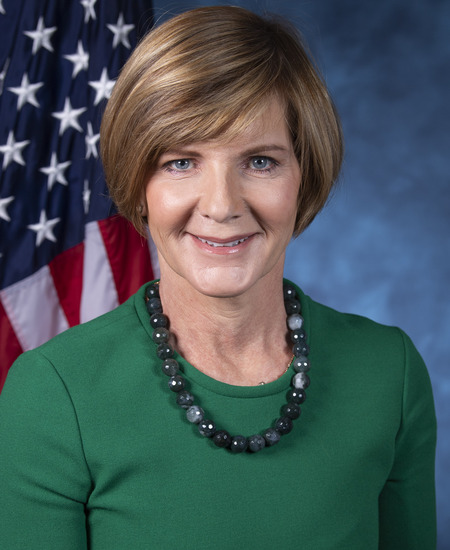
Rep. Susie Lee
Sponsored bills
Critical Mineral Consistency Act of 2025 This bill modifies the Energy Act of 2020 to expand the definition of critical minerals to include critical materials designated by the Department of Energy (DOE). Under current law, DOE's critical materials list contains certain materials that are essential for energy, including those on the critical minerals list of the U.S. Geological Survey (USGS). The USGS's list, which contains certain minerals that are essential to the nation's economic or national security, is not required to include the materials on DOE's list. Currently, both lists include minerals with a high risk of supply chain disruptions, and both DOE and USGS must conduct a variety of efforts to ensure a secure and reliable supply chain of the minerals. By expanding the definition of critical minerals , this bill requires the USGS to include on its list the materials on DOE's list. Within 45 days of DOE adding a mineral, element, substance, or material to its critical materials list, the USGS must update its list to include such mineral, element, substance, or material.
Maddy summaryThis bill directs U.S. agencies to support Iranian people's access to uncensored information and hold Iranian officials accountable for human rights abuses. It requires the State Department and FCC to report on technologies (like satellite networks and mesh systems) that could bypass internet restrictions in Iran, and authorizes $2 million annually to develop such tools. The bill also establishes a new "Iran Kleptocracy Initiative" at FinCEN to track corruption, freeze assets of Iranian regime officials and state-owned businesses, and coordinate with international partners. These measures apply to U.S. policy toward Iran but do not alter Iran's domestic laws; they focus on U.S. sanctions, technology development, and anti-corruption efforts targeting the Iranian regime.
Maddy summaryHRES 1061 is a symbolic resolution recognizing the cultural and historical significance of Lunar New Year in 2026. It does not create new laws or policies, but formally acknowledges Lunar New Year's origins (over 4,000 years in China), its celebration as Seollal in Korea and Tết in Vietnam, and its observance by millions of Asian Americans and others in the U.S. The resolution expresses respect for Asian Americans and extends holiday wishes for a "happy and prosperous new year" during the Year of the Horse. As a non-binding resolution, it has no legal effect or direct impact on any individuals or groups.
Maddy summaryHR 4304, the FAIR Bet Act, amends the tax code to allow gamblers to deduct 100% of their wagering losses instead of the current 90% limit. This change directly affects individuals who report gambling losses on their federal income tax returns. The key provision modifies Section 165(d) of the Internal Revenue Code to remove the 90% restriction on deducting gambling losses. The bill does not alter how gambling winnings are taxed, only the deduction available for losses.
Maddy summaryHR 7498, the After Hours Child Care Act, creates a new Child Care and Development Innovation Fund to expand child care access for parents working nontraditional hours (like evenings, nights, or weekends). The bill directly affects working parents with young children who struggle to find care outside standard 9-to-5 hours, aiming to help them stay employed and advance in their careers. It authorizes $25,000-$500,000 grants for up to 5 years to eligible entities (such as child care providers or partnerships with businesses) to expand existing programs, establish new onsite workplace child care, or improve facilities and staff training. Grantees must cover 25% of costs, and the Secretary of Health and Human Services must report every two years on the program’s impact, including children served and changes in child care availability.
Maddy summaryThis bill amends disaster preparedness funding rules to better support companion animals during emergencies. It adds a new 90% federal funding option for specific pet-related preparedness activities, alongside the existing 50% option. States, localities, and tribes receiving disaster grants can now use funds for items like collapsible crates, mobile pet trailers, veterinary supplies, emergency generators, and animal response team training. The law directly affects government entities managing disaster response by expanding allowable uses of existing grant money for pet safety.
Maddy summaryThe PART Act requires new vehicles to have catalytic converters marked with a unique identification number that links directly to the vehicle's identification number, stored in a law enforcement-accessible database. It establishes a $7 million grant program to help repair shops, dealers, law enforcement, and fleet owners purchase equipment for marking converters with visible, durable identifiers (using die or pin stamping and high-visibility paint). The bill also mandates that businesses buying catalytic converters keep detailed seller records (including vehicle information) for two years and use traceable payments, banning cash or cryptocurrency transactions. Additionally, it creates new federal criminal penalties for stealing or trafficking in catalytic converters, with potential sentences of up to five years in prison.
Maddy summaryThe REPAIR Act requires motor vehicle manufacturers to provide car owners and independent repair shops with full access to vehicle data and repair information, prohibiting technological or legal barriers that restrict this access. It mandates that manufacturers share vehicle-generated data, critical repair information, and tools on equal terms with dealers and authorized service providers, without requiring consumers to use specific brands of parts or tools. The law establishes an advisory committee to monitor implementation and ensure fair competition in vehicle repair, while giving the Federal Trade Commission authority to enforce these requirements as unfair or deceptive practices. This legislation directly affects car owners, independent repair facilities, aftermarket parts manufacturers, and motor vehicle manufacturers by shifting control of repair information and data from manufacturers to consumers.
Maddy summaryThe HARM Act 2.0 requires the U.S. government to identify and designate successor groups of the Wagner mercenary force (such as Africa Corps, Redut PMC, and Patriot PMC) as terrorist organizations under existing law. It mandates the Secretary of State to submit a report listing these groups, their leaders, and related entities, followed by a review by the Comptroller General. If designated, these groups and individuals would face sanctions including asset freezes and transaction bans under Executive Order 13224. The bill also requires annual reports for five years detailing the groups' activities, human rights abuses, financial networks, and the effectiveness of sanctions.