

Border Enforcement, Security, and Trade (BEST) Facilitation Act of 2023 This bill establishes positions within U.S. Customs and Border Protection (CBP) to review inspection images of vehicles and cargo entering or exiting the United States. Specifically, the bill establishes the position of image technician within the CBP Office of Field Operations. An image technician must (1) review nonintrusive inspection images of vehicles and cargo entering or exiting the United States; (2) assess whether there are indications that such vehicles and cargo contain contraband, illicitly concealed merchandise (e.g., drugs and weapons), or persons seeking to unlawfully enter the United States; and (3) recommend suspicious vehicles and cargo for further inspection by a CBP officer. The bill also establishes the position of supervisory image technician with additional responsibilities, including receiving and reporting intelligence to the National Targeting Center about techniques used by malign actors to transport contraband, illicitly concealed merchandise, and persons seeking to unlawfully enter the United States. A CBP officer shall retain the discretion and final decision-making authority on whether to release a vehicle or cargo or refer the vehicle or cargo for further inspection. The bill establishes annual training requirements for both image technician and supervisory image technician positions, including training on privacy and civil liberties and how to analyze inspection images. Within a year of this bill's enactment, CBP must develop a workforce staffing model for these positions. The Government Accountability Office must validate the model within six months of the model's completion.
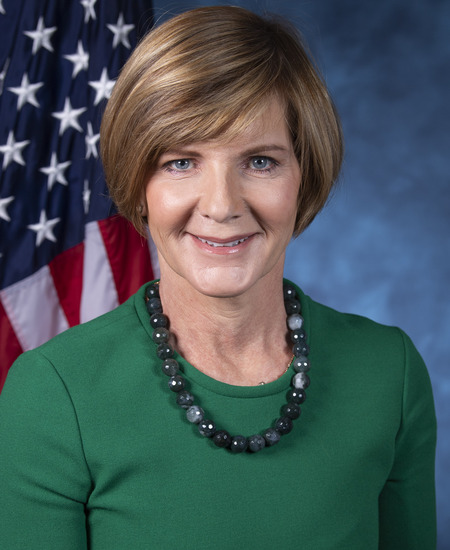
Rep. Susie Lee
Sponsored bills
Maddy summaryHR 3309, the Standard FEES Act, establishes a uniform fee schedule for federal agencies processing specific forms related to building access (like easements) and communications installations. It requires the General Services Administration to set fees based on actual processing costs and ensure they are competitively neutral, with limited exceptions for public benefit or broadband deployment. Executive agencies must adopt this schedule within 120 days of its establishment, replacing any conflicting existing fees for these forms. The bill directly affects federal agencies that handle these forms, ensuring consistent fee collection to cover processing costs.
Maddy summaryThis resolution commemorates October 2023 as Filipino American History Month, honoring the contributions and cultural heritage of Filipino Americans to the United States. It directly recognizes the Filipino American community - now the third-largest Asian American and Pacific Islander group - with a population of approximately 4.5 million - and highlights their historical roles, including WWII service and community leadership. The resolution has no legal effect or funding provisions; it is purely ceremonial, urging the public to observe the month through educational programs and activities. It follows prior congressional recognitions of Filipino American History Month since 2009.
Maddy summaryThis resolution designates the week of September 25-29, 2023, as "National Clean Energy Week" to recognize the growing role of clean energy in the U.S. economy. It expresses support for clean energy jobs and innovation, noting the sector employed about 8.1 million people in 2022. The resolution encourages federal, state, and local investment in affordable clean energy technologies and promotes "commonsense solutions" for energy needs. As a symbolic gesture, it has no legal force or funding implications - it simply urges recognition of clean energy's economic and environmental contributions.
Maddy summaryHRES 736 is a House resolution designating September 25-October 1, 2023, as "Asian American and Native American Pacific Islander-Serving Institutions Week" to recognize institutions that serve high proportions of Asian American, Native Hawaiian, and Pacific Islander students. These institutions - enrolling over 46% of such students despite representing only 6.5% of U.S. colleges - provide critical support for low-income, first-generation students through culturally relevant programs. The resolution encourages eligible institutions to seek funding and urges the public to observe the week with activities celebrating their educational contributions. It has no legal effect but serves as a symbolic acknowledgment of their role in higher education.
Maddy summaryThis bill requires federal agencies to adjust contract prices to reimburse contractors for paying employees during government funding lapses (e.g., shutdowns). It covers costs for furloughed, laid-off, or reduced-hour workers, or for restoring paid leave used during the lapse, with a weekly cap of $1,442 per employee. Directly affecting federal contractors and their employees who experienced work disruptions due to funding gaps, it mandates agencies to make these adjustments promptly after enactment. Contractors must provide proof of costs, and the Office of Federal Procurement Policy must report on implementation to Congress within a year.
Maddy summaryThe Grid Resiliency Tax Credit Act creates a 30% federal tax credit for companies building or significantly upgrading electric transmission lines that meet specific resilience and capacity standards. It directly affects utility companies and transmission developers investing in new lines (crossing at least two states or 150 miles long) or modifications that increase existing line capacity by 500 megawatts or more. To qualify, projects must use advanced conductors or superconducting technology, transmit at minimum voltage levels (100 kV for new lines, 345 kV for others), and serve purposes like disaster resilience or grid reliability. The credit applies to property placed in service after December 31, 2023, and expires for projects starting after 2033.
Maddy summaryHR 5641, the Pay Our Troops Act, ensures military personnel and their support staff continue receiving pay during fiscal year 2024 if Congress fails to pass regular budget appropriations. It appropriates existing Treasury funds to cover pay and allowances for active-duty troops, reserve components, and civilian employees or contractors supporting military operations. The bill automatically terminates on January 1, 2025, or earlier if Congress enacts a regular budget or continuing resolution. This provision directly affects service members, Department of Defense staff, and Coast Guard personnel (when not under the Navy) during budget implementation gaps.
Maddy summaryHRES 708 is a symbolic resolution designating the week of September 18-23, 2023, as "Malnutrition Awareness Week." It does not create new laws or funding but formally recognizes malnutrition as a significant issue affecting vulnerable groups, including children (particularly Black children, who are nearly 3 times more likely to experience food insecurity), older adults (up to 50% at risk), and hospitalized patients. The resolution supports existing federal programs like the Older Americans Act and school nutrition initiatives, while acknowledging the high costs of malnutrition (e.g., $51 billion annually for older adults) and urging access to screening and nutrition counseling. It primarily aims to raise public awareness and honor professionals working on malnutrition prevention.
Maddy summaryThe Jimmy Deal Trafficking Survivors Assistance Act of 2023 requires the Transportation Security Administration (TSA) to establish a Trafficking Survivor Point of Contact (TSPoC) at each airport where TSA conducts passenger screening. The TSPoC, a designated TSA employee trained in trauma-informed care, assists non-profit service providers helping human trafficking survivors with air travel arrangements, including identity verification, security screening support, and safe handoffs at destination airports. Service providers must meet specific eligibility criteria, such as providing 30 days' notice and confirming they are actively assisting a survivor while arranging travel and complying with airline policies for minors. The TSPoC ensures survivors receive trauma-informed support throughout the travel process, from security screening to being met by a designated representative at their destination.