

Maddy summaryHR 6081 amends the short title of the Lake Tahoe Restoration Act (Public Law 106-506) to honor Senator Dianne Feinstein, renaming it the "Dianne Feinstein Lake Tahoe Restoration Act." This change applies to all federal references in laws, maps, regulations, documents, or records that previously cited the original title. The bill does not alter the Act's policies or funding but updates its official name and all related references. It directly affects federal agencies and documents that reference the legislation. This is a purely procedural renaming with no substantive policy changes.
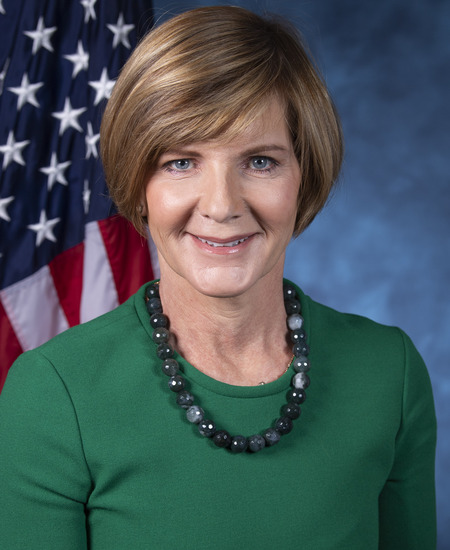
Rep. Susie Lee
Sponsored bills
Maddy summaryHCONRES 82 is a symbolic resolution recognizing and supporting the New Heights Bid Committee's effort to secure the 2027 FIFA Women's World Cup for a joint U.S.-Mexico bid. It directs Congress to encourage the President and federal agencies to assist the committee in meeting hosting requirements and to consider future legislation if the bid is successful. The resolution does not create new laws or funding but formally expresses congressional backing for the bid committee's work. It directly affects the New Heights Bid Committee by affirming congressional support for their efforts to host the tournament.
Maddy summaryThis bill creates a federal grant program to fund high-quality tutoring in schools with teacher shortages (called "hard-to-staff" or "high-need" schools). Local groups (like school districts, colleges, and community partners) apply for competitive grants to hire and train tutors - such as education students, recent graduates, or certified educators - to provide small-group tutoring aligned with school curriculum, with 85% of funds going directly to student support (e.g., tutor stipends, materials, meals). It prohibits using funds to replace teachers and prioritizes tutors from minority-serving colleges or education programs. The program authorizes $500 million over three years.
Maddy summaryHR 839, the China Exchange Rate Transparency Act of 2023, requires the U.S. Treasury Secretary to direct the U.S. representative at the International Monetary Fund (IMF) to advocate for greater transparency from China regarding its exchange rate policies. The bill directs advocacy for China to provide more data on its exchange rate management, comply with IMF information requests, publish significant deviations from other currencies used in IMF calculations, and consider transparency in IMF governance reviews. It directly affects China’s exchange rate practices, aiming to address U.S. Treasury findings that China lacks transparency in its foreign exchange interventions and policies. The law expires 30 days after China demonstrates substantial compliance with IMF rules on exchange rate transparency or 7 years from enactment, whichever comes first.
Maddy summaryHR 540 directs the U.S. Governor at the International Monetary Fund (IMF) to actively support Taiwan's membership and participation in the IMF. The bill requires the U.S. to use its voting power to back Taiwan's admission as a member, its participation in economic reviews, employment opportunities for Taiwanese nationals, and access to technical assistance. It mandates annual reports on U.S. efforts to advance Taiwan's involvement at international financial institutions and expires if Taiwan is admitted or after 10 years. This bill directly affects Taiwan's ability to engage with the IMF, the world's primary international financial institution, by directing U.S. policy at that body.
Maddy summaryHRES 963 is a symbolic resolution honoring Korean American Day, which commemorates the January 13, 1903 arrival of the first large wave of Korean immigrants to the U.S. It recognizes Korean Americans' contributions to U.S. society, including their economic, cultural, and military impacts, and marks the 121st anniversary of this historic migration. The resolution urges all Americans to observe Korean American Day to appreciate these contributions. As a commemorative measure, it does not create new policies or affect specific groups beyond this ceremonial recognition.
Maddy summaryHR 6973 reauthorizes the COPS on the Beat grant program for fiscal years 2025-2034, with new provisions to support diverse hiring and better compensation for officers in rural communities. The bill provides increased federal funding (up to 90% in the first year, decreasing to 75% over four years) for jurisdictions with median household incomes below 80% of the national average. It sets a $75,000 cap on hiring costs per officer and limits compensation to 80% of the national median household income for qualifying rural areas. The legislation also requires the GAO to report on law enforcement workforce diversity and pay relative to local costs of living in 2029 and 2034. This bill directly affects local law enforcement agencies seeking federal grants to hire and retain officers, particularly in rural communities with lower median incomes.
Maddy summaryThe Affordable Connectivity Program Extension Act of 2024 allocates $7 billion in funding for the Affordable Connectivity Program (ACP) during fiscal year 2024. The ACP provides subsidies to low-income households to help cover the cost of internet service and connected devices like laptops or tablets. This funding ensures the program can continue supporting eligible households throughout the year, with the money remaining available until fully spent. The bill extends existing program funding without changing eligibility criteria or service requirements.
Maddy summaryHR 6787, the Las Vegas Wash Program Extension Act, increases federal funding authorization for the Las Vegas Wash water management program from $40 million to $65 million. This amendment to the Water Resources Development Act of 2000 directly affects the ongoing operations and maintenance of the Las Vegas Wash Program, which manages water quality and flood control in the Las Vegas area. The bill's sole provision is adjusting the annual funding level for this specific program, with no new requirements or policy changes. The program primarily serves the Las Vegas Valley watershed region in Nevada.
Maddy summaryThis bill reauthorizes and extends funding for programs addressing substance use disorders and opioid addiction, including residential treatment for pregnant and postpartum women, first responder training, and community recovery initiatives. It increases funding levels for these programs, adds xylazine to Schedule III of controlled substances, and requires a study on remote monitoring for patients prescribed opioids. The bill also expands Medicaid coverage requirements for medication-assisted treatment and mandates reporting on mental health condition data alongside substance use disorder data, directly affecting individuals with substance use disorders, healthcare providers, and state and tribal governments.