

Maddy summaryThis bill makes it a federal crime to steal packages that have been delivered by private carriers (like FedEx or UPS) but not yet received by the recipient. It directly affects package recipients, carriers, and thieves who target unclaimed deliveries left on porches or in mailboxes. The key provision amends federal law to include these delivered-but-unclaimed packages under the same legal protections as mail in transit. This changes the law to treat stolen packages at the delivery stage as a federal offense, similar to theft of postal mail. The bill does not create new penalties but expands existing theft statutes to cover this specific scenario.
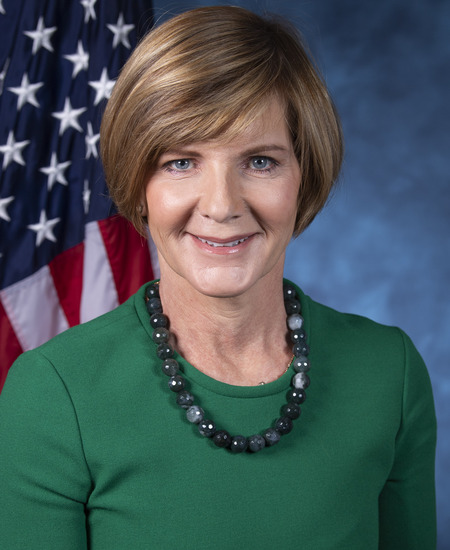
Rep. Susie Lee
Sponsored bills
Maddy summaryThis bill reauthorizes the Debbie Smith DNA Backlog Grant Program, which provides federal funding to state and local law enforcement agencies to reduce backlogs in processing DNA evidence from crime scenes. It extends the program's funding period from fiscal years 2024 through 2029 (previously ending in 2024). The bill also updates audit requirements to ensure grant funds are used properly through 2029. This directly affects law enforcement agencies that receive these grants to accelerate DNA analysis for criminal investigations.
Maddy summaryHRES 1355 is a non-binding resolution supporting the designation of July 10 as Journeyman Lineworkers Recognition Day. It honors lineworkers who maintain electrical infrastructure under hazardous conditions, including during disasters, and commemorates Henry Miller, the first president of the International Brotherhood of Electrical Workers, who died on July 10, 1896, while troubleshooting an electrical outage. The resolution encourages public recognition of these workers' contributions but does not create new laws or policies.
Maddy summaryThe TAKE IT DOWN Act (HR 8989) creates new federal criminal penalties for publishing nonconsensual intimate images or deepfakes without consent, directly affecting platforms hosting user-generated content and individuals who share such material. It defines "deepfake" as AI-generated intimate content falsely depicting someone, and prohibits publishing these without consent - especially when the victim expected privacy - imposing fines or up to 3 years in prison for offenses involving minors. The bill also requires "covered platforms" (like social media sites) to establish a 48-hour removal process for reported nonconsensual content and shields platforms from liability when removing content in good faith. The Federal Trade Commission enforces these provisions as unfair or deceptive practices.
Maddy summaryHR 8941, the "No Tax on Tips Act," creates a new tax deduction for workers who receive cash tips. It allows employees to deduct the full amount of cash tips they report to their employer (via statements required under tax law) from their taxable income, reducing their overall tax burden. This deduction applies to both itemizing and non-itemizing taxpayers and is exempt from standard limitations on miscellaneous deductions. The provision takes effect for taxable years beginning after December 31, 2024, directly benefiting service industry workers like servers and bartenders who rely on cash tips.
Maddy summaryThis bill amends the Federal Employees' Compensation Act to include physician assistants and nurse practitioners as eligible providers for injured federal workers. It defines "other eligible provider" as a nurse practitioner or physician assistant within their state-authorized scope of practice. The law updates key sections to replace "physician" with "physician or other eligible provider" for treatment, certification, and claim processes. The Secretary must finalize implementing regulations within six months of enactment.
Maddy summaryThis bill (HR 2365, Public Law 118-66) directs the U.S. Department of Health and Human Services (HHS) to establish the National Parkinson’s Project. It requires HHS to create and update a coordinated national plan for preventing, diagnosing, treating, and researching Parkinson’s disease and related disorders (including multiple system atrophy and progressive supranuclear palsy), while coordinating federal research and care efforts across agencies like the NIH, CDC, and VA. The law mandates annual progress assessments, an advisory council with patient advocates and diverse experts, and annual reports to Congress on federal Parkinson’s programs and recommendations for improvement. It affects federal agencies managing Parkinson’s-related programs and aims to improve care coordination and research efficiency for patients and caregivers, with the law sunsetting in 2035.
Maddy summaryHRES 1332 is a symbolic resolution recognizing June as LGBTQIA+ Pride Month. It encourages the celebration of Pride Month to honor the historical struggles and achievements of LGBTQIA+ people in the United States, while acknowledging the ongoing challenges they face. This resolution does not create new laws or policies, but serves as a formal recognition of LGBTQIA+ rights as human rights and highlights their integral role in American history. The resolution was introduced by multiple members of Congress and passed by the House of Representatives.
Maddy summaryHRES 1327 is a symbolic congressional resolution condemning Azerbaijan for actions it claims constitute ethnic cleansing against Armenians in Nagorno-Karabakh. It specifically calls for the U.S. government to impose targeted sanctions on Azerbaijani officials, halt military aid to Azerbaijan under Section 907 of the FREEDOM Support Act, provide humanitarian aid to Armenian refugees, and strengthen U.S.-Armenia security cooperation. The resolution affirms displaced Armenians' right to return to Nagorno-Karabakh with security protections. It directly affects Azerbaijan's government officials, Armenian refugees in Armenia, and U.S. foreign policy implementation. As a non-binding resolution, it does not create new law but urges specific policy actions.
Maddy summaryHR 8843, the American Music Tourism Act of 2024, amends the Visit America Act to direct the Assistant Secretary of Commerce for Travel and Tourism to identify and promote U.S. locations and events significant to music tourism for both domestic and international travelers. It requires the Assistant Secretary to specifically promote travel to music-related attractions (like museums, studios, and venues) and music festivals/concerts. The bill also defines "music tourism" as traveling to visit music sites or attend live music events. Finally, it mandates an annual report to Congress on progress toward these tourism goals, starting one year after the bill's enactment.