

Maddy summaryHR 471, the Fix Our Forests Act, establishes a new system for identifying and managing high-risk wildfire areas called "firesheds" and creates a centralized Fireshed Center to coordinate wildfire risk management across federal agencies. The bill streamlines environmental reviews for wildfire risk reduction projects, allowing for faster implementation of hazardous fuels management activities in designated areas. It includes provisions for community wildfire risk reduction programs, water source protection, and specific initiatives for restoring white oak forests. The legislation also includes litigation reforms to expedite forest management projects and reduce delays from legal challenges. These provisions aim to reduce wildfire risk and improve forest health through more coordinated, data-driven management approaches.
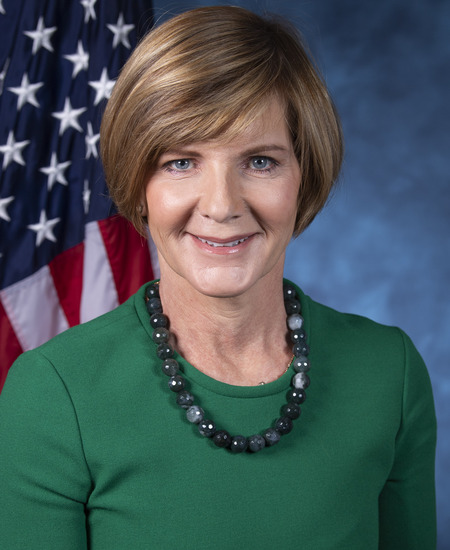
Rep. Susie Lee
Sponsored bills
Maddy summaryThis bill removes the requirement for an initial in-person visit before Medicare beneficiaries can receive mental health services via telehealth. It eliminates geographic restrictions that previously limited telehealth access, allowing services to be provided from home or other locations without travel. The change applies immediately to mental health care and substance use disorder treatment, and permanently removes a 2025 deadline that would have ended expanded telehealth access for rural clinics and health centers. This directly affects Medicare patients seeking mental health support, particularly those in rural areas or with mobility challenges.
Maddy summaryHR 1884, the Veterans Fellowship Act, establishes a 5-year pilot program to help veterans transition to civilian careers. It authorizes the Labor Department to select 3-5 states to partner with nonprofits, placing veterans in employer-sponsored fellowships lasting up to 20 weeks. Each fellow receives a monthly stipend and a potential path to long-term employment with the same employer. The program requires a $10 million annual federal appropriation (2025-2029) and mandates a Comptroller General report on its effectiveness after four years. This directly affects participating veterans, states, and nonprofit organizations involved in the pilot.
Maddy summaryThis bill strengthens the Voting Rights Act of 1965 by clarifying how to prove voting discrimination and expanding requirements for preclearance of voting changes. It establishes new standards for determining when voting practices dilute minority voting strength or deny/abridge voting rights, requiring plaintiffs to show specific conditions for vote dilution claims and including factors like historical discrimination and racial polarization in court analyses. The bill modifies the criteria for determining which states and political subdivisions must seek preclearance for voting changes, and adds new transparency requirements for jurisdictions to publicly disclose changes to voting qualifications, polling locations, and election districts. It directly affects states and local governments that implement voting policies, particularly those with a history of voting rights violations or that make changes to voting qualifications, procedures, or district boundaries. The bill aims to prevent discriminatory voting practices by providing clearer standards for courts and requiring greater transparency in voting rule changes.
Maddy summaryThe Richard L. Trumka Protecting the Right to Organize Act of 2025 strengthens workers' organizing rights by making it an unfair labor practice for employers to threaten permanent replacement of striking workers, discriminate against workers who support unions, or require employees to attend employer campaigns unrelated to their job duties. It expands the definition of "employee" to make it harder for companies to classify workers as independent contractors and requires employers to post notices about workers' rights in conspicuous locations. The bill establishes a new electronic voting system for union elections, creates a 90-day bargaining period before mediation can be requested, and increases penalties for violations of labor laws. These changes are intended to make it easier for workers to form unions and negotiate better wages and working conditions.
Maddy summaryThis bill directs the State Department to review restrictions on U.S. citizens traveling to North Korea, particularly focusing on humanitarian visits for Americans with relatives there (estimated at 100,000 people). It requires the Secretary of State to submit a report within 180 days detailing how the U.S. will pursue a formal end to the Korean War through diplomatic negotiations with North and South Korea. The bill also mandates a separate report outlining a clear roadmap for achieving a binding peace agreement, including necessary negotiation steps and key stakeholders. These provisions aim to address the ongoing state of war, which the bill states prevents formal U.S.-North Korea relations and family reunifications.
Combat Veterans Pre-Enrollment Act of 2025 This bill requires the Department of Veterans Affairs (VA) to establish a program to carry out all activities necessary to permit certain members of the Armed Forces to elect to enroll in the VA health care system on the date of separation of such members from active service. Specifically, the program is for those who served on active duty in a theater of combat operations during a period of war after the Persian Gulf War or in combat against a hostile force during a period of hostilities after November 11, 1998. The VA must, in conjunction with the Department of Defense (DOD) and Department of Homeland Security, establish a mechanism to permit a member of the Armed Forces to elect to pre-enroll in the VA health care system during the 180-day period preceding the date of separation of the member from active service. The VA-DOD Joint Executive Committee must brief Congress on the efforts to implement such a mechanism under the program. The Government Accountability Office must report on the program and include recommendations with respect to methods to improve the program.
Maddy summaryThis bill requires every Department of Veterans Affairs (VA) hospital and urgent care facility to employ at least one Sexual Assault Nurse Examiner (SANE) or a qualified healthcare provider to perform sexual assault forensic examinations. It mandates that after such an examination, veterans must be verbally referred to mental health services, either at the VA hospital or via a Veterans Care Agreement if VA wait times exceed 30 days. The bill explicitly prohibits any reduction in other patient care responsibilities for VA staff while implementing these requirements. The law directly affects veterans seeking sexual assault care at VA facilities by ensuring access to specialized examiners and timely mental health referrals.
Safe Schools Improvement Act This bill requires states to direct their local educational agencies (LEAs) to establish policies that prevent and prohibit bullying and harassment of elementary and secondary school students. In particular, these policies must prohibit bullying and harassment based on race, color, national origin, disability, religion, or sex. Sex includes sexual orientation, gender identity, and sex characteristics (including intersex traits). Further, LEAs must provide (1) students, parents, and educational professionals with annual notice of the conduct prohibited in their disciplinary policies; (2) students and parents with grievance procedures that target such conduct; and (3) the public with annual data on the incidence and frequency of that conduct at the school and LEA level. The Department of Education must conduct and report on an independent biennial evaluation of programs and policies to combat bullying and harassment in elementary and secondary schools. The National Center for Education Statistics must collect state data to determine the incidence and frequency of the conduct prohibited by LEA disciplinary policies.
Maddy summaryHR 575, the Increased TSP Access Act of 2025, amends conservation program rules to expand access to third-party providers (TSPs) like agricultural retailers, engineers, and certified crop advisors. It creates new pathways for state agencies and professional organizations to certify TSPs (within 180 days of enactment), requires the USDA to review certifications within 10 business days, and sets payment rates equivalent to direct government services. The bill directly affects agricultural producers who use conservation programs and TSPs seeking certification, while mandating annual transparency reports on certification numbers, funding, and program effectiveness. Key changes include streamlined certification for existing specialists (e.g., certified crop advisors) and rules preventing double-counting of payments from other federal programs.