

Maddy summaryHR 1039, the Clear Communication for Veterans Claims Act, requires the Department of Veterans Affairs (VA) to commission an independent assessment of notices sent to veterans filing claims. Within 30 days of enactment, the VA must partner with a federally funded research center to evaluate these notices, focusing on making them clearer, more concise, and better organized while reducing paper use and government costs. The assessment, developed with input from veterans' groups and experts, must be submitted to Congress within 90 days, and the VA must implement feasible recommendations within one year. This bill directly affects veterans navigating claims processes and aims to improve their experience through clearer communication. The bill also includes a minor technical change to housing loan fee deadlines.
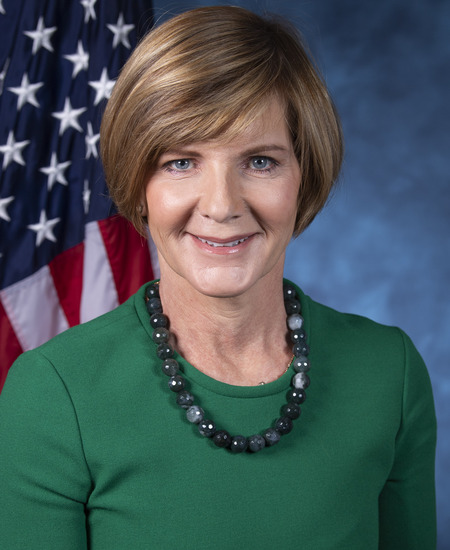
Rep. Susie Lee
Sponsored bills
Maddy summaryHR 2245, the Autonomy for Disabled Veterans Act, increases funding limits for home modifications for disabled veterans using VA home health services. It raises the maximum annual amount for home improvements from $6,800 to $10,000 and for structural alterations from $2,000 to $5,000. The bill also requires annual inflation adjustments to these amounts based on the Consumer Price Index, ensuring the funding keeps pace with rising costs. This directly affects veterans who need home modifications as part of their VA-provided home health services.
Maddy summaryThis bill, HR 2253 (Puppy Protection Act of 2025), sets new federal standards for commercial dog dealers who sell puppies to the public. It requires specific housing sizes based on dog size (e.g., 12-30 square feet per dog), daily exercise in safe outdoor areas, clean water and nutritious food twice daily, and annual veterinary exams including dental checks. The bill also limits breeding frequency (max 2 litters in 25 months), sets age minimums for breeding (18 months for small dogs, 2 years for large dogs), and mandates health screenings to prevent genetic diseases. These requirements apply directly to commercial dealers, with final regulations to be issued within 18 months of enactment.
Maddy summaryThis bill, HR 2102 (Major Richard Star Act), allows veterans with combat-related disabilities to receive both full military retired pay and veterans' disability compensation simultaneously, without the previous offset that reduced retired pay. It directly affects veterans already eligible for both benefits due to combat-related injuries, removing the requirement that their retired pay be reduced by the disability compensation amount. The key provision amends Title 10 and Title 38 to eliminate the offset rule (sections 5304 and 5305 of Title 38) for these veterans. The change applies to payments starting after the bill’s enactment date, effective for all qualifying veterans. This is a policy change to increase financial support for affected veterans, not a new benefit.
Maddy summaryHR 2585, the Armenian Genocide Education Act, establishes a federal program through the Library of Congress to develop educational resources about the 1915-1923 Armenian Genocide for K-12 schools. It requires the Librarian to create and distribute accurate teaching materials, provide teacher training workshops, and maintain an online resource hub focused on the genocide's history, lessons, and prevention of hate. The program directly supports local educational agencies, independent schools, and educators by offering professional development and curriculum resources. It defines key terms like "denial" and "distortion" to guide the educational content, aiming to improve understanding of this historical event and its relevance to preventing modern-day hate crimes.
Maddy summaryHR 2533, the EASE Act of 2025, requires Medicare and Medicaid to test a new telehealth model designed to improve specialty care access for rural and underserved Medicare/Medicaid beneficiaries. The bill mandates the Centers for Medicare & Medicaid Services (CMS) to partner with nonprofit provider networks - comprising at least 50 community health centers or rural clinics (half in rural areas) - to deliver specialty care via telehealth and coordinate with primary care providers. Eligible individuals must be enrolled in Medicare Part B, Medicaid, or CHIP and reside in designated rural or underserved areas. The model requires networks to collect and evaluate data on service delivery, with funding subject to existing program rules. This creates a structured pilot program focused on expanding remote specialty care access in underserved regions.
Maddy summaryThis bill establishes special base pay rates for wildland firefighters employed by the Forest Service or Department of the Interior, increasing their base pay by specific percentages (from 1.5% to 42%) based on their grade. It creates "incident response premium pay" at 450% of hourly rate for firefighters deployed to respond to qualifying wildfire incidents, with a yearly maximum of $9,000. The bill also provides for paid rest and recuperation leave following wildfire incident response. These provisions replace temporary pay increases that were previously authorized under other legislation and directly affect wildland firefighters who perform duties related to wildland fires.
Save America's Forgotten Equines Act of 2025 or the SAFE Act of 2025 This bill permanently prohibits the slaughter of equines (e.g., horses and mules) for human consumption. (Current law prohibits the slaughter of dogs and cats for human consumption. This bill extends the prohibition to equines.) Specifically, this bill prohibits a person from knowingly (1) slaughtering an equine for human consumption; or (2) shipping, transporting, possessing, purchasing, selling, or donating an equine to be slaughtered for human consumption or equine parts for human consumption. The bill subjects a violator to a fine. The bill applies to conduct in or affecting interstate or foreign commerce or within the special maritime and territorial jurisdiction of the United States. However, it does not apply to an activity carried out by an Indian for a religious ceremony. As background, in recent years, the appropriations acts have prohibited the Department of Agriculture (USDA) from using federal funds to inspect horses before they are slaughtered for human consumption. Therefore, there are currently no USDA-inspected horse slaughter facilities in the United States.
Maddy summaryHR 2398, the Rural Veterinary Workforce Act, amends federal tax law to exempt certain student loan repayment or forgiveness assistance from income tax for veterinarians working in rural areas. It specifically expands existing tax exclusions to include programs under the National Agricultural Research, Extension, and Teaching Policy Act (7 U.S.C. 3151a) and similar state-level programs designed to increase rural veterinary access. This change directly affects veterinarians participating in qualifying loan repayment or forgiveness programs in states prioritizing rural veterinary services. The policy change modifies IRS tax treatment to reduce the financial burden on veterinarians serving underserved rural communities.
Maddy summaryThe Providing Veterans Essential Medications Act requires the Department of Veterans Affairs to reimburse State homes or provide medications directly for certain high-cost drugs used by veterans in State-run nursing homes. A medication is defined as high-cost if its price (including a 3% fee) exceeds 8.5% of the VA's monthly payment for the veteran's care at that home. This applies specifically to State homes that provide such medications to veterans under VA contracts. The bill ensures veterans receive essential medications without financial burden on the State homes, using clear cost thresholds to determine eligibility.