

This resolution expresses congressional disapproval of the rule submitted by the Equal Employment Opportunity Commission (EEOC) that revises the EEOC settlement process to provide employers with the factual and legal basis that the EEOC relied on to make a reasonable cause finding of a discriminatory practice.
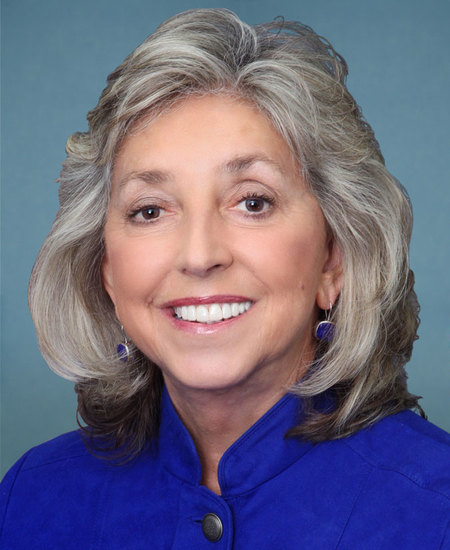
Rep. Dina Titus
Sponsored bills
This joint resolution eliminates the deadline for the ratification of the Equal Rights Amendment, which prohibits discrimination based on sex. The amendment was proposed to the states in House Joint Resolution 208 of the 92nd Congress, as agreed to in the Senate on March 22, 1972. The amendment shall be part of the Constitution whenever ratified by the legislatures of three-fourths of the states.
Neighborhood Homes Investment Act This bill establishes a new business-related tax credit to finance home building and rehabilitation in neighborhoods that meet certain eligibility criteria relating to poverty rates, income, and home values. The credit is limited to 35% of the lesser of the qualified development cost (i.e., the cost of construction, substantial rehabilitation, demolition, and environmental remediation of residential properties) or 80% of the national median sale price for new homes. The credit applies to single family homes containing four or fewer residential units, condominiums, or houses or apartments owned by cooperative housing corporations.
Securing Access for Venue Equity Act or the SAVE Act This bill expands a grant program established to support venue operators in response to COVID-19 (i.e., coronavirus disease 2019) to include hospitality businesses, such as amusement and theme parks, scenic and sightseeing transportation businesses, and travel arrangement and reservation services.
Keeping Our Manufacturers from Being Unfairly taxed while Championing Health Act or KOMBUCHA This bill modifies the definition of brewer for purposes of the alcohol excise tax to exempt kombucha from such tax.
Housing Supply and Affordability Act This bill allows the Department of Housing and Urban Development to award grants to states, local governments, Indian tribes, and Native Hawaiian organizations for the development and implementation of housing policy plans. These plans must increase the housing supply while avoiding resident displacement, increase housing affordability, and reduce barriers to housing development. The amounts provided by the bill are designated as an emergency requirement pursuant to the Statutory Pay-As-You-Go Act of 2010 (PAYGO) and the Senate PAYGO rule. (This excludes the budget effects from being counted for the purposes of enforcing the PAYGO rules.)
Veteran Suicide Prevention Act This bill requires the Department of Veterans Affairs (VA) to complete a review of the deaths of all covered veterans who died by suicide during the five-year period preceding the enactment of this bill. Covered veterans are those who received VA hospital care or medical services during the five-year period preceding the death of the veteran. The VA shall report on the results of the review and make such report publicly available.
Protect Democracy in Burma Act of 2021 This bill requires the Department of State to report to Congress on the military coup in Burma (Myanmar), including a description of U.S. efforts to (1) engage with the Association of Southeast Asian Nations to support a return to Burma's democratic transition and democratic values throughout Southeast Asia, and (2) influence the United Nations to hold accountable those responsible for the coup.
Ethan's Law This bill establishes a framework to regulate the storage of firearms on residential premises at the federal, state, and tribal levels. At the federal level, the bill establishes statutory requirements for firearms on residential premises to be safely stored if a minor is likely to gain access without permission or if a resident is ineligible to possess a firearm. An individual who violates the requirements is subject to criminal penalties. A firearm stored in violation of the requirements is subject to seizure and forfeiture. At the state and tribal levels, the bill requires the Department of Justice to award grants to implement functionally identical requirements for the safe storage of firearms.
Pandemic Treatment Access and Affordability Act of 2021 This bill imposes licensing and price restrictions on federally supported drugs and other medicines intended to address COVID-19 (i.e., coronavirus disease 2019) or other public health emergencies. With respect to a COVID-19 drug patent developed using certain types of federal support, any license granted by the federal government shall be open and nonexclusive. Similarly, a licensee or assignee for such a patent shall grant open nonexclusive licenses for the patent. An entity that receives a license shall pay reasonable royalties to (1) the patent holder, or (2) the owner of marketing exclusivity rights granted by the Food and Drug Administration (FDA) that were terminated under this bill. The bill requires that such drugs be offered at a fair and reasonable price based on certain considerations, such as access. If the Department of Health and Human Services (HHS) finds that the price of any drug to address a public health emergency is excessive, HHS must void any FDA-granted exclusivity for the drug and grant open and nonexclusive licenses to other manufacturers. Such licenses are subject to reasonable royalty requirements.