I am Vanessa Guillén Act of 2021 This bill addresses the policies and procedures of the Department of Defense (DOD) for cases or allegations of sex-related offenses.
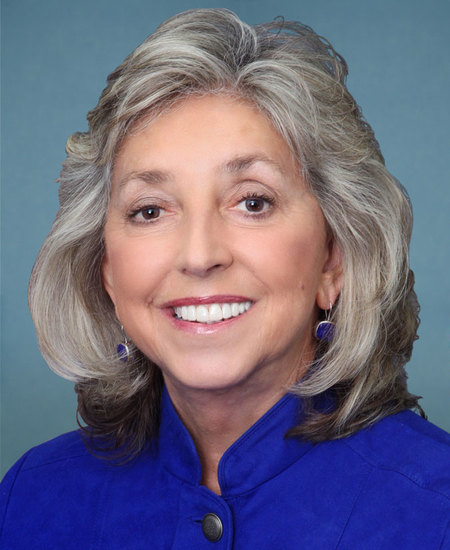
Rep. Dina Titus
Sponsored bills
Homes for Every Local Protector, Educator, and Responder Act of 2021 or the HELPER Act of 2021 This bill establishes a program administered by the Department of Housing and Urban Development to provide mortgage assistance to law enforcement officers, elementary and secondary school teachers, firefighters, or other first responders. Specifically, these individuals may be eligible for a one-time mortgage on a primary family residence with no down payment and no monthly mortgage insurance premium.
Public Safety Employer-Employee Cooperation Act This bill requires the Federal Labor Relations Authority to determine whether a state substantially provides public safety officers or employees the right to form and join a labor organization; recognition by public safety employers of the employees' labor organization, agreement to bargain with the organization, and reduction of any agreements to writing in a contract or memorandum of understanding; the right to bargain over hours, wages, and terms and conditions of employment; and binding interest arbitration to resolve an impasse in collective bargaining negotiations. The bill makes the authority responsible for (1) determining the appropriateness of units for labor representation; (2) supervising elections; (3) conducting hearings and resolving complaints of unfair labor practices; and (4) protecting the right of employees to form, join, or assist any labor organization, or to refrain from doing so. An employer, public safety officer, or labor organization may not engage in a lockout, sickout, work slowdown, strike, or any other organized job action that will measurably disrupt the delivery of emergency services and is designed to compel an employer, public safety officer, or labor organization to agree to the terms of a proposed contract.

Nurses for Under-Resourced Schools Everywhere Act or the NURSE Act This bill establishes a demonstration grant program through which the Department of Education must award matching funds to increase the number of school nurses in public elementary and secondary schools served by a local educational agency in which at least 20% of students are eligible to participate in the school lunch program.
Nurse Staffing Standards for Patient Safety and Quality Care Act of 2021 This bill requires hospitals to implement and submit to the Department of Health and Human Services (HHS) a staffing plan that complies with specified minimum nurse-to-patient ratios by unit. Hospitals must post a notice regarding nurse-to-patient ratios in each unit and maintain records of actual ratios for each shift in each unit. The bill also requires hospitals to follow certain procedures regarding how ratios are determined and other staff are prohibited from performing nurse functions unless specifically authorized within a state's scope of practice rules, among other requirements. HHS must adjust Medicare payments to hospitals to cover additional costs attributable to compliance with these ratios. Nurses may object to, or refuse to participate in, an assignment if it would violate minimum ratios or if they are not prepared by education or experience to fulfill the assignment without compromising the safety of a patient or jeopardizing their nurse's license. Hospitals may not (1) take adverse actions against a nurse based on the nurse's reasonable refusal to accept an assignment; or (2) discriminate against individuals for good faith complaints relating to the care, services, or conditions of the hospital or related facilities. HHS may impose civil monetary penalties on hospitals violating the ratio requirements and must publish the names of such hospitals. The bill provides stipends to the nurse workforce loan repayment and scholarship program and expands the nurse retention grant program to include nurse preceptorship and mentorship projects.
Enhance Access To SNAP Act of 2021 or the EATS Act of 20 21 This bill expands eligibility for the Supplemental Nutrition Assistance Program to students attending institutions of higher education.
Improving Access to Nutrition Act of 20 21 This bill repeals certain work requirements for the Supplemental Nutrition Assistance Program (SNAP, formerly known as the food stamp program). The requirements apply to able-bodied adults who are ages 18-49 and have no dependent children. Individuals who do not meet certain work requirements are generally prohibited from receiving more than 3 months of SNAP benefits over a 36-month period. Under current law, some of the work requirements under SNAP are temporarily suspended due to COVID-19 (i.e., coronavirus disease 2019).
Helping Emergency Responders Overcome Act or the HERO Act This bill establishes a series of programs relating to the behavioral health of law enforcement officers, first responders, 9-1-1 operators, and other public safety officers and health care providers. The programs include a public safety officer suicide-reporting system at the Centers for Disease Control and Prevention, a grant program for peer-support behavioral health and wellness programs within fire departments and emergency medical services agencies, and a grant program for behavioral health and wellness programs for health care providers.
Mental Health Services for Students Act of 2021 This bill provides specific statutory authority for the Project AWARE (Advancing Wellness and Resiliency in Education) State Educational Agency Grant Program that is administered by the Substance Abuse and Mental Health Services Administration. The program supports school-based mental health services, including screening, treatment, and outreach programs.
Green Transportation Act This bill incorporates greenhouse gas emission reduction in various transportation-related planning activities and programs. Specifically, states and metropolitan planning organizations must address greenhouse gas emission reductions and certain other issues (e.g., public health and climate change) in long-range and other planning related to highways and public transportation. The bill also makes reducing carbon dioxide and other greenhouse gas emissions from the transportation system a national goal of the Federal-aid Highway Program. The Department of Transportation (DOT) must establish applicable performance measures and standards related to that goal. Additionally, states and metropolitan planning organizations may use certain funding available through the National Highway Trust Fund to develop standardized models and methodologies to measure and monitor transportation-related greenhouse gas emissions. DOT must collect and organize such models and methodologies in a publicly available clearinghouse and report about them to Congress. Further, DOT must establish a program to fund projects that support the reduction of greenhouse gas emissions from the surface transportation system. As part of this program, DOT must annually evaluate carbon dioxide emissions on public roads and evaluate states' progress in reducing emissions.