

Maddy summaryThe MORE Act (HR 5068) would remove cannabis from the federal list of controlled substances, effectively decriminalizing it at the federal level while establishing a new tax on cannabis products. The bill creates an Opportunity Trust Fund that would distribute tax revenues to support communities disproportionately impacted by cannabis prohibition, including funding for expungement programs, job training, and equitable licensing initiatives for minority business owners. It also includes provisions to prevent discrimination based on cannabis use in federal programs, immigration proceedings, and workplace policies. The bill would require federal courts to expunge non-violent cannabis convictions and establish a process for resentencing individuals currently serving time for such offenses. These provisions aim to address racial disparities in cannabis enforcement and create more equitable opportunities in the legal cannabis industry.
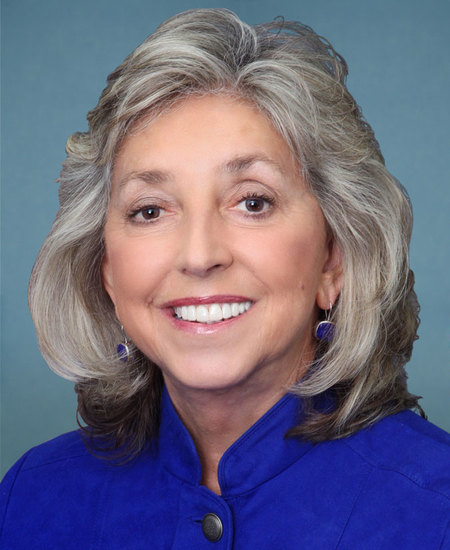
Rep. Dina Titus
Sponsored bills
Maddy summaryHR 909, the Crime Victims Fund Stabilization Act of 2025, modifies how funds from the False Claims Act are deposited into the Crime Victims Fund. It specifies that from 2025 through 2029, certain False Claims Act proceeds (specifically those for qui tam plaintiff payments and government damage reimbursements) cannot be deposited into the fund. This change directly affects the composition of the Crime Victims Fund by excluding these specific revenue streams during the specified period. The bill does not create new benefits or alter victim services; it only adjusts fund allocation rules for existing False Claims Act revenues.
Maddy summaryHR 7016, the "No Funds for NATO Invasion Act," blocks federal funding for any U.S. military invasion of a North Atlantic Treaty Organization (NATO) member country or territory covered by NATO's Article 5 mutual defense clause. The bill prohibits using any federal funds for such invasions and bans U.S. officials from executing these actions. It directly affects U.S. military operations and funding decisions involving NATO members. The law applies to all federal spending, preventing the use of existing budgets for this specific purpose.
Maddy summaryHR 7004 prohibits federal elected officials, congressional staff, political appointees, and executive branch employees from trading prediction market contracts using material nonpublic information about government policy, actions, or political outcomes. It bans any purchase, sale, or exchange of these contracts when the individual possesses or could reasonably obtain such nonpublic information - defined as important investment details not available to the public. The bill directly affects government insiders who might otherwise trade on inside knowledge of upcoming decisions or election results through prediction markets. Key provisions clarify that covered transactions include any financial instrument tied to future government events, listed on platforms operating across state lines. This creates a specific insider trading rule for prediction markets, distinct from general securities laws.
Maddy summaryHR 7002, the Justice for Exploited Children Act, amends the Fair Labor Standards Act to increase penalties for employers violating child labor laws involving minors under 18. It adds criminal penalties for repeated or willful violations, including fines up to $100,000 or 5 years in prison, and significantly higher fines for violations causing death or serious injury to child employees (up to $500,000 or 10 years imprisonment). Civil penalties are also raised, with minimum fines of $1,000 for standard violations and $50,000 for violations causing a child’s death (doubled for repeat or willful cases). The bill directly affects employers who violate child labor protections, aiming to strengthen enforcement through steeper financial and criminal consequences.
Maddy summaryThis concurrent resolution (HCONRES 69) commemorates the 15th anniversary of the January 8, 2011, Tucson shooting that killed six people and injured 13, including former Congresswoman Gabby Giffords. It honors the victims, survivors, and Giffords - now a prominent advocate for gun violence prevention - and recognizes her leadership in promoting civility and reducing gun violence. The resolution also commends Tucson residents and first responders for their resilience and reaffirms Congress’s commitment to respectful dialogue and opposing political violence. As a ceremonial resolution, it does not create new laws or policies.
Maddy summaryHR 6980, the NOVA Act of 2026, prohibits the use of federal funds to support U.S. possession, control, or sovereignty over Venezuela's territory or resources, including military deployments there. It allows limited exceptions: the President may acquire Venezuelan property for diplomatic use (with local government approval) or use existing U.S. properties in Venezuela for embassies. The bill does not apply to properties owned by the U.S. before January 1, 2026, and explicitly states it won't affect funding for emergency humanitarian aid. This bill directly affects U.S. government agencies and programs seeking to fund activities related to Venezuela's governance or military presence.
Maddy summaryHR 1600, the Crimea Annexation Non-Recognition Act, prohibits U.S. federal departments and agencies from taking any action that implies recognition of Russia's claim to Crimea, its airspace, or territorial waters. The bill states U.S. policy explicitly rejects recognizing Russia's sovereignty over Crimea and requires federal agencies to avoid any actions that could be interpreted as such recognition. This directly affects all U.S. federal agencies by restricting their activities related to Crimea, such as diplomatic engagements or aid programs that might imply acceptance of Russia's control. The bill does not impose new sanctions or funding changes but establishes a clear policy stance on diplomatic recognition.
Maddy summaryHJRES 136 would require the President to issue an annual proclamation designating a day as "Democracy Day" each year. The proclamation must call on state and local governments, as well as educational authorities, to observe the day through programs and activities promoting civic engagement. The bill does not specify which date must be designated, leaving that decision to the President annually. This is a procedural measure focused on directing an existing executive action to foster democratic awareness, without creating new laws or altering existing policies.
Maddy summaryThis bill expands the Department of Veterans Affairs' (VA) efforts to support veterans facing systemic barriers by renaming the Center for Minority Veterans to include "Historically Underserved Veterans" and broadening the definition of "covered veterans" to include those experiencing difficulties due to factors like LGBTQ+ identity, rural residence, low income, language barriers, or citizenship status. It requires the VA to conduct biennial reviews of benefit disparities, establish new duties for the Advisory Committee (such as advising on expanding health care and suicide prevention services), and permanently reinstate the Office of Equity Assurance to address inequities. The bill directly affects veterans who have faced discrimination or access challenges in receiving VA benefits, including minority veterans, LGBTQ+ veterans, rural veterans, and those with limited English proficiency. Key mechanisms include mandatory disparity reviews, new committee guidance on benefit expansion, and a dedicated office to oversee equity initiatives.