This bill revises enforcement provisions under the Animal Welfare Act (AWA), including by directing inspectors to confiscate or destroy in a humane manner animals found to be suffering physical or psychological harm as a result of failure to comply with the AWA.
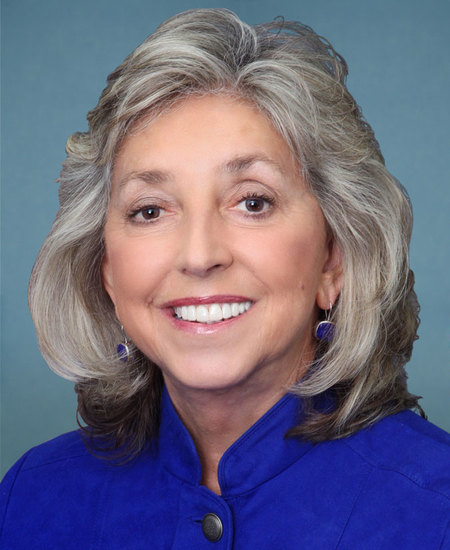
Rep. Dina Titus
Sponsored bills
Wildlife Conservation and Anti-Trafficking Act of 2021 This bill sets forth provisions relating to wildlife conservation, anti-trafficking and poaching, and illegal fishing. Specifically, the bill directs the Departments of Justice, the Interior, Commerce, State, and the Treasury to develop a plan of action for awards to whistleblowers of violations of laws applicable to wildlife trafficking; directs Interior to carry out the International Wildlife Conservation Program to, among other things, address global conservation threats and combat wildlife trafficking and poaching; provides funding for the conservation of certain endangered species; authorizes Interior, in consultation with the State Department, to station not less than one U.S. Fish and Wildlife Service officer in the primary diplomatic or consular post of the United States in a focus country or country of concern (i.e., countries engaging in wildlife trafficking); and directs Commerce to make amounts available for illegal, unreported, and unregulated fishing enforcement. The bill also modifies the federal criminal code to make wildlife trafficking and illegal fishing predicates with respect to the enforcement of certain criminal offenses, including racketeering and money laundering.
Responsible Education Mitigating Options and Technical Extensions Act or the REMOTE Act This act addresses the administration of certain Department of Veterans Affairs (VA) educational assistance benefits. First, the act extends through June 1, 2022, certain adjustments for veterans' education benefits that were put in place due to COVID-19. The act allows the VA to waive the requirement that an educational institution verify the enrollment of a student utilizing VA educational assistance if the VA determines the institution uses a flat rate tuition and fee structure that would make the use of a second verification unnecessary. The act provides an exception from the imposition of specified disciplinary actions (e.g., suspending course and program approval) in situations where an educational institution provides a commission, bonus, or other incentive payment to entities engaged in student recruiting or admission activities related to recruiting foreign students who reside in foreign countries and are ineligible for federal student assistance. Additionally, the act generally exempts from certain requirements and restrictions imposed by the VA or a state approving agency educational institutions (1) located in foreign countries, or (2) that provide information regarding the costs of a program of education using a form or template developed by the Department of Education. The act also exempts educational institutions located in foreign countries from (1) having records and accounts that pertain to an individual who is not receiving VA educational assistance examined by government representatives, and (2) furnishing certain information related to tests that require payment. The act authorizes the VA, in certain circumstances, to provide educational assistance (including a housing stipend) to veterans or eligible persons who are in their last academic period (e.g., semester) of a program of education and are pursuing the program on less than a half-time basis. Specifically, such assistance may be provided if the number of credits the person needs to complete the program of education is less than the number of credits that would constitute enrollment on more than a half-time basis for that last academic period and the person (1) is enrolled in or has completed every course offered by the program of education during that academic period, and (2) enrolls in an additional course that is not required for the program of education to reach enrollment on a more than a half-time basis. The act extends certain loan fee rates through January 14, 2031, under the VA's home loan program. Finally, the act removes the cap on the number of full-time VA employees who provide equal employment opportunity counseling.
This resolution recognizes the anniversaries of the International Day of Peace, Human Solidarity Day, the International Day of Living Together in Peace, and other specified international days. The resolution also expresses that Congress commits to (1) encouraging the people of the United States to continue commemorating international days of peace, coexistence, and cooperation; and (2) supporting activities on such days that promote thoughtful, deliberative, and cooperative actions to achieve peace.
Downwinders Parity Act of 2021 This bill expands a program that compensates individuals who were exposed to radiation from atmospheric nuclear testing and subsequently developed specified cancers. Under current law, the program compensates, among others, individuals who were present in a designated geographic area during a period of nuclear testing. The bill expands that area to include all parts of Clark County, Nevada, and Mohave County, Arizona. Current law restricts eligibility to certain parts of those counties. The Department of Justice must report on efforts to inform individuals newly eligible for compensation about the program.
This bill posthumously provides for the award of a Congressional Gold Medal in commemoration of the 13 service members who died on August 26, 2021, while stationed at Hamid Karzai International Airport in Afghanistan.
Get Foreign Money Out of U.S. Elections Act This bill imposes prohibitions and requirements related to campaign contributions and expenditures from foreign sources. For example, the bill bans campaign contributions and expenditures by domestic business entities that are controlled, influenced, or owned by foreign nationals.
This resolution recognizes the 73rd anniversary of the Universal Declaration of Human Rights, supports the designation of Human Rights Day, and encourages the observation of Human Rights Day and a continued commitment to upholding human rights around the globe.
Food Donation Improvement Act of 2021 This bill expands liability protections for the donation of food and grocery products. Specifically, the bill expands the liability protections to include donations of an apparently fit grocery product or apparently wholesome food for which the recipient is charged a good Samaritan reduced price that is no greater than the cost of handling, administering, and distributing the food or product; or that is donated directly to a needy individual by a retail grocer, wholesaler, agricultural producer, restaurant, caterer, school food authority, or institution of higher education. The Department of Agriculture must issue regulations that clarify the quality and labeling standards that food products donated under the Bill Emerson Good Samaritan Food Donation Act must meet to be eligible for liability protection.
Protecting Our Democracy Act This bill addresses issues involving (1) abuses of presidential power; (2) checks and balances, accountability, and transparency; and (3) election integrity and security. Specifically, regarding abuses of presidential power, the bill requires the Department of Justice (DOJ) and the President to submit to Congress specified materials relating to certain pardons, prohibits presidential self-pardons, suspends the statute of limitations for federal offenses committed by a sitting President or Vice President, prohibits the acceptance of foreign or domestic emoluments, and sets forth provisions regarding Office of Government Ethics and Office of Special Counsel jurisdiction and enforcement authority. To address checks and balances, accountability, and transparency, the bill authorizes specified actions to enforce congressional subpoenas, imposes limits on presidential declarations of emergencies, requires DOJ to maintain a log of specified communications between it and the White House, requires cause for removal of inspectors general, increases whistleblower protections, and requires a candidate for President or Vice President to provide copies of tax returns for the 10 most recent taxable years to the Federal Election Commission. To address election integrity and security, the bill requires federal campaign reporting of foreign contacts, makes various changes to requirements concerning foreign donations to political campaigns and candidates and foreign contributions to online electioneering communications, prohibits distribution of materially deceptive audio or visual media prior to an election (i.e., deepfakes), and establishes a program to support states and localities transition to ranked choice voting systems.