

Maddy summaryHJRES 147 is a joint resolution to terminate a national emergency declared by the President on July 30, 2025, which authorized additional duties on imports from Brazil. Ending this emergency would remove the legal basis for those extra tariffs, eliminating the additional import costs for Brazilian goods. The resolution relies on Section 202 of the National Emergencies Act to formally end the emergency declaration. This change directly affects U.S. importers of Brazilian products and Brazilian exporters by removing the extra duties imposed under the emergency authority.
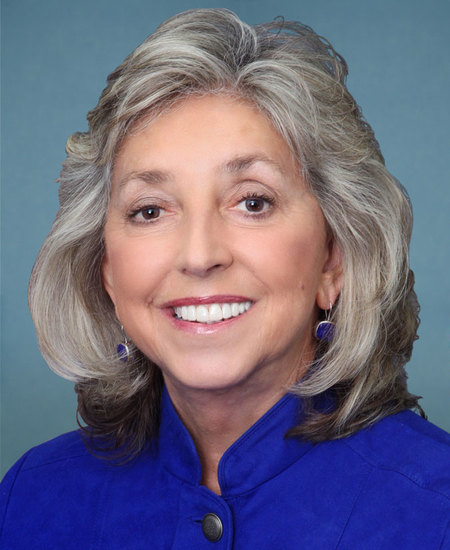
Rep. Dina Titus
Sponsored bills
Maddy summaryHR 7307, the SUPPLIES Act, requires the State Department and USAID to create procedures within 60 days for handling unused supplies (like medicine, vaccines, or food) after foreign aid projects end. These procedures must prioritize preventing waste by ensuring supplies aren't destroyed, diverted, or expired without use. The bill mandates that these procedures be published online by both agencies. It directly affects U.S. government agencies and foreign aid partners managing aid supplies. The law defines "commodity" broadly to include perishable items held in warehouses or storage facilities for foreign assistance programs.
Maddy summaryHR 6821, the Protect Our Students Act, redirects federal highway safety funds to improve school zone safety. It increases the required allocation of these funds for school zone improvements from 40% to 50% and authorizes specific safety measures including crossing guards, flashing lights, visible signage, crosswalks, traffic calming, and automated enforcement. The bill directly affects students walking to school, local schools, and communities by mandating that federal highway safety programs fund these targeted school zone upgrades. This changes how existing federal transportation funds can be used, focusing resources on proven safety infrastructure.
Maddy summaryThe MOVE Act requires the U.S. Department of Transportation to study how micromobility devices (like e-scooters, e-bikes, and electric skateboards) impact road safety, particularly for children, young adults, and other vulnerable road users. It mandates the creation of best practices and a public education program covering device safety, speed limits (max 20 mph for micromobility), and state laws on age, helmets, and registration. The bill also updates federal safety programs to include emerging micromobility safety issues. It directly affects nonmotorized road users and micromobility device operators by providing safety guidance based on data, not by changing existing laws. The focus is on improving safety awareness through education, not imposing new regulations.
Maddy summaryThe Emergency Alert Grant Fairness Act requires the Federal Emergency Management Agency (FEMA) to open applications for its Next Generation Warning System grants for at least 30 days each year. It also explicitly includes public broadcasting entities (as defined in the Communications Act of 1934) as eligible recipients for these grants. This bill directly affects FEMA's grant administration process and public broadcasting organizations that provide emergency alert services. The key change is standardizing the application window and expanding eligibility to ensure public broadcasters can access funding for emergency alert systems.
Maddy summaryHJRES 144 is a congressional disapproval resolution targeting a specific rule issued by the Department of Veterans Affairs (VA) on December 31, 2025, which addressed "Reproductive Health Services" (90 Fed. Reg. 61310). This resolution directs Congress to disapprove the VA rule under Chapter 8 of Title 5, U.S. Code, meaning the rule would have no legal effect if passed. The bill directly affects the VA's implementation of reproductive health services for veterans, as it seeks to nullify the agency's existing policy. This is a procedural measure, not a substantive policy change, aimed solely at blocking the VA's rule through congressional action.
Maddy summaryHR 7255, the Santini-Burton Modernization Act of 2026, updates land management provisions for the Lake Tahoe Basin. It directly affects the Washoe Tribe of Nevada and California by authorizing the Secretary of Agriculture to transfer funds to the Tribe for acquiring and managing culturally significant land within the Basin. Key mechanisms include requiring consultation with the Tribe, Tahoe Regional Planning Agency, and local governments when developing annual spending plans, and specifying land management activities such as preserving cultural sites, maintaining forest health, and protecting water quality. The bill ensures transferred funds count as non-Federal matching funds and prioritizes projects aligned with the Tahoe Regional Planning Agency’s environmental goals.
Maddy summaryHR 7252, the Restoring Community Trust Act of 2026, repeals Section 642 of the 1996 Illegal Immigration Reform and Immigrant Responsibility Act (8 U.S.C. 1373). This provision currently requires state and local government agencies to share information about individuals with federal immigration authorities. The bill removes this mandate, allowing states and localities to decide independently whether to share such information with federal immigration officials, consistent with their own laws. It does not prohibit voluntary cooperation but aims to restore state authority over internal operations and reduce legal uncertainty for local governments.
Maddy summaryThis bill requires the Social Security Administration to regularly inform disabled beneficiaries about the Ticket to Work program. Specifically, the Commissioner must send program information to each disabled beneficiary within one year of the law's enactment, and then every six months thereafter. The program helps disabled individuals access employment services while retaining benefits. This change directly affects Social Security disability beneficiaries by mandating ongoing outreach about work support options, without altering the program's existing rules or benefits.
Maddy summaryHR 7271, the Evan Anzoo Memorial Act, requires the Comptroller General to produce a report investigating deaths linked to USAID service cuts. The bill mandates a one-year report estimating 2025 deaths and five-year future deaths due to USAID stop-work orders, plus an assessment of whether specific individuals (like Evan Anzoo, 5, South Sudan, who died after losing HIV treatment) died because of lost USAID services. It also requires an interim update within 180 days and a list of other verified deaths tied to these service disruptions. The act does not change USAID policy but directs a factual review of impacts from prior USAID service reductions.