

Maddy summaryThis bill directs the Secretary of Health and Human Services to create a program focused on researching how environmental factors, such as air pollution, chemicals, and heavy metals, may contribute to neurodegenerative diseases like Alzheimer's and Parkinson's. The legislation would establish collaborative research centers at universities and medical institutions to study these environmental links, train scientists, and share findings with the public and healthcare professionals. The program includes provisions for creating a national data system and information clearinghouse to track disease patterns and environmental exposures across different communities. Funding of up to $50 million annually through 2031 is authorized to support these research efforts, with biennial reports required to Congress on progress and outcomes.
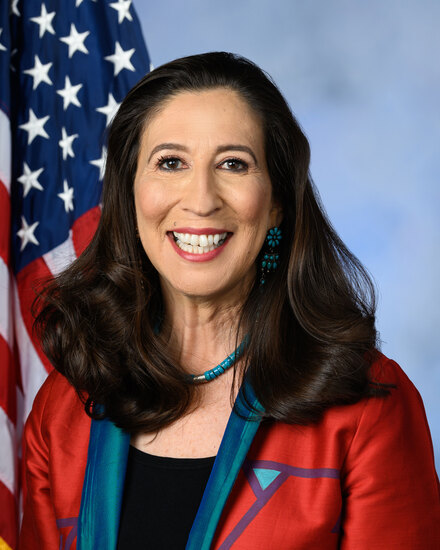
Rep. Teresa Leger Fernandez
Sponsored bills
Maddy summaryHR 7736, the RELIEF Act, requires U.S. Customs and Border Protection to refund tariffs collected under the International Emergency Economic Powers Act (IEEPA) on imports entered on or after January 1, 2025. It directly affects importers of record by mandating automatic refunds within 90 days of the bill's enactment, without requiring them to submit applications or protests. The bill directs Customs to use existing data to calculate and disburse refunds for all affected tariff collections, including entries involving goods withdrawn from warehouse for consumption. This policy change eliminates the need for importers to seek refunds through separate processes, streamlining the recovery of overpaid duties.
Maddy summaryHR 7740, the African American History Act of 2026, authorizes $4 million annually for the National Museum of African American History and Culture to develop educational resources and support teaching about African American history. The bill directs the museum to create digital and print materials, provide teacher training, and expand access to curriculum resources for K-12 and college classrooms. It requires annual reports to Congress on fund usage and expires in 2030. This program directly affects educators and students by enhancing classroom materials and professional development on African American history.
Maddy summaryHRES 1077 is a non-binding resolution expressing the House of Representatives' support for the U.S. Postal Service to honor Lieutenant Colonel Charity Adams Earley with a commemorative stamp. It directly requests the Citizens’ Stamp Advisory Committee (part of the USPS) to recommend such a stamp to the Postmaster General. The resolution highlights Adams Earley’s historic role as the first Black officer in the Women’s Army Corps (WAC), her leadership of the 6888th Central Postal Directory Battalion during WWII, and her post-war advocacy for Black leadership development. This resolution does not create new law or funding but formally urges the USPS to recognize her legacy through a postage stamp.
Tribal Trust Land Homeownership Act of 2025 This bill sets forth requirements for the processing of a proposed residential leasehold mortgage, business leasehold mortgage, land mortgage, or right-of-way document by the Bureau of Indian Affairs (BIA). The BIA must notify lenders upon receipt of such documentation, perform a preliminary review of such documents not later than 10 days after receipt, and approve or disapprove of such documents within 20 or 30 days, depending on the type of application. Additionally, the bill sets forth requirements for the BIA regarding (1) response times for the completion of certified title status reports, (2) notification of delays in processing, and (3) the form of notices and delivery of certain reports. The bill also provides relevant federal agencies and Indian tribes with read-only access to the Trust Asset and Accounting Management System maintained by the BIA. The Government Accountability Office must report on digitizing documents for the purpose of streamlining and expediting the completion of mortgage packages for residential mortgages on Indian land. Finally, the bill establishes within the BIA's Division of Real Estate Services the position of Realty Ombudsman.
Maddy summaryThis bill authorizes a Congressional Gold Medal to honor the Freedom House Ambulance Service, which pioneered the first paramedic-based emergency medical system in the U.S. in the 1960s. It recognizes the service's role in establishing professional pre-hospital care standards, training marginalized residents (including the first women paramedics), and influencing national EMS protocols despite being defunded in 1975. The medal will be presented to the National Museum of African American History and Culture for public display, as specified in the bill. The legislation is purely commemorative, with no new policy or funding changes, focusing on preserving the service's historical significance in medical innovation and civil rights.
Maddy summaryThis bill requires most employers to provide workers with earned paid sick leave. Employees would earn 1 hour of paid sick time for every 30 hours worked, up to 56 hours per year, which can be used for their own illness, medical care, caring for family members (including children, parents, spouses, domestic partners, or other family-like relationships), or addressing domestic violence, sexual assault, or stalking situations. The bill prohibits employers from retaliating against workers who use this leave and requires employers to inform employees about their rights. It ensures that workers who leave and return to the same employer within a year can reinstate their unused sick leave. This law would not override more generous state or local paid leave policies.
Maddy summaryHRES 1058 is a non-binding House resolution recognizing the federal government’s duty to develop a Transgender Bill of Rights. It calls for specific policy changes, including amending civil rights laws to explicitly prohibit discrimination based on gender identity in employment, housing, and public accommodations; protecting access to gender-affirming medical care; and streamlining legal recognition of gender identity on federal documents like passports and voter registration. The resolution also proposes expanding protections for transgender and nonbinary individuals in healthcare, education, immigration, and correctional facilities, while emphasizing community-led policy development. As a resolution, it does not create new law but sets a framework for future legislative action.
Department of Homeland Security Appropriations Act, 2026 This bill provides FY2026 appropriations for various agencies and offices within the Department of Homeland Security (DHS), except for U.S. Immigration and Customs Enforcement (ICE), U.S. Customs and Border Protection (CBP), and management and oversight activities of the Office of the Secretary. Specifically, the bill provides appropriations to DHS for the Federal Protective Service, the Office of Inspector General, the Transportation Security Administration, the U.S. Coast Guard, the U.S. Secret Service, the Cybersecurity and Infrastructure Security Agency, the Federal Emergency Management Agency (FEMA), U.S. Citizenship and Immigration Services, the Federal Law Enforcement Training Centers, and the Science and Technology Directorate. The bill does not provide appropriations for some agencies and activities that have been funded in prior DHS appropriations acts, including ICE, CBP, and management and oversight activities of the Office of the Secretary.
Maddy summaryThe Tribal Warrant Fairness Act updates federal law to ensure Indian tribes have equal standing with local and state governments in specific law enforcement contexts. It amends the U.S. Marshals Service statute to explicitly include "Tribal fugitive matters" when requested by an Indian Tribe, and revises the Presidential Threat Protection Act to add "Indian Tribes" and "Tribal law" to relevant provisions. These changes directly affect tribal governments by requiring federal agencies to recognize tribal requests and jurisdiction in warrant-related matters and threat protection. The bill makes no new policy but clarifies existing federal procedures to include tribal authorities on par with local and state entities.