

Maddy summaryHR 4832, the Indian Programs Advance Appropriations Act of 2023, changes how funding is allocated for key Native American programs. It requires that starting in fiscal year 2024, new budget authority for specific accounts under the Bureau of Indian Affairs, Bureau of Indian Education, and Indian Health Service must be made available immediately for the current fiscal year *and* include advance funding for the next fiscal year. The bill mandates annual reports by July 31 each year, including workload estimates and resource sufficiency assessments developed with tribal consultation. This affects tribal programs funded through accounts like Operation of Indian Programs, Contract Support Costs, and Indian Health Services, aiming to improve budget planning predictability.
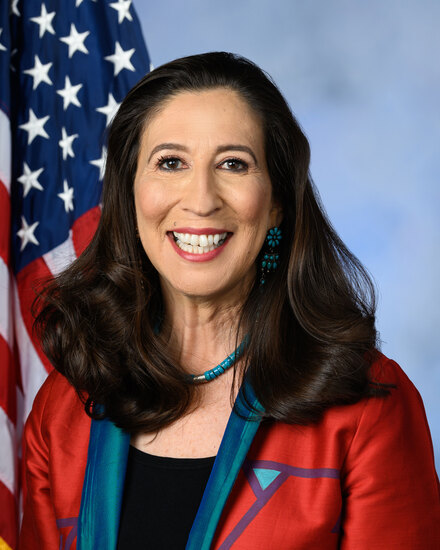
Rep. Teresa Leger Fernandez
Sponsored bills
Maddy summaryThis bill amends federal farm disaster assistance to provide full coverage for crop losses caused by drought or disasters for farmers relying on acequias (traditional community irrigation systems in New Mexico). It requires the USDA to cover all losses suffered by these producers under Section 196 of the Federal Agriculture Improvement and Reform Act, rather than partial assistance. The bill also eliminates special permits needed for routine acequia maintenance or minor repairs on federal land, allowing community members to manage infrastructure without federal approval. Finally, it mandates a USDA report within two years detailing how many acequia-dependent farmers received aid, program accessibility, and targeted assistance efforts.
Maddy summaryThis bill provides additional federal funding to help state agencies cover administrative costs for three nutrition programs. Specifically, it allocates 70% of the funds to the Commodity Supplemental Food Program, 20% to the Emergency Food Assistance Program, and 10% to the Senior Farmers' Market Nutrition Program for their operational expenses. The funding totals $1 million annually for fiscal years 2024 through 2028. It directly affects state agencies managing these programs by increasing their resources for administrative tasks, without changing program benefits or eligibility for participants.
This concurrent resolution opposes actions that undermine Israel's future as a Jewish, democratic state. The resolution expresses that democracy is at the core of the special relationship between the United States and Israel, and that Congress stands with all Israelis seeking to defend liberal democracy, judicial review, and independent political institutions.
Maddy summaryHR 4963, the Tax Fairness for Workers Act, would restore tax deductions for certain employee expenses. It creates an above-the-line deduction for union dues and expenses paid by wage-earning employees, and allows miscellaneous itemized deductions for other work-related expenses (like uniforms or supplies) that were previously disallowed after 2017 tax law changes. These provisions directly affect employees who pay union dues or incur qualifying job-related costs. The bill amends specific sections of the Internal Revenue Code to make these deductions available for taxable years beginning after December 31, 2022. It does not change tax rates or provide new benefits, only reinstating previously eliminated deductions for eligible workers.
Maddy summaryThis bill establishes new federal requirements for employers to prevent heat-related illness and injury among workers. It mandates that employers provide safe work environments by implementing specific measures, including access to cool water, scheduled rest breaks in shaded areas, employer-paid cooling equipment, and training for employees and supervisors on recognizing heat illness symptoms. The Secretary of Labor must create these standards within one year, requiring employers in high-heat occupations (like construction, agriculture, and outdoor labor) to adopt engineering controls, administrative schedules, and health protocols. Key provisions include ensuring hydration, rest, and language-accessible training, while preserving existing safety protections and allowing for updates as scientific evidence evolves.
Maddy summaryHR 4942 extends and modifies the Conrad State 30 program, which allows states to sponsor foreign medical graduates to work in medically underserved areas in exchange for a commitment to practice for three years. The bill directly affects foreign medical graduates seeking to work in the U.S., states that sponsor them, and health facilities in underserved communities. Key provisions include creating mechanisms for physicians to change employers or states if they face issues with their current employment, adding requirements for employment agreements (including prohibitions on non-compete clauses), and establishing exceptions to the three-year work requirement under certain circumstances. The bill also creates a process for states to recapture waiver slots when physicians leave their employment and requires annual reporting on the program's usage. These changes aim to improve physician retention in underserved areas by providing more flexibility and protections for foreign medical graduates.
Maddy summaryHR 3933, the TAP Promotion Act, requires standardized presentations about Veterans Affairs (VA) benefits during military transition counseling for service members separating from the armed forces. These presentations must be approved by the VA, delivered by authorized veterans service organizations (VSOs), and include information on how VSOs assist with VA claims - without encouraging membership in specific organizations. The bill mandates a one-hour limit per presentation and requires the VA to submit annual reports to Congress detailing which VSOs presented, attendance numbers, and recommendations for improvement. This policy directly affects service members preparing for civilian life and the VSOs providing these transition resources.
Maddy summaryHR 4893, the Scientific Integrity Act, requires federal agencies that fund, conduct, or oversee scientific research to adopt policies preventing political interference in science. The bill mandates these agencies to prohibit suppression or distortion of research findings, establish Scientific Integrity Officers to enforce policies, and implement training and reporting systems. It directly affects scientists and engineers employed by or contracted with covered agencies (like the EPA or NIH), ensuring their work remains free from political pressure. Key mechanisms include annual public reporting on misconduct complaints, whistleblower protections, and requiring scientific conclusions to be based on evidence, not ideology.
Maddy summaryHR 4889, the Raise the Wage Act of 2023, would gradually increase the federal minimum wage for most workers to $15.50 per hour by 2027, with specific annual targets: $9.50 starting in 2023, rising to $11.00 after one year, $12.50 after two years, and $15.50 after four years. It would also phase out the separate lower minimum wage for tipped employees (starting at $6.00/hour) by aligning their pay with the regular minimum wage by 2028, while requiring employers to let workers keep all tips. The bill includes similar phased increases for workers under 20 and transitions toward fairer wages for workers with disabilities under special certificates, which would sunset after 2028. Future annual increases after 2028 would tie the minimum wage to the median hourly wage of all workers.