

Maddy summaryThis bill (HJRES 63) would rename the Robert E. Lee Memorial, a National Park Service site in Arlington, Virginia, to "Arlington House National Historic Site." It directly affects the National Park Service, which manages the site, and all federal government documents, maps, and records referencing the location. The key provision updates all official references to the site to the new name and repeals two prior resolutions that established the memorial. As a procedural renaming bill, it does not create new policies or funding but changes the site's official designation.
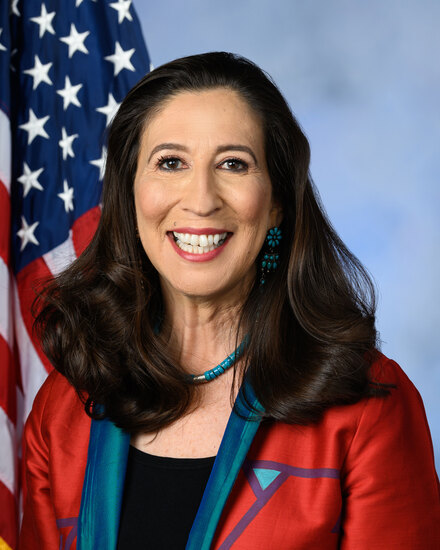
Rep. Teresa Leger Fernandez
Sponsored bills
Maddy summaryThe Keep Americans Safe Act (HR 1674) restricts the sale, transfer, and possession of large capacity ammunition feeding devices (LCFDs) - defined as magazines or similar devices holding more than 15 rounds of ammunition - for most individuals. Exceptions allow law enforcement officers (including campus law enforcement), retired officers, and nuclear security personnel to possess LCFDs under specific conditions. The bill requires new LCFDs to have serial numbers and manufacturing dates, permits federal seizure of violative devices, and authorizes federal grant programs to fund buy-back initiatives for LCFDs. It directly affects gun owners and manufacturers while preserving access for covered law enforcement and security personnel.
Maddy summaryThe PAST Act of 2025 amends the Horse Protection Act to ban harmful practices known as "soring," which deliberately cause pain to horses to exaggerate their gait for shows. It specifically prohibits devices like action devices (e.g., boots causing friction) and weighted shoes on Tennessee Walking Horses, Racking Horses, and Spotted Saddle Horses at events. The bill increases penalties, including escalating disqualifications for repeat offenses (180 days → 1 year → 3 years) and raises fines for violations to $5,000 per offense. It also requires stricter licensing for inspectors and mandates public posting of violation records to help event organizers enforce rules.
Maddy summaryThe American Dream and Promise Act of 2025 would create pathways to permanent residency for certain immigrant youth who entered the U.S. as children (Dream Act component) and for individuals from countries with Temporary Protected Status or Deferred Enforced Departure (American Promise Act component). To qualify, applicants must meet continuous physical presence requirements (since January 1, 2021 for Dream Act applicants, and for 3+ years for American Promise applicants), pass background checks, and satisfy educational or employment criteria. Conditional permanent resident status would be granted initially, with the option to convert to full permanent residency after meeting additional requirements like earning a degree, serving in the military for two years, or demonstrating three years of earned income. The bill includes fee exemptions for low-income applicants, establishes a grant program to assist applicants with legal help, and creates specific procedures for background checks and appeals.
Maddy summaryThis bill amends Medicare rules to allow nurse practitioners and physician assistants to certify diabetic shoe coverage for Medicare beneficiaries with diabetes, expanding the current requirement that only physicians could provide this documentation. It directly affects Medicare patients needing specialized footwear due to diabetes and healthcare providers like NPs and PAs who would now be authorized to meet the certification requirement. The key change modifies Section 1861(s)(12) of the Social Security Act to insert "nurse practitioner, or physician assistant" in all relevant sections of the documentation rules. This update simplifies access to covered diabetic shoes by broadening which healthcare professionals can issue the necessary certification.
Maddy summaryEthan's Law requires gun owners to store firearms securely in homes where minors live or where residents are legally prohibited from owning guns. It makes it unlawful to leave firearms unsecured if a minor or ineligible person could access them, with fines of $500 per violation and harsher penalties if injury or death occurs. The bill creates a federal grant program to help states implement similar secure storage laws and treats unsafe storage as negligence in legal cases. It directly affects households with children or residents who cannot legally possess firearms, aiming to reduce accidental shootings and unauthorized access.
Maddy summaryThe Conrad State 30 and Physician Access Reauthorization Act extends and reauthorizes a program that allows foreign medical graduates to work in underserved U.S. communities after completing their training. It extends the program through 2021 (with retroactive effect), adds protections for physicians who have completed service requirements, and makes changes to visa requirements to better support physicians working in underserved areas. The bill requires states to maintain a 90% utilization rate of waivers to keep receiving the full allocation, and adds reporting requirements for the program. This bill directly affects foreign physicians seeking to work in underserved areas and the health care facilities that employ them.
Maddy summaryThe Navajo-Gallup Water Supply Project Amendments Act of 2025 updates the Navajo Nation's water project to better serve its communities. It expands the Project Service Area to include additional communities in New Mexico and Arizona, and creates a Deferred Construction Fund to manage costs for facilities that may be built later. The bill clarifies land trust provisions for the Navajo Nation and establishes separate trust funds for water resources development, operations, maintenance, and replacement costs for both the Navajo Nation and the Jicarilla Apache Nation. It also includes provisions for delivering non-Project water to communities in Utah under specific conditions while ensuring the project's timeline and funding remain intact.
Maddy summaryThis bill amends the Indian Health Care Improvement Act to replace the term "contract health care" with "purchased/referred care" throughout federal law. It ensures patients who pay out-of-pocket for authorized purchased/referred care (such as services arranged by the Indian Health Service) can receive reimbursement from the IHS within 30 days of submitting documentation electronically or in person. The IHS must establish these reimbursement procedures within 120 days and update all relevant documents, including the Indian Health Manual, within 180 days. The changes apply to all purchased/referred care authorized by the IHS after enactment, but do not affect tribal self-determination programs unless tribes agree to the new terms.
Maddy summaryHR 1444, the Zuni Indian Tribe Water Rights Settlement Act of 2025, establishes a settlement for the Zuni Tribe's water rights in the Zuni River Stream System by confirming the Tribe's water rights held in trust by the U.S. government. The bill creates a $655.5 million Trust Fund for water infrastructure development and management, plus $29.5 million for operation and maintenance, with funds to be used for projects like water treatment, irrigation systems, and watershed protection. It also protects approximately 217,000 acres of culturally significant land around Zuni Salt Lake by withdrawing Federal land from development and imposing management restrictions. The settlement ensures Tribal water rights cannot be forfeited for non-use and maintains existing water rights for individual allottees on Zuni Lands.