

Maddy summaryThis bill establishes federal protections and funding to expand access to in vitro fertilization and intrauterine insemination for individuals, military service members, and veterans. It requires most private health plans, Medicaid programs, and Medicare to cover these fertility treatments without imposing higher cost-sharing than other medical services. Additionally, the legislation mandates that the Department of Defense and the Department of Veterans Affairs provide specific fertility preservation and treatment benefits to uniformed service members and eligible veterans. The bill also includes preemption clauses that override state laws restricting these procedures and prohibits discrimination based on marital status, sex, or sexual orientation in the provision of care.
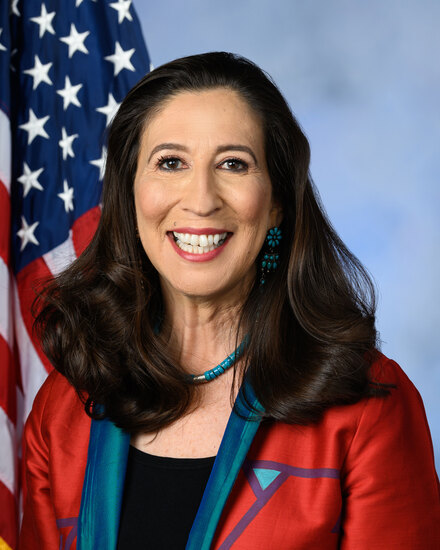
Rep. Teresa Leger Fernandez
Sponsored bills
Maddy summaryThe Protecting Home-Based Care for Rural Veterans Act of 2026 aims to safeguard funding for home health services provided to veterans living in rural areas. It requires the Department of Veterans Affairs to restore any reimbursement rates for homemaker and home health aide services that were lowered after December 31, 2025, and prevents future rate cuts without notifying Congress at least 90 days in advance. Additionally, the bill mandates annual reports to Congress detailing the availability of service providers in different regions and the methods used to calculate payment rates. A one-time report must also be submitted within 90 days of the law's enactment to explain how these rates were determined and whether input was gathered from service providers.
Maddy summaryThe CHILE Act of 2026 creates a new federal program to provide direct financial assistance to specialty crop producers facing adverse events like economic crises or market disruptions. Under this framework, the Secretary of Agriculture would calculate payments based on a producer's recent sales history and a specific payment factor designed to address crop losses. The bill sets a total funding limit of $5 billion for fiscal year 2027, which remains available until spent, and includes special rules to account for the higher input costs and diverse business structures common in specialty farming. Additionally, the legislation establishes a minimum payment threshold of $900,000 for large-scale farming operations that derive at least 75 percent of their income from agriculture.
Maddy summaryThis concurrent resolution formally recognizes the persistent wage gap between Black women and white, non-Hispanic men in the United States. It highlights data showing that Black women earn significantly less than their male counterparts and reaffirms Congress's support for existing laws that prohibit pay discrimination based on sex or race. The document does not create new laws or change policy but serves as a symbolic statement to raise awareness about the economic disparities faced by Black women.
Maddy summaryThe CDC Tribal Public Health Security and Preparedness Act amends the Public Health Service Act to formally include Indian Tribes, Tribal organizations, and urban Indian organizations in state and local public health emergency planning. It establishes a new funding stream that provides at least 10 cooperative agreements annually to these entities, with a minimum award amount determined through consultation and no requirement for matching funds. The bill also grants the CDC Secretary the authority to waive certain program regulations, except those related to labor standards and the environment, after consulting with Tribes to ensure effective program delivery. Additionally, the legislation requires the Secretary to conduct a review and submit a detailed report to Congress on the implementation and success of these tribal health initiatives within two years of enactment.
Maddy summaryThis bill strengthens the Epstein Files Transparency Act by giving state attorneys general and victims the legal right to sue the U.S. Attorney General if they unlawfully withhold, redact, or delay access to investigation records. It requires the Justice Department to provide unredacted copies of documents to state officials for use in investigations and to victims personally, while allowing redactions only to protect the privacy of other victims. The legislation also mandates that courts expedite these cases, removes common legal excuses for hiding documents, and imposes criminal penalties on federal employees who obstruct compliance. Additionally, it grants Members of Congress the authority to request full access to records and to file lawsuits if the Attorney General fails to comply within a set timeframe.
Maddy summaryThis bill requires Medicare Advantage plans to implement electronic pre-approval systems for medical services by 2028 and meet transparency reporting standards starting in 2027. Plans must publicly report data on approval/denial rates, appeal outcomes, response times, and technology use for pre-approval requests, including details on how denials relate to clinical criteria. It establishes a 24-hour response timeframe for certain requests and mandates annual reviews of pre-approval requirements based on data and input from seniors and providers. The law directly affects Medicare Advantage plans, seniors enrolled in these plans, and healthcare providers who submit pre-approval requests. These changes aim to make the pre-approval process faster, more transparent, and more accountable for seniors seeking covered medical services.
Maddy summaryThis resolution expresses support for designating July 10th as Journeyman Lineworkers Recognition Day to honor the workers who maintain the nation's electrical grid. The bill specifically recognizes the dangerous conditions these employees face, such as working at heights near live power lines and responding to disasters like hurricanes and wildfires. It also commemorates Henry Miller, the first president of the International Brotherhood of Electrical Workers, who died on July 10, 1896, while performing his duties. Ultimately, the measure encourages the public to observe this day with reflection on the contributions of lineworkers.
Maddy summaryThis bill establishes a new grant program administered by the National Endowment for the Arts to document the history, culture, and daily life of Americans in celebration of the nation's 250th anniversary. The program will provide funding to eligible nonprofit organizations, state arts agencies, and commissions to hire writers, photographers, and artists to create written, photographic, and digital works covering diverse communities across all regions of the United States. To ensure comprehensive coverage, the bill requires the NEA to appoint an advisory panel to set guidelines and mandates that the resulting projects collectively reflect the full breadth of American experience, from urban centers to rural and Tribal areas. Additionally, the legislation directs the creation of a public repository and an archive at the Library of Congress to preserve and distribute these works, while prohibiting the requirement for recipients to match the grant funds with their own money.
Maddy summaryThe LIFT the BAR Act aims to restore access to federal benefits for lawfully present noncitizens by repealing several restrictions imposed by the 1996 welfare reform law and a 2024 reconciliation bill. Specifically, it would allow eligible noncitizens to receive SNAP food assistance, Medicaid, CHIP, and child nutrition programs, while also updating legal terminology to refer to "noncitizens" rather than "aliens" in relevant statutes. The legislation includes provisions to ensure these individuals can qualify for premium tax credits and would require federal agencies to issue implementation guidance within 180 days of enactment.