

Maddy summaryThe Domestic Workers Bill of Rights Act (HR 3971) would establish key labor protections for domestic workers, including nannies, housekeepers, and caregivers who work in private homes. The bill requires written agreements for workers employed 8+ hours per week, provides earned sick days (1 hour for every 30 hours worked), mandates fair scheduling practices with 72-hour notice for schedule changes, and extends overtime protections to live-in domestic employees. It also prohibits unfair wage deductions, guarantees meal and rest breaks, and ensures privacy protections including no monitoring in private living spaces. The bill directly affects approximately 2.2 million domestic workers across the U.S., who are disproportionately women of color and immigrants. Enforcement would be handled by the Department of Labor through new complaint resolution mechanisms and oversight.
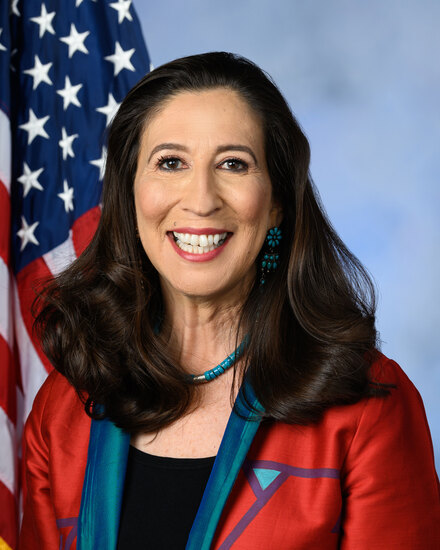
Rep. Teresa Leger Fernandez
Sponsored bills
Maddy summaryHRES 476 is a non-binding resolution condemning a violent antisemitic attack that occurred on June 1, 2025, during a peaceful march in Boulder, Colorado. The resolution expresses solidarity with the survivors and their families, including a Holocaust survivor injured in the attack, and recognizes the Boulder community's resilience. It calls for vigilance against rising antisemitism, supports investigations into hate crimes, and affirms that hate and violence have no place in the United States. This resolution directly affects the survivors of the attack, the Jewish community in Boulder, and aims to promote unity and safety without enacting new laws or policies.
Maddy summaryThis bill codifies existing protections for designated roadless areas within the National Forest System by prohibiting new road construction, road reconstruction, and logging in these areas. It directly affects National Forest lands already identified as "inventoried roadless areas" under the current Roadless Rule, which covers roughly 58 million acres. The key mechanism requires the Secretary of Agriculture to enforce these prohibitions, maintaining current protections without expanding restrictions to other lands or altering existing multiple-use management. The bill does not create new protected areas but legally solidifies the existing regulatory framework to preserve ecological and recreational values.
Maddy summaryThis bill, HR 3916 (My Body, My Data Act of 2025), requires businesses and other "regulated entities" to minimize collection and sharing of personal reproductive or sexual health data - such as pregnancy status, contraceptive use, or abortion-related information - and gives individuals specific rights. It mandates that entities provide individuals with easy access to their data, the ability to correct inaccuracies, and the right to request deletion of such information within 15 days. The law also requires clear privacy policies detailing data practices and prohibits retaliation against individuals who exercise these rights, such as charging higher prices or denying services. It applies broadly to most businesses (excluding HIPAA-covered healthcare providers) and is enforced by the FTC with private lawsuits allowed for violations.
Maddy summaryThe IHS Provider Expansion Act creates a new Office of Graduate Medical Education Programs within the Indian Health Service (IHS) to expand healthcare workforce training. It directly affects IHS facilities and Native American communities by establishing pipelines for healthcare professionals through residency programs and improving recruitment/retention at IHS sites. Key provisions include overseeing existing programs, coordinating with academic institutions, and forming an interagency working group (with VA, HHS, and CMS) to develop long-term plans. The bill authorizes $4 million annually for the office starting in fiscal year 2027, requiring quarterly progress reports to Congress until the working group terminates after 10 years.
Maddy summaryThis bill requires private firearm transfers between individuals to go through a licensed dealer who must conduct a background check. It applies to most private sales but includes exceptions for transfers between family members (like parents and children), law enforcement, emergencies preventing harm, and temporary loans at shooting ranges or for hunting. Dealers must provide background check notices in both English and Spanish. The law aims to prevent prohibited individuals from obtaining firearms through private transactions while maintaining existing state authority on firearm laws.
Maddy summaryHR 3885, the Community TEAMS Act of 2025, creates a new grant program to expand medical student clinical training in rural and medically underserved communities. It provides funding for consortia of medical schools partnered with rural health clinics, community health centers, or facilities in underserved areas to support student rotations in outpatient settings. The grants, lasting 1-5 years, require applicants to detail project plans, sustainability, and how the program will improve community access to healthcare. This directly affects medical students, training facilities, and residents of high-need areas by aiming to build a sustainable physician workforce in those locations.
Maddy summaryThis bill requires federal land agencies (like the Bureau of Land Management and National Park Service) to develop Tribal Co-Management Plans within one year, enabling federally recognized tribes to partner with agencies on forest and grassland management activities - such as restoration, planning, and recreation - on lands historically connected to those tribes. Tribes can enter agreements with the Forest Service to carry out these activities, with federal staff receiving training on indigenous knowledge and tribal history. The bill authorizes $50 million (2026-2030) to support these agreements, mandates consultation to protect tribal data sovereignty, and requires agencies to consider tribal cultural ties when evaluating partnership proposals.
Maddy summaryHR 3757, the Pride In Mental Health Act of 2025, provides $20 million annually (2026-2030) to fund grants for mental health services targeting LGBTQ+ youth, including nonbinary, intersex, and Two Spirit youth, and their families/caregivers. The bill mandates grantees to provide trauma-informed care, cultural competency training, school bullying prevention guidelines, and evidence-based practices while explicitly prohibiting the use of funds for conversion therapy or its promotion. It also requires the federal government to restore mental health reports on LGBTQ+ youth, conduct a national survey measuring mental health distress, and produce a report on mental health services for LGBTQ+ youth in foster care. The law directly affects these youth populations by expanding access to tailored mental health resources and data collection, with funding administered through the Substance Abuse and Mental Health Administration.
Maddy summaryThe bill's title ("Protect Vulnerable Immigrant Youth Act") does not align with its actual provisions. HR 3763 amends two sections of the Immigration and Nationality Act to adjust employment-based visa categories, specifically adding "or (J)" to existing numerical limitations and preference allocation rules. These changes would affect certain employment-based visa applicants (e.g., those in categories like "J" for religious workers or other specific employment groups) by removing numerical caps that previously applied to them. The bill contains no provisions related to youth protection, immigration status for minors, or direct safeguards for vulnerable immigrant youth.