

Maddy summaryThe John R. Lewis Voting Rights Advancement Act of 2023 would strengthen the Voting Rights Act of 1965 by updating the criteria for which states and localities must obtain federal preclearance before changing voting practices. It would establish new standards for proving vote dilution and vote denial by requiring courts to consider historical discrimination, racial polarization in voting, and whether voting practices disproportionately burden minority voters. The bill would also require states and localities to provide public notice of voting changes and share demographic data about polling locations. These changes would primarily affect jurisdictions with a history of voting rights violations, aiming to prevent discriminatory voting practices before they take effect.
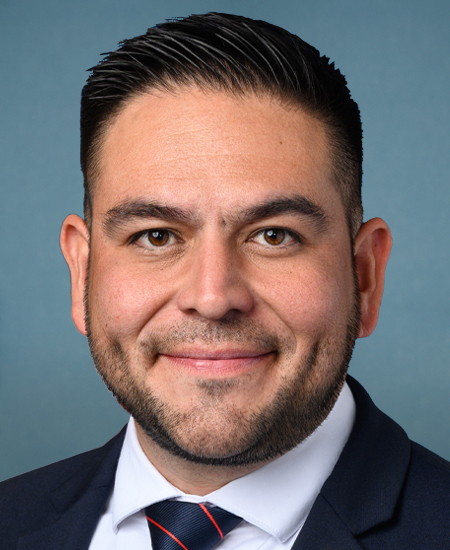
Rep. Gabe Vasquez
Sponsored bills
Maddy summaryThis bill amends existing law to allow Indian tribes, alongside counties and state governors, to retain and use funds from timber sales under "good neighbor agreements" for forest restoration projects. It directly affects tribes, counties, and state agencies participating in these agreements, which involve collaborative forest management on federal lands. The key change lets tribes keep timber sale revenue to fund restoration work under their agreements, just as counties and governors can. The bill does not create new programs but adjusts who can access these funds. It applies to projects initiated after 2018 or on or after the bill's enactment date.
Maddy summaryThe Humane Cosmetics Act of 2023 bans cosmetic animal testing in the United States, prohibiting companies from conducting or contracting such testing after its enactment (effective 1 year later). It also bans selling or transporting cosmetics developed using animal testing conducted after that date within U.S. interstate commerce. The law directly affects cosmetic manufacturers, retailers, and suppliers operating in the U.S. market, requiring them to use non-animal testing methods for safety evaluations. Exceptions exist for foreign regulatory requirements or when no alternative testing methods are available for specific ingredients.
Maddy summaryHRES 492 is a congressional resolution condemning the Iranian government's systematic persecution of the Baha'i minority, which directly affects Baha'is in Iran facing arrests, property confiscation, and imprisonment. The resolution specifically calls for Iran to immediately release Baha'is detained for their faith, end state-sponsored hate propaganda against them, and reverse discriminatory policies denying equal access to education, employment, and religious freedom. It urges the U.S. President and Secretary of State to demand Iran’s compliance with international human rights treaties and to use existing sanctions authorities (under the 2010 and 2012 Iran sanctions laws) against officials responsible for these abuses. The resolution does not impose new legal requirements but serves as a formal U.S. government statement of condemnation and a call for diplomatic and sanctions action.
Maddy summaryThis bill expands SNAP eligibility for college students by modifying existing rules. It allows students attending higher education institutions (as defined by the Higher Education Act) to qualify for SNAP benefits if they have a zero expected family contribution (EFC) from FAFSA or meet specific criteria for independent student status under the Higher Education Act. The changes replace outdated language about "employment" with "attending school or working" and remove barriers that previously excluded many low-income students. This directly affects low-income undergraduate and graduate students who may face food insecurity while enrolled in college. The policy change takes effect 180 days after enactment.
Maddy summaryHR 4745, the Delivering for Rural Seniors Act of 2023, creates a pilot program to expand home delivery of food packages under the Commodity Supplemental Food Program (CSFP) for low-income seniors in rural areas. The bill authorizes $10 million annually (2024-2026) for competitive grants to state agencies, which must prioritize rural service providers to cover costs like transportation, staffing, and outreach for home delivery. It requires grantees to report on delivery metrics, costs, and effectiveness annually. The program directly affects rural CSFP participants facing transportation barriers to accessing food assistance.
Maddy summaryThe Converting Our Waste Sustainably (COWS) Act of 2023 establishes a new federal program to help dairy and livestock producers reduce methane emissions and improve soil health. It directly affects eligible producers who currently use liquid manure lagoons or methane-capturing systems by offering cost-sharing (up to 90% federal funding) to adopt covered management measures like pasture-based grazing, solid manure separation systems, or composting practices. The program allocates $1.5 billion over five years (2024-2028), prioritizing projects near low-income communities and reserving funds for beginning, limited-resource, and socially disadvantaged farmers. Payments require producers to implement at least one approved measure for up to three years, with a $825,000 cap per entity over five years.
Maddy summaryHRES 645 is a non-binding House resolution recognizing August as "Chicano Heritage Month" to celebrate the contributions of Mexican Americans to U.S. history. It highlights historical figures like labor leaders Cesar Chavez and Dolores Huerta, landmark court cases (e.g., *Mendez v. Westminster* ending school segregation), and cultural impacts such as Selena's influence on music. The resolution does not create new laws or policies but serves as a symbolic acknowledgment by the House to honor this heritage. It encourages the public and institutions to observe the month with events celebrating Mexican American contributions.
Maddy summaryHR 5222 creates a trust fund requiring oil companies with over $50 million in annual revenue to pay an amount equal to the total compensation of their 10 highest-paid employees each year. The fund reimburses eligible workers (or their family members living within 20 miles of oil/gas sites for at least one year) for medical expenses related to asthma, heat illness, or other respiratory/cardiovascular conditions linked to air pollution from oil operations. Claims are processed in the order they’re received, with payments drawn directly from the fund without needing new congressional appropriations. This directly affects workers and residents near extraction sites who develop health issues tied to industry operations.
Maddy summaryHR 5113, the REACH Our Tribes Act, requires the U.S. Department of Agriculture to establish an annual consultation process with Tribal Governments on budget requests and program reauthorizations (like farm bills), including 30 days' notice before meetings and public reports summarizing discussions and responses. It also mandates USDA to publicly report on funding provided to Tribal entities through its programs and improve outreach for underutilized programs. Additionally, the bill creates an interagency task force to streamline application requirements for economic development programs and a public online repository listing all federal economic development programs available to tribes. These provisions directly affect Tribal Governments and Tribal entities (including tribes, tribal organizations, and businesses) by enhancing their input in budget decisions and improving access to federal resources.