

Maddy summaryHR 3885, the Community TEAMS Act of 2025, creates a new grant program to expand medical student clinical training in rural and medically underserved communities. It provides funding for consortia of medical schools partnered with rural health clinics, community health centers, or facilities in underserved areas to support student rotations in outpatient settings. The grants, lasting 1-5 years, require applicants to detail project plans, sustainability, and how the program will improve community access to healthcare. This directly affects medical students, training facilities, and residents of high-need areas by aiming to build a sustainable physician workforce in those locations.
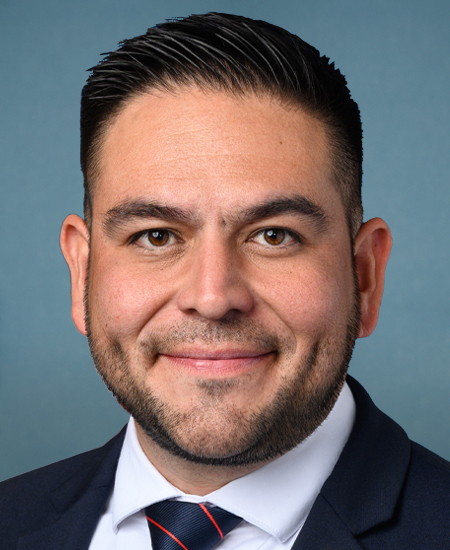
Rep. Gabe Vasquez
Sponsored bills
Maddy summaryHR 3873 (KO Cancer Act) directs the National Cancer Institute (NCI) to receive 25% more annual funding for cancer research in fiscal years 2026-2030 compared to 2022 levels, with these funds in addition to existing appropriations. It also requires the Department of Health and Human Services to study the causes of cancer drug shortages - including economic factors, supply chain issues, and regulatory delays - and submit a report with recommendations to Congress within one year of enactment. The bill directly affects the NCI, cancer researchers, and patients by increasing research funding and addressing drug access barriers. Its key provisions are a specific funding increase for NCI research and a mandated study on cancer drug shortages, aiming to improve treatment availability through evidence-based solutions.
Maddy summaryThis bill establishes a grant program allowing state, local, tribal, and territorial law enforcement agencies to hire retired officers for non-enforcement tasks like crime scene analysis, forensics, financial investigations, and IT support - excluding arrest or force authority. Agencies must verify retired officers have appropriate training or will complete continuing education and conduct background checks for disciplinary records using the National Decertification Index. The program requires annual Department of Justice audits to prevent fund misuse, with agencies having unresolved audit findings barred from receiving grants for two years. Priority for funding is given to agencies without unresolved audit findings over the past three years, and the Attorney General must report annual audit results to Congress.
Maddy summaryThis bill expands Medicare coverage for mental health services provided by clinical social workers to seniors in skilled nursing facilities. It removes an exclusion that previously prevented these services from being covered under Medicare's skilled nursing facility payment system. The bill specifically adds defined mental health service codes (including those for assessment and treatment) to Medicare's coverage, ensuring seniors can access these services without additional barriers. These changes will take effect for services provided on or after January 1, 2026.
Maddy summaryHR 649, the Whole Milk for Healthy Kids Act of 2025, amends the National School Lunch Act to allow schools participating in the program to offer students both organic and non-organic whole milk, in addition to reduced-fat, low-fat, and fat-free options. Key provisions include clarifying that milk fat in whole milk should not count toward saturated fat limits for meal compliance, prohibiting schools from purchasing milk from Chinese state-owned enterprises, and ensuring schools cannot be barred from offering the full range of milk types listed. The bill directly affects public and private schools serving the National School Lunch Program by expanding their milk options for students. It focuses on concrete policy changes to dietary offerings and sourcing restrictions within the school nutrition program.
Maddy summaryThis bill amends the Ysleta del Sur Pueblo and Alabama-Coushatta Indian Tribes of Texas Restoration Act to align their gaming regulations with the standard Indian Gaming Regulatory Act (IGRA). It eliminates redundant language that previously created an exception for these two tribes, ensuring they are regulated identically to all other tribes operating gaming facilities on tribal lands. The key provision adds a "Rule of construction" requiring IGRA to fully apply to their gaming activities and removes two sections (107 and 207) that caused regulatory overlap. This directly affects the Ysleta del Sur Pueblo and Alabama-Coushatta tribes in Texas, removing their unique regulatory status. The change ensures consistent federal oversight for tribal gaming across all 28 states with regulated tribal casinos.
Maddy summaryThis bill updates the International Bridge Act of 1972 to modernize border crossing permits. It expands the definition of "international bridge" to include land ports of entry on the U.S.-Mexico and U.S.-Canada borders, covering both bridges and border crossings. Crucially, it removes the requirement for environmental reviews under the National Environmental Policy Act (NEPA) for Presidential permits related to these projects. The bill directly affects developers and agencies seeking permits for border infrastructure projects by streamlining the approval process.
Maddy summaryHR 3629, the End Banking for Human Traffickers Act of 2025, requires U.S. financial institutions to improve their ability to detect and prevent money laundering linked to human trafficking. It mandates that the Financial Institutions Examination Council (within 180 days) review and enhance staff training, referral procedures, and detection methods for trafficking-related transactions. The bill also directs an interagency task force to analyze anti-trafficking efforts and submit recommendations - such as better information sharing, updated training, and policy changes - to Congress and federal banking agencies within 270 days. The law explicitly prohibits banks from denying services to trafficking victims and amends existing law to require countries to establish financial frameworks preventing trafficking proceeds. This affects all U.S. banks and financial institutions by changing their anti-money laundering protocols.
Maddy summaryHRES 441 is a symbolic House resolution expressing support for designating May 2025 as "Mental Health Awareness Month." It does not create new laws, allocate funding, or change existing policies - it solely aims to raise public awareness about mental health challenges. The resolution cites statistics on rising mental health issues (including youth depression, suicide rates, and disparities in care access) to underscore the need for greater attention. It encourages the public, schools, and organizations to use the month to promote mental well-being and reduce stigma, but contains no concrete policy changes or mandates.
Maddy summaryHR 3564, the Nuclear First-Strike Security Act of 2025, requires the President to notify key congressional leaders at least seven days before authorizing a first-use nuclear strike (using nuclear weapons without prior attack on the U.S. or allies). This applies unless the strike occurs under a congressional declaration of war, in response to a nuclear attack on the U.S. or an ally (defined as NATO, Japan, South Korea, or Australia), or during a launch-on-warning scenario. The bill mandates the Secretary of Defense to certify the strike's legality and necessity to congressional leaders before execution. It directly affects the President and Defense Department, adding a formal congressional notification step to nuclear decision-making. The law aims to create a deliberate review period for the most extreme military action.