

Climate Agricultural Conservation Practices Act This bill requires the Natural Resources Conservation Service (NRCS) to consider climate benefits in reviews or revisions of its conservation practice standards. Climate benefits include a reduction in agricultural greenhouse gas emissions, an increase in carbon sequestration, or mitigation against (or adaptation to) increased weather volatility. As background, NRCS administers most of the Department of Agriculture conservation programs, which assist producers and landowners who wish to practice conservation on agricultural lands. The NRCS conservation practice standards provide guidance and set out minimum quality criteria for implementing federally funded conservation practices.
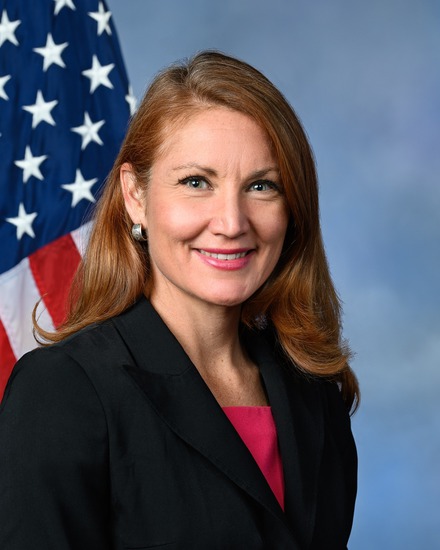
Rep. Melanie A. Stansbury
Sponsored bills
Save America's Forgotten Equines Act of 2025 or the SAFE Act of 2025 This bill permanently prohibits the slaughter of equines (e.g., horses and mules) for human consumption. (Current law prohibits the slaughter of dogs and cats for human consumption. This bill extends the prohibition to equines.) Specifically, this bill prohibits a person from knowingly (1) slaughtering an equine for human consumption; or (2) shipping, transporting, possessing, purchasing, selling, or donating an equine to be slaughtered for human consumption or equine parts for human consumption. The bill subjects a violator to a fine. The bill applies to conduct in or affecting interstate or foreign commerce or within the special maritime and territorial jurisdiction of the United States. However, it does not apply to an activity carried out by an Indian for a religious ceremony. As background, in recent years, the appropriations acts have prohibited the Department of Agriculture (USDA) from using federal funds to inspect horses before they are slaughtered for human consumption. Therefore, there are currently no USDA-inspected horse slaughter facilities in the United States.
Maddy summaryHR 1271 increases funding for scholarships at 1890 institutions - historically Black colleges and universities established under the Second Morrill Act - by adding mandatory annual support. It amends existing law to explicitly include bachelor's and graduate programs in scholarship eligibility and requires $15 million annually from the Commodity Credit Corporation starting in fiscal year 2025, to remain available until spent. This funding directly supports students at these institutions by expanding access to financial aid for higher education. The bill updates previous funding language to ensure ongoing support beyond 2023.
Maddy summaryHRES 261 is a symbolic resolution recognizing the heritage, culture, and contributions of Latinas in the United States. It celebrates Latinas' historical and ongoing roles in fields like business, military service, science, arts, and public office, while acknowledging persistent challenges like wage gaps and systemic barriers. The resolution specifically highlights that Latinas make up approximately 1 in 6 U.S. women (31 million people) and emphasizes their economic impact (contributing $1.3 billion to GDP in 2021) and cultural achievements. It does not create new policies or allocate funds but formally honors these contributions and calls for continued efforts to address inequities. This resolution directly affects Latinas as a recognized demographic group within U.S. society.
Maddy summaryHouse Resolution HRES 267 formally recognizes the 10th anniversary of Educators Rising (rebranded in 2015) and its work preparing high school students for teaching careers. The resolution commends the program for addressing teacher shortages through local "Grow Your Own" initiatives that connect students to teaching pathways. It highlights Educators Rising’s national reach (1,400+ chapters) and role in fostering educator diversity, but contains no new policies, funding, or direct impacts on individuals or schools. As a symbolic resolution, it does not create legal obligations or alter existing programs.
Maddy summaryHR 2467, America's Red Rock Wilderness Act, would designate approximately 1.3 million acres of public land across Utah as wilderness areas, protecting them from development and managing them for conservation. The bill specifically designates 77 wilderness areas in the Great Basin and Colorado Plateau regions, including lands within existing national monuments like Grand Staircase-Escalante and Bears Ears. It includes provisions for water rights protection, allows continued livestock grazing under certain conditions, and withdraws the designated lands from mining and mineral leasing. The bill also ensures Tribal rights are protected and requires the Secretary of the Interior to administer these areas according to wilderness management standards.
Maddy summaryThis bill, HR 2411, directs the U.S. government to immediately resume funding for the United Nations Relief and Works Agency for Palestine Refugees (UNRWA) by repealing two prior funding restrictions. It requires the State Department to restart payments to UNRWA under existing authorities and mandates the President to rescind a 2025 executive order ending UNRWA support. The bill affects Palestinian refugees in Gaza, Jordan, Lebanon, Syria, and the West Bank who rely on UNRWA for humanitarian aid, as well as U.S. funding mechanisms. It also requires quarterly reports through 2028 on UNRWA’s progress implementing accountability reforms from an independent review led by Catherine Colonna.
Maddy summaryHR 2398, the Rural Veterinary Workforce Act, amends federal tax law to exempt certain student loan repayment or forgiveness assistance from income tax for veterinarians working in rural areas. It specifically expands existing tax exclusions to include programs under the National Agricultural Research, Extension, and Teaching Policy Act (7 U.S.C. 3151a) and similar state-level programs designed to increase rural veterinary access. This change directly affects veterinarians participating in qualifying loan repayment or forgiveness programs in states prioritizing rural veterinary services. The policy change modifies IRS tax treatment to reduce the financial burden on veterinarians serving underserved rural communities.
Maddy summaryHRES 257 is a symbolic resolution expressing support for designating March 2025 as "Music in Our Schools Month." It does not create new laws or allocate funding but formally recognizes music education's value in schools. The resolution highlights music's role in cultural heritage, student development (including cognitive and social benefits), and existing disparities in access - particularly for students in underserved urban, rural, or high-poverty schools. It calls for greater support for music programs but does not mandate any policy changes or require action from schools or the government.
Maddy summaryHRES 256 designates March 2025 as Endometriosis Awareness Month, recognizing endometriosis as a common chronic condition affecting approximately 1 in 10 women of reproductive age. The resolution supports raising public awareness, promoting early detection and culturally competent care for those with the disease, and encourages increased research funding for better treatments and a potential cure. It specifically highlights the significant impacts of endometriosis, including diagnostic delays (3-11 years), chronic pain, high healthcare costs ($13,000+ annually per patient), and reduced workforce participation. This non-binding resolution directly affects women and girls living with endometriosis and aims to foster public education and support through designated awareness activities.