

Maddy summaryThe Tax Fairness for Workers Act (HR 2671) would allow certain employees to deduct work-related expenses directly from their gross income. Specifically, it creates an above-the-line deduction for union dues (amending IRC Section 62(a)(1)) and reinstates a deduction for other out-of-pocket work costs like uniforms or tools (amending IRC Section 67(g)), effective for 2025 tax years. This directly affects union members and workers with significant job-related expenses who previously could not deduct these costs. The bill removes the prior limitation that barred these deductions, making them available without needing to itemize. The policy change simplifies tax filing for affected workers by treating these expenses as deductible business costs.
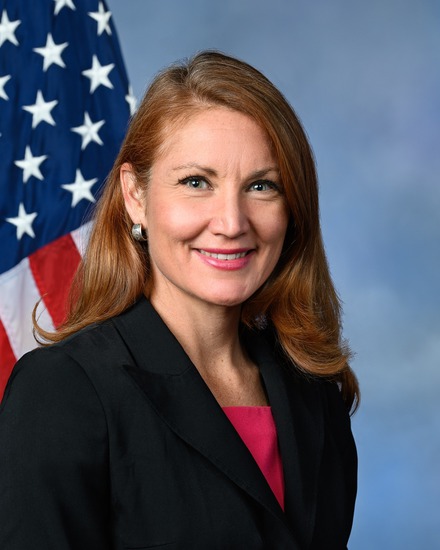
Rep. Melanie A. Stansbury
Sponsored bills
Maddy summaryThis bill, HR 2253 (Puppy Protection Act of 2025), sets new federal standards for commercial dog dealers who sell puppies to the public. It requires specific housing sizes based on dog size (e.g., 12-30 square feet per dog), daily exercise in safe outdoor areas, clean water and nutritious food twice daily, and annual veterinary exams including dental checks. The bill also limits breeding frequency (max 2 litters in 25 months), sets age minimums for breeding (18 months for small dogs, 2 years for large dogs), and mandates health screenings to prevent genetic diseases. These requirements apply directly to commercial dealers, with final regulations to be issued within 18 months of enactment.
Maddy summaryHR 2195, the Feed Hungry Veterans Act of 2025, would expand eligibility for food assistance under the Supplemental Nutrition Assistance Program (SNAP) to more veterans. It adds four new qualifying categories to the existing rules: veterans with a "catastrophically disabled" determination under military disability law, veterans under 65 receiving a pension, and veterans meeting specific combined disability rating thresholds. The bill amends the Food and Nutrition Act to include these new groups in SNAP eligibility, directly affecting veterans who currently may not qualify under existing disability rating criteria. The changes would take effect on October 1, 2030.
Maddy summaryThis bill, HR 2102 (Major Richard Star Act), allows veterans with combat-related disabilities to receive both full military retired pay and veterans' disability compensation simultaneously, without the previous offset that reduced retired pay. It directly affects veterans already eligible for both benefits due to combat-related injuries, removing the requirement that their retired pay be reduced by the disability compensation amount. The key provision amends Title 10 and Title 38 to eliminate the offset rule (sections 5304 and 5305 of Title 38) for these veterans. The change applies to payments starting after the bill’s enactment date, effective for all qualifying veterans. This is a policy change to increase financial support for affected veterans, not a new benefit.
Maddy summaryHRES 292 is a non-binding House resolution supporting "Financial Literacy Month" to raise awareness about personal finance education. It references statistics showing widespread financial literacy gaps, including 14.2% of U.S. households being unbanked or underbanked, only 42% of adults budgeting, and just 28 states requiring high school economics courses. The resolution calls on federal, state, local, school, nonprofit, and business entities to observe Financial Literacy Month with programs and activities. It does not create new laws or policies but aims to highlight the importance of financial education for managing money, credit, and debt.
Maddy summaryHR 2639, the Telehealth Access for Tribal Communities Act of 2025, permanently expands Medicare telehealth coverage for services provided by Indian health programs and urban Indian organizations. It allows these services to be delivered from any location within the U.S. (including patients' homes) starting April 1, 2025, and includes audio-only telehealth as a covered option. This directly affects tribal communities by removing location restrictions and expanding access to remote healthcare through their existing Indian health programs. The bill modifies Medicare rules to make these telehealth flexibilities permanent, ensuring continued coverage for eligible tribal patients.
Federal Firearm Licensee Act This bill establishes new security requirements and expands recordkeeping and reporting requirements for federally licensed dealers, importers, and manufacturers of firearms (i.e., federal firearms licensees, or FFLs). The bill also broadens the authority of the Bureau of Alcohol, Tobacco, Firearms and Explosives (ATF) to administer federal firearms laws and enforce violations. Specifically, bill requires FFLs to implement and comply with a plan to secure their business premises, conduct quarterly physical checks of their business inventories, maintain video surveillance of the area where firearms are sold or transferred, and initiate firearms-related background checks for employees. Additionally, the bill requires FFLs to report to the ATF any inventory firearm that is lost, stolen, or unaccounted for and to notify the ATF about default-proceed transactions (i.e., allowable firearm transfers to an unlicensed person prior to the completion of a background check when the submitted background check remains incomplete after three business days). Finally, the bill removes limits on the ATF's authority to conduct activities related to the administration of federal firearms laws. It enhances the ATF's inspection authority, including by removing the limit on the number of annual compliance inspections (currently, one), requiring inspections of high-risk FFLs, and authorizing an additional 650 investigators. Finally, the bill directs the ATF to deny an application for a federal firearms license if it would endanger public safety or if the applicant is unlikely to comply with the law.
Maddy summaryThis bill authorizes $250 million annually for four years to help schools on federally impacted lands (like tribal reservations and military bases) improve aging infrastructure. It creates two grant types: formula grants for schools with no bond capacity and competitive grants prioritizing schools with urgent safety issues like unsafe buildings or lack of clean water. Local schools must contribute 10-25% of project costs based on their "learning opportunity threshold," with the highest-priority schools receiving full federal funding. Funds can be used for construction, renovation, and repair to meet safety standards and improve learning environments. The bill addresses the significant infrastructure challenges reported by 65% of schools with facilities in poor condition.
Maddy summaryThis bill changes visa rules for foreign graduate students pursuing STEM master's or doctoral degrees in the U.S. It requires these students to apply for admission before starting their program and adds background checks and credential verification to their visa process. It also creates a new pathway to permanent residency for STEM degree holders who secure jobs in their field at median wage levels, and allows students to seek permanent residency while on student visas (dual intent). The bill directly affects international students in STEM fields, U.S. universities, and employers hiring these graduates.
Maddy summaryThe IDEA Full Funding Act (HR 2598) mandates specific annual federal funding levels for the Individuals with Disabilities Education Act (IDEA), directly affecting schools and students with disabilities nationwide. It requires the federal government to appropriate either a fixed dollar amount or a specified percentage (increasing annually from 4.5% to 40%) of a calculated total - based on the number of eligible students and average per-pupil costs - starting in fiscal year 2026 through 2035. The bill sets clear, escalating funding targets, with the higher of two calculated amounts (dollar figure or percentage) becoming available for obligation each fiscal year. This establishes a binding financial commitment to address long-standing underfunding of special education services under IDEA.