

Maddy summaryThis bill creates a National Resilience and Recovery Fund financed by specific taxes on crude oil and natural gas production. The fund will be supported by taxes from Gulf of Mexico offshore oil production, environmental taxes on crude oil, and a new windfall profits tax on large crude oil producers exceeding 300,000 barrels per day in 2023. The money will directly support four existing federal disaster resilience programs: Hazard Mitigation Grants, Building Resilient Infrastructure, Safeguarding Tomorrow Revolving Loans, and Flood Mitigation Assistance. The bill also clarifies that certain oil types (including oil from tar sands and oil shale) will be subject to these taxes, with the windfall tax applying to producers exceeding specified production thresholds.
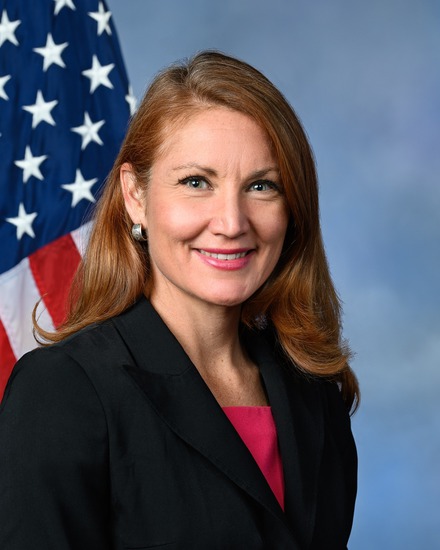
Rep. Melanie A. Stansbury
Sponsored bills
Maddy summaryHRES 846 is a symbolic resolution designating October 2025 as National Domestic Violence Awareness Month. It expresses the House's support for raising awareness about domestic violence and its impacts, and calls for continued congressional attention to ending domestic violence through existing programs. The resolution does not create new laws, allocate funding, or directly affect any specific groups - it is purely a statement of support. It references statistics on domestic violence prevalence but focuses on awareness rather than policy changes.
Maddy summaryThe American Energy Independence and Affordability Act extends multiple clean energy tax credits that were set to expire between 2025 and 2026. It specifically extends residential clean energy credits through 2034, clean electricity investment credits for wind and solar through 2032, and clean vehicle credits for electric vehicles through 2032. The bill also reinstates special rates for sustainable aviation fuel and modifies requirements for energy-efficient home improvements. These provisions directly affect homeowners installing solar panels, businesses investing in clean energy infrastructure, and manufacturers producing clean energy equipment.
Maddy summaryHRES 829 is a non-binding resolution recognizing the significant pay gap between disabled women and both disabled and nondisabled men, citing 2023 data showing disabled women earn 56 cents for every dollar earned by nondisabled men across all workers. It specifically highlights steeper disparities for disabled women of color (e.g., 54 cents for disabled American Indian and Alaska Native women) and those with disabilities affecting independent living (36 cents for every dollar). The resolution identifies systemic barriers like discrimination, inadequate vocational services, and occupational segregation as key contributors to these inequities but does not create new laws or funding. It reaffirms the House’s commitment to advancing equal pay without proposing concrete policy changes.
Maddy summaryHR 5813, the Women’s Health and Cancer Rights Modernization Act of 2025, requires health insurance plans to cover all medically necessary breast or chest wall reconstruction services following breast cancer treatment, including mastectomy or breast-conserving surgery. It mandates coverage for every reconstruction method (like implants, tissue flaps, or future recognized techniques), symmetrical surgery for the other breast, custom prostheses, and treatment of complications like lymphedema. Health plans must ensure at least one in-network provider for each reconstruction type, provide annual written notices to patients about this coverage, and cannot deny coverage or penalize providers for following these requirements. This applies to group and individual health insurance plans, with no effect on stricter state laws requiring broader coverage.
Maddy summaryThe Tribal Housing Innovation Act (HR 5825) creates a competitive grant program through the Department of Housing and Urban Development (HUD) to fund sustainable housing on tribal lands. It provides up to $150 million annually for Indian Tribes or tribal housing groups to build new residential units with sustainable features (like solar panels, energy-efficient appliances, or insulation) or add such features to existing units. Grants require that units be rented only to tribal members, and recipients must report on the number of units built/modified, features added, and tenant demographics. The program mandates annual reporting to Congress on national impacts, aiming to improve housing sustainability while prioritizing tribal communities.
Maddy summaryHR 5824, the Tribal Affordable Housing Act, creates a new HUD grant program to help Native American tribes build or improve housing on tribal lands. It allocates $150 million annually starting in 2026 for competitive grants to tribes or tribal housing entities that historically received under $500,000 in HUD funding. Grants fund either new residential units or necessary improvements (like repairs or additions) to existing units. The program operates under existing rules from the 1996 Native American Housing Act.
Maddy summaryHR 5799, the FALCON Act of 2025, requires federal agencies, contractors, and grant recipients to comply with Inspector General (IG) requests for information or access within 60 days. It mandates that covered entities (including agency staff, contractors, and grantees) must respond to IG requests or face potential disciplinary actions like suspension, removal, or contract penalties. The bill also requires IGs to notify Congress and agency heads within 30 days if an entity fails to comply, detailing the non-compliant party's role and the request's subject. This applies to all covered agencies as defined in the bill, aiming to strengthen oversight by ensuring timely cooperation with IG investigations.
Maddy summaryThis resolution (HRES 820) is a symbolic measure supporting the designation of the week beginning October 12, 2025, as "National Wildlife Refuge Week." It does not create new policies or affect any specific groups directly; instead, it urges the House to formally recognize and encourage observance of this week. The resolution highlights the National Wildlife Refuge System's role in conserving habitats, supporting biodiversity, and contributing to local economies through recreation. It emphasizes the system's value for wildlife conservation, public access, and community engagement, but the resolution itself only involves the House's supportive statement.
Maddy summaryThis resolution formally recognizes the vital role of Spanish-language media in serving over 41 million U.S. residents who speak Spanish at home. It affirms that access to Spanish-language news and entertainment is essential for community engagement, combating misinformation, and supporting democratic participation. The House resolution specifically commends Spanish-language media professionals and encourages policies that sustain this media sector, which provides culturally relevant information on elections, health, and civic life. As a symbolic gesture (not a law), it has no direct policy changes but highlights the sector's importance to Latino communities and national inclusivity.