

Maddy summaryHR 1404, the CHAMPVA Children’s Care Protection Act of 2025, expands healthcare eligibility under the CHAMPVA program for children of veterans. It increases the maximum age for children to receive medical benefits from 21 to 26 years old, regardless of marital status. This change directly affects dependent children of veterans who were previously eligible until age 21, extending coverage through their mid-twenties. The policy amendment applies to medical care provided on or after the bill’s enactment date.
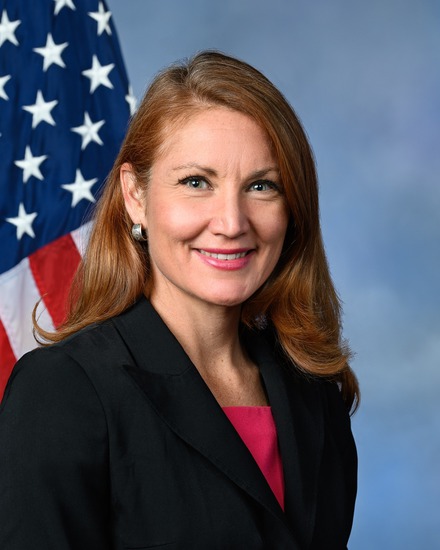
Rep. Melanie A. Stansbury
Sponsored bills
Maddy summaryThe NIH Clinical Trial Integrity Act requires sponsors of clinical trials approved by the National Institutes of Health (NIH) to set and meet specific goals for including participants from diverse racial, ethnic, age, and sex groups. This includes submitting detailed plans for recruitment and retention - such as using telemedicine for follow-ups or flexible scheduling - and reporting annual demographic data without personally identifiable information. Trials failing to meet these goals must develop a community-informed strategic plan to improve participation, which the NIH will publish. The bill also mandates a national awareness campaign to promote diverse trial participation and a study on reducing cost barriers for participants.
Maddy summaryHCONRES 64 is a congressional resolution directing the President to withdraw U.S. military forces from any hostilities against Venezuela that lack explicit congressional authorization. It applies to ongoing military operations in Venezuela not approved by Congress through a declaration of war or specific law authorizing force. The resolution invokes the War Powers Resolution (50 U.S.C. 1544(c)), requiring the removal of troops within the timeframe specified by that law. This bill does not affect military actions already authorized by Congress but mandates the end of unapproved operations.
Maddy summaryHR 6818, the Part-Time Worker Bill of Rights Act, would expand rights for part-time workers by reducing eligibility requirements for family and medical leave from 12 months to 90 days of employment under the FMLA. The bill prohibits employers from discriminating against part-time workers based on hours worked, requiring equal treatment for benefits, promotions, and scheduling. It mandates that employers obtain written statements from employees about their desired work hours and prioritize offering available work hours to existing employees before hiring new external workers. The bill establishes enforcement mechanisms including civil penalties for violations and allows employees to file private lawsuits for damages, with the Secretary of Labor having investigative authority to ensure compliance. This legislation directly affects part-time workers and employers with more than 15 employees across both private and public sectors.
Essential Caregivers Act of 2025 This bill prohibits certain health care facilities from limiting the access of essential caregivers to residents of those facilities, including during designated emergency periods. Specifically, the bill generally prohibits Medicare skilled nursing facilities, Medicaid nursing facilities, Medicaid intermediate care facilities, and associated inpatient rehabilitation facilities from restricting the access of essential caregivers to residents of the facilities, including during emergency periods in which visitation rights are otherwise restricted. During emergency periods, facilities may restrict access for an initial period of up to seven days and for one additional maximum seven-day period (if the additional period is approved by the state health department). Facilities may restrict access for a total of 7 days (or 14 days with the approval of the state health department) during an emergency period. Essential caregivers must agree to comply with any safety protocols set by the facility, which may be no more stringent for caregivers compared to those for staff. Caregivers who fail to comply with these requirements may be denied access, subject to an appeals process.
Maddy summaryHR 6767, the Health Equity and MENA Community Inclusion Act of 2025, amends federal health law to include Middle Eastern and North African (MENA) populations - such as Lebanese, Iranian, Egyptian, and Palestinian communities - within the definition of "racial and ethnic minority groups." This change directly affects approximately 3.5 million MENA individuals in the U.S., who have historically been excluded from federal health programs like the Office of Minority Health (OMH) due to data classification. The bill mandates the Department of Health and Human Services (HHS) to conduct a comprehensive health study, breaking down data by specific MENA subgroups to analyze disparities in areas like chronic disease, mental health, maternal outcomes, and access to care. HHS must also establish privacy safeguards for study participants and publish findings via a public online portal, enabling targeted health initiatives for MENA communities.
Maddy summaryThe Protect America's Workforce Act cancels an executive order issued on March 27, 2025, that excluded certain groups from federal labor-management relations programs, making it legally unenforceable. It also ensures that all collective bargaining agreements between federal agencies and labor unions, which were active as of March 26, 2025, remain fully effective until their agreed terms expire. This directly affects federal agencies, labor unions, and the employees covered by these agreements. The bill prevents federal funds from being used to implement the canceled executive order while preserving existing labor agreements.
Maddy summaryHRES 949 is a symbolic resolution expressing congressional support for designating the first Saturday in May as "National Lowrider Day." It recognizes lowrider culture as an integral part of U.S. history and cultural identity, originating in Chicano communities and reflecting creativity, community building, and resistance to discrimination. The resolution honors lowrider builders, artists, and clubs, acknowledges historical challenges like criminalization, and calls for public events and educational programs celebrating this cultural heritage. As a non-binding resolution, it does not create new laws but formally acknowledges the cultural significance of lowrider culture for affected communities nationwide.
Maddy summaryThe TALENTS Act establishes the Presidential Management Fellows Program to recruit recent advanced degree holders for leadership development in federal agencies. It requires fellows to complete 80 hours of annual training, develop individual development plans within 90 days of starting, and complete rotational assignments with management responsibilities. The program provides a pathway for fellows to convert to competitive service positions after completing the 2-year program, with agencies required to provide developmental opportunities and evaluate fellows for certification. The Act also establishes Federal Executive Boards in 36 metropolitan areas to coordinate program implementation and support agency leadership development activities.
Miracle on Ice Congressional Gold Medal Act This act provides for the award of Congressional Gold Medals to the members of the 1980 U.S. Olympic men's ice hockey team in recognition of the team's achievement at the 1980 Winter Olympic Games.