

For the 99.5 Percent Act This bill imposes increased tax rates on decedent estates, gifts, and generation-skipping transfers. Estates with a value of over $1 billion are taxed at a 65% tax rate. The basic exclusion amount is reduced to $3.5 million. The bill increases (1) to $3 million the reduction in valuations of farmland for estate tax purposes and adjusts such increased amount for inflation, and (2) to $2 million the maximum estate tax exclusion for contributions of conservation easements. It also increases to 60% the applicable percentage for such exclusion. The bill requires (1) consistent basis reporting for property acquired by gift and transfers in trust, and (2) executors of estates and donors of gifts required to file a gift tax return to disclose to the Department of the Treasury, and to recipients of any interest in an estate or a gift, information identifying the value of each interest received. The bill sets forth estate valuation rules for certain transfers of nonbusiness assets and limits estate tax discounts for certain individuals with minority interests in a business acquired from a decedent. The bill expands rules for valuing assets in grantor retained annuity trusts to require that (1) the right to receive fixed amounts from an annuity last for a term of not less than 10 years and not more than the life expectancy of the annuitant plus 10 years, and that such fixed amounts not decrease during the first 10 years of the annuity term, and (2) the remainder interest have a value when transferred that is not less than the the greater of 25% of the fair market value of the trust property or $500,000. The bill also sets forth rules for the application of transfer taxes to a grantor trust (a trust in which the grantor retains control over the trust assets and has the right to receive income from the trust). The bill eliminates the generation-skipping transfer tax exemption for any trust whose termination date is not greater than 50 years after its creation. The bill modifies the tax exclusion for annual gifts to eliminate the present interest requirement for such exclusion and to impose a new, aggregate per donor limit equal to twice the annual exclusion amount in effect for the taxable year.
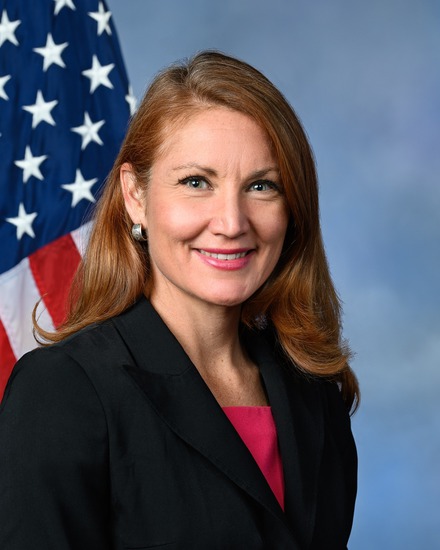
Rep. Melanie A. Stansbury
Sponsored bills
Comprehensive Care for Alzheimer's Act This bill allows the Center for Medicare and Medicaid Innovation (CMMI) to test a Dementia Care Management Model that provides comprehensive care to Medicare beneficiaries with Alzheimer's disease or a related dementia. Under the model, participating health care providers receive payment under Medicare for comprehensive care management services that are provided to individuals with diagnosed dementia, excluding Medicare Advantage enrollees, hospice care recipients, and nursing home residents. Required services include medication management, care coordination, and health, financial, and environmental monitoring, as well as trainings and other support services for unpaid caregivers. Providers must furnish services through interdisciplinary teams and must ensure access to a team member or primary care provider 24-7. The CMMI must set payments and determine quality measures for the model in accordance with specified requirements. The bill also allows the CMMI to design a similar model under Medicaid.
Commission to Study and Develop Reparation Proposals for African Americans Act This bill establishes the Commission to Study and Develop Reparation Proposals for African Americans. The commission shall examine slavery and discrimination in the colonies and the United States from 1619 to the present and recommend appropriate remedies. The commission shall identify (1) the role of the federal and state governments in supporting the institution of slavery, (2) forms of discrimination in the public and private sectors against freed slaves and their descendants, and (3) lingering negative effects of slavery on living African Americans and society.
Advancing Uniform Transportation Opportunities for Veterans Act or the AUTO for Veterans Act This bill authorizes the Department of Veterans Affairs (VA) to provide (or assist in providing) an eligible veteran or service member with an additional automobile or other conveyance under the VA automobile allowance and adaptive equipment program. Currently, a veteran or service member with a specified service-connected disability or impairment may not receive more than one automobile or other conveyance under the program. The bill authorizes the additional benefit for such veterans and service members if 10 years have passed since the person last received such benefit.
Student Loan Forgiveness for Frontline Health Workers Act This bill establishes temporary programs to provide federal and private student loan forgiveness to certain frontline health care workers. Frontline health care workers are those individuals who have made significant contributions to the medical response (e.g., patient care, medical research, or testing) to the COVID-19 (i.e., coronavirus disease 2019) national emergency. Specifically, the Department of Education (ED) must carry out a program to forgive the outstanding balance of principal and interest due on federal student loans for borrowers who are frontline health care workers. Additionally, the Department of the Treasury must carry out a program to repay in full the outstanding balance of principal and interest due on certain private student loans for borrowers who are frontline health care workers. ED and Treasury must coordinate to ensure that eligibility determinations are consistent across both programs and that frontline health care workers who are eligible for both programs may apply for loan forgiveness with a single application. Further, such programs must be available to frontline health care workers who were borrowers of eligible loans and who died as a result of COVID-19. The bill specifies the notification requirements related to the availability of these programs. ED, Treasury, and the Department of Health and Human Services must jointly establish an intergovernmental working group to assist with the administration of these programs, including the development of the application process. The bill also excludes discharged student loan debt under these programs from an individual's gross income.
Transformation to Competitive Integrated Employment Act This bill addresses employment standards for individuals with disabilities. The bill directs the Department of Labor to award grants to states and certain eligible entities to assist them in transforming their business and program models to support individuals with disabilities by providing competitive integrated employment, assisting disabled individuals in finding and retaining work in such employment, providing integrated employment and integrated community participation and wraparound services for such individuals, and ensuring that such services comply with federal regulations for individuals receiving home and community-based services. The bill also prohibits the issuance of new special certificates that allow payment of subminimum wages to disabled individuals and phases out existing certificates over a four-year period. The bill directs Labor's Office of Disability Employment to award grants to provide technical assistance and other strategic support to employers transitioning from special certificates to competitive integrated employment for disabled individuals. Labor must contract with a nonprofit entity to conduct an evaluation of the impact of these transitions.
Water Affordability, Transparency, Equity, and Reliability Act of 2021 This bill increases funding for water infrastructure, including funding for several programs related to controlling water pollution or protecting drinking water. Specifically, it establishes a Water Affordability, Transparency, Equity, and Reliability Trust Fund. The fund may be used for specified grant programs. The bill increases the corporate income tax rate to 24.5% to provide revenues for the fund. In addition, the bill revises requirements concerning the clean water state revolving fund (SRF) and the drinking water SRF. It also creates or reauthorizes several grant programs for water infrastructure.
HIV Epidemic Loan-Repayment Program Act of 2021 or the HELP Act of 2021 This bill directs the Health Resources and Services Administration (HRSA) to carry out a loan repayment program for certain health care providers who agree to provide HIV treatment or HIV dental care in (1) a designated health professional shortage area, (2) a clinical site that is funded under the Ryan White HIV/AIDS Program, or (3) an area that meets requirements specified by HRSA. For each qualifying year of service, HRSA pays one-fifth of the principal and interest on any eligible loan, with total loan repayment after five years; repayment is capped at $250,000 per borrower.
Military Hunger Prevention Act This bill requires the Department of Defense (DOD) to pay a basic needs allowance to certain low-income members of the Armed Forces. Specifically, those eligible for the basic needs allowance are members who (1) have completed initial entry training, (2) have a gross household income that did not exceed an amount equal to 130% of the federal poverty guidelines of the Department of Health and Human Services (HHS), and (3) do not elect to decline the allowance. In situations where a household contains two or more eligible members, the bill specifies that only one allowance may be paid per year to one member they jointly elect. The amount of the allowance must be the aggregate amount equal to 130% of the HHS federal poverty guidelines minus the gross household income of the covered member during the preceding year divided by 12. The Defense Finance and Accounting Service (DFAS) of DOD must notify, in writing, individuals determined to be eligible for the allowance. The notice must include information regarding financial management and assistance programs administered by DOD for which the individuals are also eligible. Individuals who seek to receive the allowance must submit specified information to DFAS.
Resident Physician Shortage Reduction Act of 2021 This bill increases the number of residency positions eligible for graduate medical education payments under Medicare for qualifying hospitals, including hospitals in rural areas and health professional shortage areas. Current law provides for an increase of up to 200 positions per fiscal year beginning in FY2023, with a total increase of 1,000 positions; each hospital may receive up to 25 additional positions. The bill provides for an additional increase of 2,000 positions per fiscal year from FY2023-FY2029; during this period, each hospital may receive up to 75 additional positions in total under the bill and current law. Additionally, one-third of the positions that are made available under the bill must be allocated to hospitals that are already operating above applicable resident limits. The bill also requires the Government Accountability Office to report on strategies to increase the diversity of the health professional workforce, including with respect to representation from rural, low-income, and minority communities.