Reaching English Learners Act This bill directs the Department of Education to establish a grant program for preparing future teachers to effectively instruct English learners to achieve at high levels in early childhood education programs and in elementary and secondary schools. Under the program, grants must be given to partnerships between (1) certain institutions of higher education, and (2) high-need local educational agencies or high-need early childhood education programs.
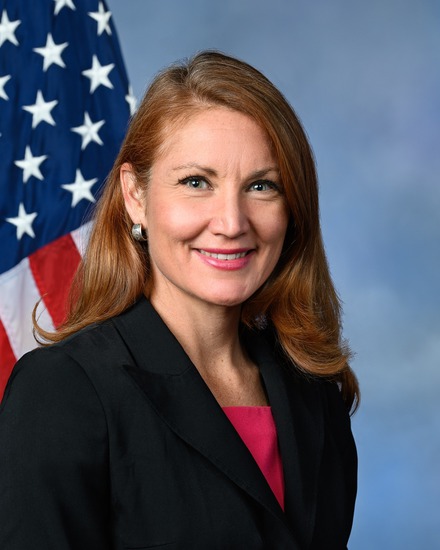
Rep. Melanie A. Stansbury
Sponsored bills
Americans Giving Care to Elders (AGE) Act of 2021 This bill allows a tax credit for a portion of a taxpayer's expenses for eldercare. The credit applies to expenses to care for certain relatives or members of the taxpayer's household who have attained the age of 60 and require assistance with activities of daily living. Eldercare expense include amounts paid for: medical care, lodging away from home, adult day services, personal care, respite care, assistive technologies and devices (including remote health monitoring), environmental modifications (including home modifications), and counseling or training for a caregiver. The amount of eldercare expenses incurred during any year that may be taken into account for the credit may not exceed $6,000.
This resolution supports the designation of ALS Awareness Month. Amyotrophic lateral sclerosis (ALS) is a progressive neurodegenerative disease, also known as Lou Gehrig's disease, that affects nerve cells in the brain and spinal cord.
This resolution expresses support for policies and other efforts to prevent childhood sunburns, such as exempting sunscreen from over-the-counter medication bans in schools.
John Lewis Every Child Deserves a Family Act This bill prohibits discrimination on the basis of sexual orientation, gender identity, marital status, or religion in the provision of child welfare programs and services by entities receiving federal funding. The Department of Health and Human Services (HHS) must provide technical assistance to help states follow this requirement, including (1) guidance for bringing state laws into compliance, (2) developing training to increase cultural competency related to social identity, and (3) training for judges and attorneys involved in child welfare cases, among other supports. Additionally, HHS must establish the National Resource Center on Safety, Well-Being, Placement Stability, and Permanency for LGBTQ Children and Youth Involved with Child Welfare Services to provide training, technical assistance, and guidance to applicable state and local agencies and service providers. Further, the Religious Freedom Restoration Act may not be the basis for challenging the application or enforcement of this bill. The Government Accountability Office must study and report on states' compliance with the requirements of the bill no later than three years after enactment.

Young Americans Financial Literacy Act This bill requires the Consumer Financial Protection Bureau to award competitive grants to eligible institutions for the establishment of financial literacy education programs for young people and families. An eligible institution is a partnership among two or more of the following an institution of higher education; a state or local government agency specializing in financial education; a nonprofit agency, organization, or association; a financial institution; or another small organization. Authorized grant funded activities shall include developing and implementing comprehensive, research based, financial-literacy education programs for young people; designing instructional materials; developing and supporting the delivery of professional development programs in financial literacy education; improving access to, and dissemination of, financial literacy information for young people and families; developing educational programs to reduce student loan default rates; conducting ongoing research and evaluation of financial literacy education programs; and measuring the effectiveness of authorized activities. The grant program shall terminate after FY2025.
This bill allows a $5,000 refundable tax credit for certain healthcare professionals. The bill defines healthcare professional as (1) a practitioner (i.e., physician assistant, nurse practitioner, clinical nurse specialist, certified registered nurse anesthetist, certified nurse-midwife, clinical social worker, clinical psychologist, and registered dietitian or nutrition professional); (2) a certified nursing assistant; (3) a licensed practical nurse or registered professional nurse; or (4) a home health aide.
Stop Child Hunger Act of 2021 This bill establishes a permanent program and provides funds for electronic benefit transfer (EBT) cards to cover meals for children during extended school closures. Specifically, the Department of Agriculture must establish a program to provide EBT cards to cover meals for children who are enrolled in the National School Lunch Program or School Breakfast Program when a school is closed, operating remotely, or a combination of both for a period of five days or more. Cards may be used to purchase food from approved retailers under the Supplemental Nutrition Assistance Program.
Dentist and Optometric Care Access Act of 2021 or the DOC Access Act of 20 21 This bill prohibits private health insurance plans from setting rates for items and services, except for dental cleanings, provided by a doctor of optometry, of dental surgery, or of dental medicine for which the plan does not pay a substantial amount. Additionally, an agreement between a plan and such a doctor for limited scope dental or vision benefits may last longer than two years only with the prior acceptance of the doctor for each term extension. Plans also may not restrict such a doctor's choice of laboratories or suppliers. Such doctors may elect to waive the application of the payment amount and choice of laboratories provisions of this bill. The bill establishes a private right of action for a person adversely affected by a violation of this bill. The bill does not supersede state laws regarding health insurers and dental or vision benefit plans.
Opportunity To Address College Hunger Act This bill requires institutions of higher education (IHEs) that receive grants to operate work-study programs to notify a student receiving work-study assistance that the student may be eligible for participation in the Supplemental Nutrition Assistance Program (SNAP). The Department of Education must provide guidance to states and IHEs on how to identify and communicate with students who are potentially eligible for SNAP.