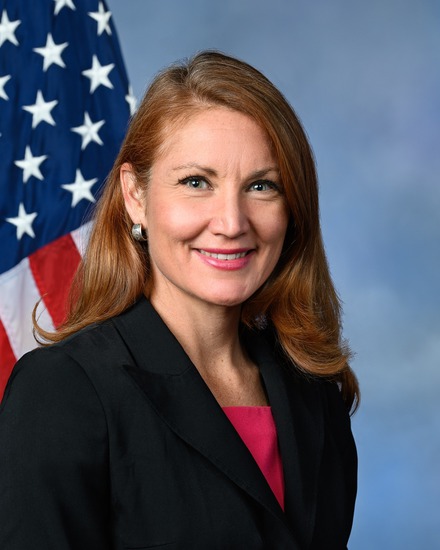
Photo of Melanie A. Stansbury
D United States House · District 1 · New Mexico On the 2026 ballot

Rep. Melanie A. Stansbury

Compare
Total votes
2,694
all sessions
Attendance
98%
52 missed
Near the chamber average
With party
98%
of cast votes
Higher than 85% of chamber peers
Bipartisan score
1%
crosses aisle rarely
Lower than 86% of chamber peers
Sponsored
1,698
bills & resolutions
Higher than 89% of chamber peers
Committees
5
assignments
1,698 bills and resolutions

Sponsored bills

Total
1,698
Primary
56
Co-sponsor
1,642
This page
1,698
matching current filters
Co-sponsor HR 5724
In committee · Indiana House · Co-sponsor
White House Conference on Food, Nutrition, Hunger, and Health Act

White House Conference on Food, Nutrition, Hunger, and Health Act This bill directs the President to convene a conference to make policy recommendations for ending hunger, creating sustainable markets for agricultural producers, and improving nutrition and the resiliency of the food system. The bill also requires specified congressional committees to hold hearings on the conference recommendations and on the status of hunger, nutrition security, and food systems.

In committee Nov 3, 2021 1 co-sponsor
Co-sponsor HR 5631
In committee · Indiana House · Co-sponsor
Tim Hart Wildland Firefighter Classification and Pay Parity Act

Tim Hart Wildland Firefighter Classification and Pay Parity Act or Tim's Act This bill addresses the pay and benefits of federal wildland firefighters and related issues. Federal wildland firefighter is defined as any temporary, seasonal, or permanent position at the Department of Agriculture (USDA) or the Department of the Interior that maintains certain group, emergency incident management, or fire qualifications and primarily engages in or supports wildland fire management activities. Specifically, (1) the Office of Personnel Management (OPM) must establish one or more classification series for federal wildland firefighter positions, and (2) USDA and the Department of the Interior shall determine each position within USDA and Interior that qualifies as a federal wildland firefighter position. The bill, among other requirements (1) establishes a pay scale for such positions, with annual adjustments; and (2) provides for hazardous duty pay. The OPM must establish guidelines for work schedules. The bill addresses issues regarding wages, unpaid leave to care for a family member, recruitment and retention bonuses, and housing allowances. USDA and Interior shall (1) establish, maintain, coordinate, and operate a voluntary tuition assistance program; (2) establish and maintain a publicly accessible, searchable Federal Wildland Firefighter Cancer and Cardiovascular Disease Database; and (3) establish and carry out a program for mental health awareness and support. Additionally, the bill provides for continuation of firefighters pension coverage in case of disability and pay parity for federal structural firefighters.


In committee Nov 3, 2021 1 co-sponsor
Co-sponsor HR 5624
In committee Nov 2, 2021 1 co-sponsor
Co-sponsor HR 5782
In committee · Indiana House · Co-sponsor
FIRE Act of 2021

FEMA Improvement, Reform, and Efficiency Act of 2021 or the FIRE Act This bill addresses the federal government's approach to wildfires. Specifically, the bill authorizes a public mitigation assistance applicant to relocate an eligible structure upon demonstrating that the structure is at risk from future damage and the relocation reduces the risk to the structure, is cost effective, and does not increase risk to adjacent structures. The Federal Emergency Management Agency (FEMA), in coordination with the National Weather Service, must conduct a study on Red Flag Warnings and similar weather and notification methods to implement plans and actions prior to a wildfire that can limit the impact, duration, or severity of the fire. The President must ensure that those providing counseling or case management services to victims of a major disaster are trained to address cultural competency. FEMA must (1) conduct a study and develop a plan to address providing housing assistance to survivors of major disasters or emergencies when presented with challenges such as the lack of proof of ownership, and (2) seek to contract with the National Academy of Sciences to study solutions to address the availability and affordability of insurance for wildfire perils and other related matters. The bill allows Indian tribal governments to apply for grants for equipping, upgrading, and constructing state and local emergency operations centers.

In committee Oct 29, 2021 1 co-sponsor
Co-sponsor HR 5736
In committee · Indiana House · Co-sponsor
Booster Seat Safety Act

Booster Seat Safety Act This bill addresses labeling requirements and testing standards for booster seats used in motor vehicles. Specifically, the bill requires labels on booster seats to include the minimum recommended age (4 years) and weight (40 pounds) for a child to use the seat. It also requires that a label on a car seat or combination car seat list the maximum weight and height limits of the seat, as well as a recommendation to continue using the seat until the child exceeds the listed limits. Additionally, the National Highway Traffic Safety Administration (NHTSA) must either establish a minimum height recommendation for booster seats or a method for manufacturers to use to determine a minimum height recommendation. Once the minimum height or method is established, booster seat labels must also contain the minimum height recommendation. The NHTSA must also establish a standard for side-impact crash tests for booster seats and provide guidelines for creating a testing dummy that approximates a six-year old child for such crash tests. Further, the NHTSA must study systems for tethering child restraint systems in vehicles and make recommendations about using or modifying tether systems to maximize child safety.

In committee Oct 27, 2021 1 co-sponsor
Co-sponsor HR 5723
In committee · Indiana House · Co-sponsor
Social Security 2100: A Sacred Trust

Social Security 2100: A Sacred Trust This bill makes changes to Social Security benefits, taxes, and other aspects of the program, including by raising the primary insurance amount, increasing the maximum taxable earnings that are subject to Social Security payroll taxes, and requiring Social Security account statements to be mailed unless the individual recipient opts for electronic delivery.

In committee Oct 27, 2021 1 co-sponsor
Co-sponsor HR 5742
In committee · Indiana House · Co-sponsor
Equitable Health Care for All Act

Equitable Health Care for All Act This bill prohibits discrimination in health care based on race, religion, and other characteristics. It also revises reporting requirements, adds equity-related measures to certain Medicare programs, and makes other changes to reduce health disparities. To enforce the prohibition, the Department of Health and Human Services (HHS) must establish an administrative process to resolve complaints about inequitable health care. HHS must investigate these complaints and mediate agreements to resolve issues. In the event of noncompliance with a mediated agreement, an aggrieved individual may bring a civil action. Health care providers must also report data in formats that allow disaggregation by demographic factors. HHS must issue proposed regulations to carry out this requirement within 90 days. Additionally, the Centers for Medicare & Medicaid Services (CMS) must include measures related to equitable health care in the Medicare value-based purchasing program for hospitals. This program provides incentive payments based on quality of care. The CMS may also exclude providers that furnish inequitable health care from its programs. In addition, the bill establishes the Federal Health Equity Commission to monitor implementation of the bill and establishes a grant program for hospitals to promote equitable health care.

In committee Oct 27, 2021 1 co-sponsor
Co-sponsor HR 5727
In committee · Indiana House · Co-sponsor
Public Service Freedom to Negotiate Act of 2021

Public Service Freedom to Negotiate Act of 20 21 This bill provides minimum collective bargaining rights and procedures for public employees and prohibits strikes by certain public safety workers. The Federal Labor Relations Authority (FLRA) shall determine for each state whether the laws of such state substantially provide for each of the minimum standard collective bargaining rights and procedures specified by this bill, including the right of public employees and supervisory employees to self-organize, form or join a labor organization, or collectively bargain. The FLRA must issue rules and take actions to establish and administer bargaining rights and procedures for those states that do not substantially provide for them. No employers, emergency services employees, or law enforcement officers may engage in a lockout, strike, or any other organized job action that is likely to result in a measurable disruption of the delivery of emergency or public safety services. Furthermore, no labor organization may be the cause of a violation of such prohibition.

In committee Oct 26, 2021 1 co-sponsor
Co-sponsor HR 5735
In committee · Indiana House · Co-sponsor
State, Local, Tribal, and Territorial Fiscal Recovery, Infrastructure, and Disaster Relief Flexibility Act

State, Local, Tribal, and Territorial Fiscal Recovery, Infrastructure, and Disaster Relief Flexibility Act This bill allows states, tribes, territories, and localities to use certain COVID-19 relief funds for new categories of spending, including for natural disasters and infrastructure projects. It also makes changes to expenditure deadlines and other aspects of this funding. Specifically, recipients may use funds for emergency relief from natural disasters and associated negative economic impacts of natural disasters. In addition, recipients may use a portion of their COVID-19 relief funds for designated infrastructure projects, such as nationally significant freight and highway projects. Furthermore, the bill allows recipients to expend COVID-19 relief funds on these types of infrastructure projects until September 30, 2026. Under current law, recipients must expend the funds by December 31, 2024. Other changes in the bill include (1) modifying eligibility and allocation requirements for funding set aside for counties and Indian tribes that are near public lands, (2) allowing Indian tribes an additional year to expend their COVID-19 relief funds, and (3) establishing a process for government entities to decline COVID-19 relief funds and requiring any declined funds to be used to reduce the federal deficit.

In committee Oct 26, 2021 1 co-sponsor
Co-sponsor HR 5628
In committee · Indiana House · Co-sponsor
Pecos Watershed Protection Act

Pecos Watershed Protection Act This bill withdraws identified federal land in the Pecos River watershed in New Mexico from entry, appropriation, or disposal under the public land laws; location, entry, and patent under the mining laws; and disposition under all laws pertaining to mineral and geothermal leasing or mineral materials.

In committee Oct 26, 2021 1 co-sponsor
Showing 1,481 to 1,490 of 1,698 bills