

Maddy summaryHR 5309, the Congressional Tribute to Constance Baker Motley Act of 2025, authorizes a posthumous Congressional gold medal for Constance Baker Motley, a pioneering civil rights attorney and judge. The bill directs the Treasury Secretary to strike the medal with her image and name, to be presented to her son, Joel W. Motley III, and her niece, Constance Royster. It also permits the sale of bronze duplicates at cost to cover expenses, with proceeds going to the U.S. Mint fund. This is a commemorative measure with no substantive policy changes, honoring Motley’s legacy as the first African-American woman appointed to a federal judgeship.
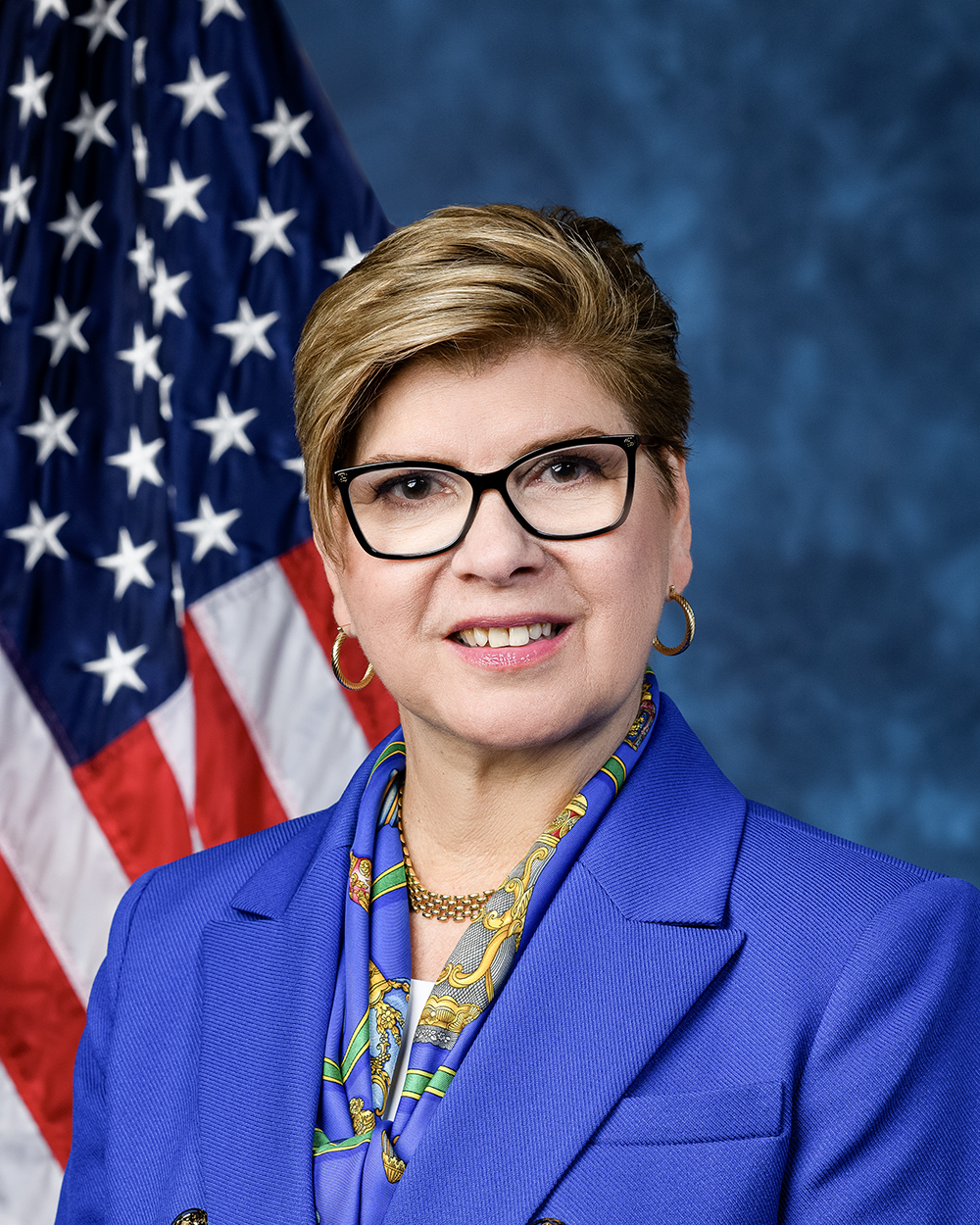
Rep. Nellie Pou
Sponsored bills
Maddy summaryThe RESULTS Act (HR 5269) changes how Medicare calculates payment rates for clinical diagnostic laboratory tests. It requires Medicare to collect data on private payor rates for widely available non-Advanced Diagnostic Laboratory Tests (non-ADLTs) from a qualifying independent claims data entity (a national nonprofit organization meeting specific criteria) rather than relying on data reported directly by laboratories. For tests where data is unavailable, the bill establishes default payment rates based on previous years' rates adjusted for inflation. The law also requires Medicare to publicly explain payment rates with supporting data, affecting Medicare beneficiaries, clinical laboratories, and private payors that provide services covered by Medicare.
Maddy summaryThis bill names the Department of Veterans Affairs community-based outpatient clinic in Toms River, New Jersey, as the "Leonard G. 'Bud' Lomell VA Clinic." It directly affects the existing clinic facility by changing its official name to honor World War II veteran Leonard G. "Bud" Lomell. The key provision updates all federal references to the clinic - including laws, regulations, maps, and documents - to reflect this new designation after the bill's enactment. The change is purely administrative and does not alter the clinic's services or operations.
Maddy summaryHR 5142, the Home Health Stabilization Act of 2025, prevents payment cuts to Medicare home health providers for 2026 and 2027. It requires the Medicare Secretary to adjust payment rates to fully offset two planned negative adjustments (-4.059% and -5.0%) that would have reduced payments under the 2026 rate update rule. This ensures home health agencies receive full reimbursement for services during those years without further reductions based on prior payment formulas. The bill directly affects home health providers who rely on Medicare payments for patient care.
Maddy summaryThe Water Crisis Prevention Act of 2025 directs the Government Accountability Office (GAO) to review how federal emergency funding from FEMA is distributed after water infrastructure failures, such as water main breaks, to States, localities, individuals, and small businesses - both with and without emergency declarations. The GAO must complete this review within six months of the bill's enactment and submit a report to Congress. The report will include recommendations for federal agencies to partner with States in identifying high-risk areas and for Congress to allocate funding to address the most vulnerable water infrastructure before failures occur. This bill focuses on improving the system for preventing future water crises through better risk assessment and targeted funding.
Maddy summaryHR 5049, the "Protecting Communities from Helicopter Noise Act," requires the Federal Aviation Administration (FAA) to study helicopter operations within a 20-mile radius of the Statue of Liberty National Monument. The study must analyze noise impacts on residential and recreational areas, helicopter traffic patterns, safety and environmental effects, and potential solutions like flight path changes or altitude limits. The FAA must submit a report to Congress within 180 days of the bill's enactment, focusing on concrete data rather than implementing new regulations. This bill directly affects communities near the Statue of Liberty in New York City by mandating an assessment of helicopter noise concerns.
Maddy summaryHR 4917, the Expanding the VOTE Act, amends the Voting Rights Act to increase language access for voters. It expands the definition of "voting materials" to include digital formats and requires states to provide language assistance (both written and oral) for minority language groups, with special provisions for American Indian and Alaska Native languages when written translations aren't feasible. The bill creates grants to help jurisdictions provide voting materials in languages that don't currently trigger Section 203 coverage, and mandates a study on lowering population thresholds for language assistance requirements. This directly affects states, local election jurisdictions, and voters who speak minority languages, including those in communities not currently covered by existing language access rules.
Maddy summaryThis bill removes a barrier preventing most low-income students from accessing SNAP benefits. It amends the Food and Nutrition Act to explicitly allow students enrolled at least half-time in recognized higher education programs to qualify for SNAP, reversing a prior exclusion. The key change eliminates the previous requirement that students meet specific exceptions (now deleted) and adds a new eligibility category under Section 3(m)(5). This directly affects low-income undergraduate and graduate students at colleges and training programs who were previously ineligible. The changes take effect January 2, 2026.
Maddy summaryHR 4796, the Restoring Essential Healthcare Act, repeals a provision that blocked Medicaid payments to certain healthcare providers during a specific period. It directly affects Medicaid beneficiaries who received care from these providers between the enactment of the prior law (Public Law 119-21) and this bill's enactment. The key provision retroactively restores Medicaid payments for services already provided during that blocked period, treating the payment restriction as if it never existed. This change ensures eligible individuals and providers receive reimbursement for covered care delivered during the prohibited timeframe.
Maddy summaryHR 4696 amends Section 249 of the Immigration and Nationality Act to update eligibility for a registry program that provides a pathway to legal status for long-term residents. It changes the requirement from entering the U.S. before January 1, 1972, to entering at least 7 years before the application date. This adjustment bases eligibility on a rolling 7-year window instead of a fixed historical cutoff, allowing more recent long-term residents to qualify. The bill directly affects individuals who entered the U.S. after 1972 but maintained continuous residence for at least seven years prior to applying.