

Maddy summaryThe 9/11 Responder and Survivor Health Funding Correction Act of 2024 makes several key changes to the World Trade Center Health Program that serves 9/11 responders and survivors. It allows licensed mental health providers (not just physicians) to conduct mental health evaluations for program participants and extends the time period for adding new health conditions from 90 to 180 days. The bill also adjusts enrollment calculations by removing deceased individuals from program counts and provides $2.97 billion in new funding for fiscal year 2024 with a minimum annual funding level of $20 million for 2025. These changes aim to improve access to care while ensuring stable, long-term funding for the program that provides medical services to those affected by the 9/11 attacks.
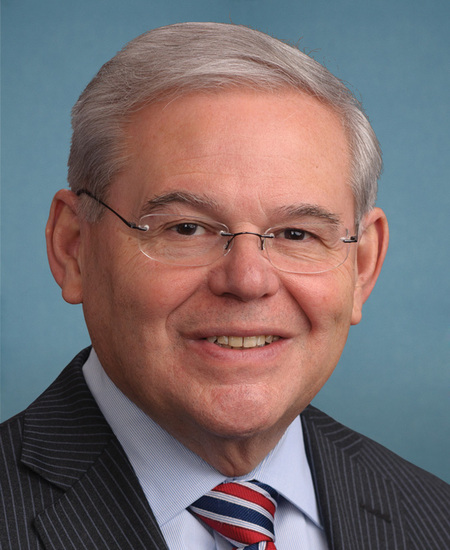
Rep. Robert Menendez
Sponsored bills
Maddy summaryHR 9104, the Access to Birth Control Act, requires pharmacies that normally stock contraception to provide birth control or related medications without delay if in stock, or immediately offer alternatives like referrals to other pharmacies or expedited orders if unavailable. It prohibits pharmacists from intimidating customers, misrepresenting availability, breaching confidentiality, or refusing to fill valid prescriptions for birth control. Pharmacies violating these rules face civil penalties up to $1,000 per day or private lawsuits. The law specifically applies to pharmacies that routinely carry contraception and excludes cases where a valid prescription is missing or payment cannot be made. It aims to address documented refusals to dispense birth control, particularly following the Dobbs decision.
Maddy summaryHR 9066, the Cuba Threat Assessment Act, requires the Department of Homeland Security (DHS) to produce annual threat assessments within 180 days of enactment (and annually for five years) regarding potential threats to the U.S. from Cuba. The DHS Under Secretary for Intelligence must coordinate these assessments with privacy and civil rights offices to ensure compliance with laws protecting individual rights, submit unclassified reports publicly, and provide classified annexes if needed. The assessments must be shared with specific congressional committees (House Homeland Security and Intelligence committees, and Senate Homeland Security and Intelligence committees) and accompanied by a briefing within 30 days of submission. This bill mandates a structured reporting process but does not alter existing laws or directly affect Cuban nationals or U.S. citizens.
Maddy summaryHRES 1358 is a resolution passed by the U.S. House of Representatives calling for accountability for Cuba's violations of internationally recognized human rights and its support for activities harming U.S. interests and democratic nations. It urges the U.S. government to maintain sanctions on Cuba until a democratic transition begins, seek Cuba's expulsion from the UN Human Rights Council, and retain Cuba on the State Sponsors of Terrorism list. The resolution also requires the State Department to submit biannual reports to Congress on efforts to promote democracy in Cuba and calls for action against the trafficking of Cuban medical personnel abroad. This resolution expresses congressional policy but does not create binding law.
Maddy summaryThis bill (HR 2365, Public Law 118-66) directs the U.S. Department of Health and Human Services (HHS) to establish the National Parkinson’s Project. It requires HHS to create and update a coordinated national plan for preventing, diagnosing, treating, and researching Parkinson’s disease and related disorders (including multiple system atrophy and progressive supranuclear palsy), while coordinating federal research and care efforts across agencies like the NIH, CDC, and VA. The law mandates annual progress assessments, an advisory council with patient advocates and diverse experts, and annual reports to Congress on federal Parkinson’s programs and recommendations for improvement. It affects federal agencies managing Parkinson’s-related programs and aims to improve care coordination and research efficiency for patients and caregivers, with the law sunsetting in 2035.
Maddy summaryHRES 1331 is a non-binding House resolution supporting Immigrant Heritage Month by recognizing immigrants' economic, cultural, and military contributions to the United States. It cites data showing immigrants contributed $1.9 trillion to the economy in 2021, made up 20% of entrepreneurs, and serve in critical roles like healthcare and agriculture. The resolution calls on elected officials, educators, and the executive branch to counter anti-immigrant rhetoric, educate the public about immigrant contributions, and protect immigrant communities. It does not create new legal obligations but aims to raise awareness and promote inclusion.
Maddy summaryHRES 1325 is a non-binding resolution supporting the designation of June 2024 as "National Men's Health Month" to raise awareness about health disparities affecting men. It does not create new laws or programs but requests the President issue a proclamation urging public observance through events and activities focused on men's health. The resolution highlights that men face higher risks for conditions like heart disease, cancer, and suicide compared to women, and emphasizes the importance of early detection through screenings and preventive care. This symbolic measure aims to encourage men to engage in health checkups and education, without altering existing policies or funding.
Maddy summaryThis bill creates a federal framework for "extreme risk protection orders" (ERPOs) that temporarily remove firearms from individuals who pose a risk of harming themselves or others. Family members or law enforcement officers can petition a federal court for a temporary order (up to 14 days) based on probable cause, followed by a hearing within 72 hours to determine if a longer-term order (up to 180 days) is warranted. The bill requires clear and convincing evidence of risk at the hearing and mandates respondents to surrender firearms to law enforcement within 48 hours. It also includes provisions for reporting, training law enforcement on ERPOs, and a federal grant program to support state ERPO implementation, without preempting state laws.
Maddy summaryThis resolution recognizes June 19, 2024, as Juneteenth Independence Day, acknowledging its historical significance as the anniversary of the end of slavery in the U.S. (specifically referencing Union soldiers' announcement in Galveston, Texas, on June 19, 1865). It does not create new policy but formally encourages all Americans to observe the day through ceremonies and educational activities. The resolution emphasizes Juneteenth's role in honoring African American freedom and its importance to U.S. history and cultural heritage. It follows the 2022 law that established Juneteenth as a federal holiday, focusing solely on symbolic recognition and annual observance.
Maddy summaryHRES 1307 is a non-binding House resolution designating June 20, 2024, as "World FSHD Day" to raise awareness about facioscapulohumeral muscular dystrophy (FSHD), a rare genetic muscle disease affecting approximately 41,487 Americans. The resolution supports efforts to improve public education about FSHD, encourage early genetic diagnosis, and advance research for treatments and cures. It directly affects FSHD patients, caregivers, and advocacy groups like the FSHD Society, which aims to develop treatments by 2025. The resolution expresses symbolic support for ongoing advocacy but does not create new laws or allocate funding.