

Maddy summaryThis bill, HR 1097 (Everett Alvarez, Jr. Congressional Gold Medal Act of 2023), authorizes the award of a Congressional Gold Medal to Everett Alvarez, Jr., in recognition of his service as a U.S. Navy pilot and Vietnam War prisoner of war. It directly honors Alvarez, who was the first U.S. pilot shot down in the Vietnam War, spent over 8.5 years in captivity, and later served in the Peace Corps and Veterans Administration. The bill’s key mechanism is directing the U.S. Mint to strike a gold medal bearing his name and image, with bronze duplicates available for sale to cover costs. It does not create new policies or affect any group beyond the honoree.
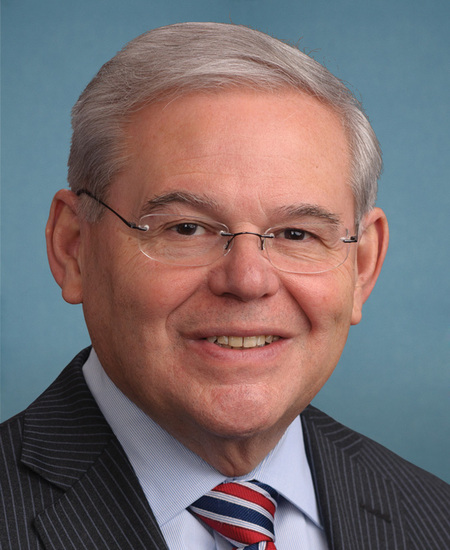
Rep. Robert Menendez
Sponsored bills
Maddy summaryThis bill establishes a two-year pilot program to test whether border patrol dogs (canines) can live with their handlers at home instead of in centralized kennels. It requires U.S. Customs and Border Protection (CBP) to implement the program at a minimum of 10 ports of entry (including urban and rural locations), with handler participation being voluntary. CBP must provide training for handlers on caring for canines at home and report to Congress on the program’s findings, including cost-benefit analysis, performance, and health impacts compared to current kenneling practices. The pilot aims to assess potential benefits for both canine handlers and the dogs before any permanent policy changes.
Maddy summaryThis bill creates a task force within Homeland Security to reunite children separated from parents or guardians at the U.S.-Mexico border between January 20, 2017, and January 20, 2021, under the Zero-Tolerance Policy. The task force must identify all affected children, recommend legal pathways for reunification (including parole, visas, or services like mental health support), and consult with affected families and organizations. It must report to Congress every 60 days and will sunset within 120 days of all reunifications or by January 20, 2039, whichever comes first. The bill directly affects children separated during that specific policy period and requires federal agencies to coordinate on practical solutions.
Maddy summaryThis bill requires major airlines to create and regularly update plans aimed at preventing flight delays and cancellations during disruptions like severe weather, staffing shortages, or cybersecurity threats. The plans must detail how airlines will maintain operations, protect staff and technology systems (including crew scheduling), and address known vulnerabilities. Airlines must submit these plans to the Transportation Secretary within one year of the law taking effect, with safeguards for confidential business information. A government audit will assess the plans' effectiveness three years after implementation.
Maddy summaryHR 5401, the 9/11 Memorial and Museum Act, provides a one-time federal grant of $5 million to $10 million to the National September 11 Memorial & Museum (operated by the World Trade Center Foundation). The grant funds the museum's operations, security, and maintenance, with specific requirements including free admission for veterans, first responders, and victims' families, dedicated weekly free public hours, and annual financial audits. The museum must also report annually to Congress on how the funds were used. This bill directly affects the museum's financial operations and access policies, not broader legislative changes.
Maddy summaryThis bill (HR 10237) requires U.S. Customs and Border Protection (CBP) to create new guidelines within 180 days for handling personal belongings of individuals arrested, restrained, or confined by CBP. The guidelines must ensure detainees can keep as much property as operationally feasible, return all stored items upon release, and specify essential categories like medical devices, IDs, phones, and legal documents that must remain with or be returned to the individual. CBP must also provide written receipts for stored items, detail circumstances for discarding property, and track compliance through annual reports to Congress. The bill mandates consultation with advocacy groups and includes oversight by the Comptroller General to review implementation and effects on CBP operations.
Maddy summaryHR 8796, the "Stop Comstock Act," removes outdated restrictions from federal law that previously banned the distribution of materials related to contraception and abortion as "obscene" or "indecent." The bill amends Title 18 and the Tariff Act by deleting references to "indecent," "immoral," "unlawful abortion," and "procuring abortion" from provisions governing obscene materials. It clarifies that the law only prohibits "obscene materials" in commerce, eliminating broad restrictions on reproductive health information. This directly affects internet platforms, healthcare providers, and individuals sharing reproductive health resources by removing legal barriers to their distribution.
Maddy summaryThis bill requires Medicare Advantage plans to implement electronic prior authorization systems by 2027 and publish detailed data on their approval and denial rates for medical services by 2026. It directly affects Medicare Advantage plans (private insurers offering Medicare coverage) and their enrollees (seniors 65+), mandating transparency about prior authorization decisions, processing times, and appeal outcomes. Key provisions include requiring plans to report annual statistics on request approvals/denials, average processing times, and use of technology, with this data published publicly by the Centers for Medicare & Medicaid Services. The bill also sets timelines for plan responses to prior authorization requests and mandates reports to Congress on implementation and impacts.
Maddy summaryThis bill (HR 7397) would define "essential health system" in federal law to specifically include certain hospitals serving high numbers of low-income patients. It targets non-Federal, non-profit hospitals that meet one of three criteria: having Medicaid disproportionate share status, serving at least 35% low-income Medicare patients, or receiving significant uncompensated care payments under Medicare. The definition applies to hospitals already designated under existing Medicaid and Medicare programs. This is a technical clarification to standardize how these hospitals are identified in federal statutes.
Maddy summaryThis bill requires Medicare to provide clear outreach and education so Medicare beneficiaries (enrolled in Part A, Part B, or Medicare Advantage plans) can authorize family caregivers to access their health information via 1-800-MEDICARE. It mandates the inclusion of a specific authorization form (CMS-10106) in Medicare notices and on Medicare.gov, along with training for call center staff. The Secretary must also share best practices to prevent fraud related to caregiver access and make materials available in non-English languages. It directly affects beneficiaries, their family caregivers, healthcare providers, and Medicare call center operators.