

Maddy summaryHR 6056, the International Human Rights Defense Act of 2025, establishes a permanent Special Envoy at the State Department to lead U.S. foreign policy efforts addressing discrimination and violence against LGBTQI+ people globally. The bill requires the U.S. government to develop and update a biannual global strategy to prevent criminalization and violence against LGBTQI+ individuals, mandate detailed reporting on such abuses in annual country reports, and ensure all U.S. foreign assistance programs include inclusive nondiscrimination policies. This legislation directly affects U.S. foreign policy implementation, federal agencies receiving funding, and LGBTQI+ communities facing persecution worldwide. The bill aims to coordinate U.S. government efforts across departments and with international partners to advance LGBTQI+ rights globally through concrete policy mechanisms.
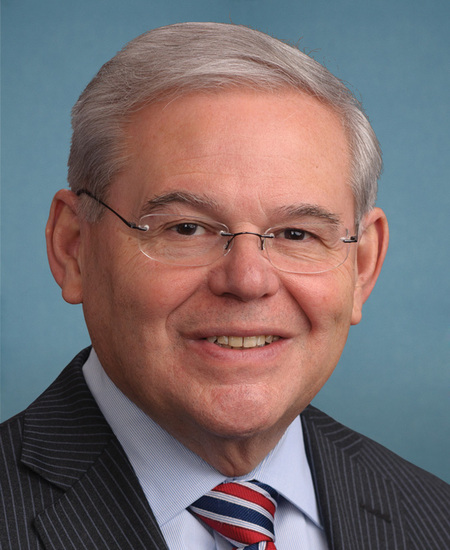
Rep. Robert Menendez
Sponsored bills
Maddy summaryThis bill ensures continuous funding for SNAP (food assistance) and WIC (nutrition program for mothers/children) during government funding gaps. It authorizes emergency Treasury funds to cover SNAP/WIC benefits and reimburse states for costs if Congress fails to pass regular appropriations for the Department of Agriculture by September 30, 2025. The funding covers missed payments retroactively from September 30, 2025, through the bill’s enactment date, and continues until either regular appropriations pass or September 30, 2026. It directly affects low-income households relying on these programs and state agencies administering them during funding lapses.
Maddy summaryThe American Energy Independence and Affordability Act extends multiple clean energy tax credits that were set to expire between 2025 and 2026. It specifically extends residential clean energy credits through 2034, clean electricity investment credits for wind and solar through 2032, and clean vehicle credits for electric vehicles through 2032. The bill also reinstates special rates for sustainable aviation fuel and modifies requirements for energy-efficient home improvements. These provisions directly affect homeowners installing solar panels, businesses investing in clean energy infrastructure, and manufacturers producing clean energy equipment.
Maddy summaryThis resolution formally recognizes the vital role of Spanish-language media in serving over 41 million U.S. residents who speak Spanish at home. It affirms that access to Spanish-language news and entertainment is essential for community engagement, combating misinformation, and supporting democratic participation. The House resolution specifically commends Spanish-language media professionals and encourages policies that sustain this media sector, which provides culturally relevant information on elections, health, and civic life. As a symbolic gesture (not a law), it has no direct policy changes but highlights the sector's importance to Latino communities and national inclusivity.
Maddy summaryThis bill establishes the New York-New Jersey Watershed Restoration Program to coordinate and fund habitat restoration and water quality improvements across the shared watershed region. It creates a competitive grant program providing federal matching funds (up to 90% for small/rural/disadvantaged communities) to state/local governments, nonprofits, and tribes for projects advancing habitat restoration, climate resilience, and public access. The program prioritizes communities facing environmental injustice and requires coordination with existing regional conservation plans like the Hudson River Estuary Program. Funding of $20 million annually (2026-2031) will support these activities, with 75% dedicated to the grant program and all projects supplementing existing conservation efforts.
Maddy summaryHRES 795 is a non-binding resolution condemning Hamas for the October 7, 2023, attacks that killed over 1,200 people, took 251 hostages (including Americans), and involved sexual violence. It demands Hamas immediately surrender and release all remaining hostages - specifically noting 48 people still held, including two U.S. citizens. The resolution also affirms Israel’s right to self-defense, calls for humanitarian aid to reach Palestinians, and condemns global antisemitism following the attacks. As a symbolic congressional statement, it does not create new laws or alter policies.
Maddy summaryHR 5705 requires the federal government to reimburse state agencies for funds they use to maintain participation in the WIC program during a government shutdown. It directly affects states that cover WIC costs using their own money when federal funding lapses. The bill establishes a process where states can seek reimbursement from the federal government after the shutdown ends. This ensures states aren’t burdened with costs for a federal funding gap that impacts nutrition assistance for women, infants, and children.
Maddy summaryHR 5673, titled "Stop the Trump Electricity Price Hikes Act," would reinstate financial assistance awards terminated by the Department of Energy under a May 15, 2025, secretarial memorandum. It directly affects recipients of these awards - likely energy or infrastructure projects - that had their funding cut, by restoring their financial support as if the terminations never occurred. The key mechanism requires the Department to treat all such terminated awards as valid and continuing, overriding prior termination actions. This bill does not address electricity pricing, consumer rates, or introduce new energy regulations.
Maddy summaryThis bill adds Medicare coverage for multi-cancer early detection screening tests (blood or biological tests analyzing cell-free DNA) starting January 1, 2028. It directly affects Medicare beneficiaries aged 68 and older (starting in 2028, with the age limit increasing by 1 year annually), requiring tests to be FDA-cleared and deemed reasonable/necessary by the Secretary for early cancer detection across multiple organ sites. Payment will initially match current stool DNA test rates before 2031, then shift to a lower rate or new payment system after 2031, with limits preventing more than one test per year. The bill explicitly states it does not alter coverage for existing cancer screenings like breast, colorectal, or prostate cancer tests.
Maddy summaryThis bill requires five federal agencies (Housing and Urban Development, Agriculture, Veterans Affairs, Treasury, and the Federal Housing Finance Agency) to coordinate housing data sharing and jointly propose policy solutions. Within one year of enactment, the agencies must establish a shared agreement and submit a report to Congress addressing mortgage costs, housing construction barriers, local regulations, insurance availability, down payment assistance, and disaster resilience. The report will outline specific proposals to improve housing affordability and market efficiency. This is a procedural bill focused on interagency coordination, not direct policy changes or benefits for homeowners.