

Maddy summaryThis concurrent resolution (HCONRES 69) commemorates the 15th anniversary of the January 8, 2011, Tucson shooting that killed six people and injured 13, including former Congresswoman Gabby Giffords. It honors the victims, survivors, and Giffords - now a prominent advocate for gun violence prevention - and recognizes her leadership in promoting civility and reducing gun violence. The resolution also commends Tucson residents and first responders for their resilience and reaffirms Congress’s commitment to respectful dialogue and opposing political violence. As a ceremonial resolution, it does not create new laws or policies.
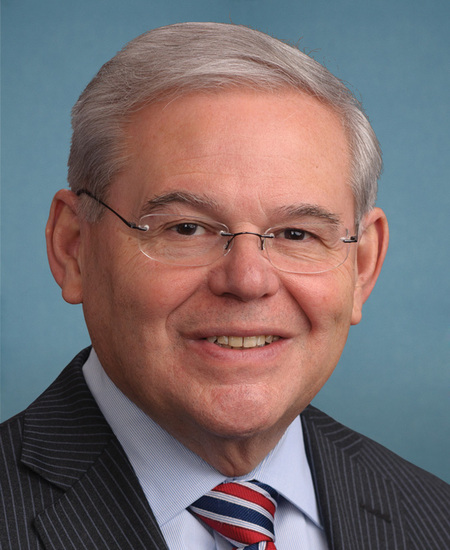
Rep. Robert Menendez
Sponsored bills
Maddy summaryHR 6983, the PRICE Act, requires large U.S. data centers (those consuming at least 50 megawatts daily) to generate all the electricity they use annually. Starting in 2035, at least 75% of that electricity must come from clean sources like solar, wind, or hydropower, increasing to 100% by 2040. Data centers failing to comply face daily civil penalties of up to $100,000 until corrected. The bill directly affects major data center operators, aiming to shift their energy use toward renewable sources through enforceable deadlines.
Maddy summaryThe Data Center Transparency Act requires the Environmental Protection Agency (EPA) and Energy Information Administration (EIA) to regularly report on data centers' environmental impacts. Specifically, the EPA must publish quarterly reports detailing data centers' water consumption, reuse practices, effects on local water systems (including pollution and service disruptions), and greenhouse gas emissions. The EIA must publish semi-annual reports on nationwide electricity consumption by data centers, broken down by state, including changes in energy use, new facility openings, and potential impacts on household energy costs. These reports will be made publicly available online, directly affecting federal agencies (EPA and EIA) and providing transparency for Congress and the public about data centers' resource use and environmental effects.
Maddy summaryThe Noise Oversight and Information for Safe Environments Act (HR 6927) requires the Environmental Protection Agency (EPA) to regularly review and update noise control criteria established under the Noise Control Act of 1972. Specifically, the EPA must conduct an initial review within two years of the bill's enactment and then at least once every ten years thereafter. If the review determines that the criteria need adjustment, the EPA must revise or supplement them to maintain effective noise regulation. This bill directly impacts the EPA's regulatory process and affects industries and communities subject to noise control standards.
Maddy summaryThis resolution (HRES 969) expresses support for designating the week beginning September 8, 2025, as "National Hispanic-Serving Institutions Week." It recognizes colleges and universities with at least 25% Hispanic undergraduate enrollment (known as Hispanic-Serving Institutions or HSIs) and their role in serving diverse, low-income students. The resolution does not create new policies or funding but encourages public observance through ceremonies and activities to honor HSIs’ contributions to higher education access and economic mobility. It applies symbolically to all 615+ HSIs across the U.S. and Puerto Rico.
Maddy summaryHR 4611 (EACH Act of 2025) requires all federally funded health programs - including Medicaid, Medicare, military health plans, and the Indian Health Service - to cover abortion services without restrictions, repealing the Hyde Amendment's long-standing ban on federal funding for most abortions. This directly affects millions of people enrolled in these programs, particularly low-income women, women of color (including 25% of Black women and 22% of Hispanic women on Medicaid), and young people. The bill mandates coverage in all federally administered health plans and prohibits state or private insurers from restricting abortion coverage in health insurance. It aims to eliminate current federal and state barriers that deny abortion access to people who rely on government health programs.
Maddy summaryThe "Peace Through Strength Against Russia Act of 2025" proposes to significantly expand and strengthen U.S. sanctions against the Russian Federation and its supporters. The bill mandates blocking property and restricting visas for Russian government officials, state-owned financial institutions, and entities supporting Russia's defense industrial base or war efforts in Ukraine, including those involved in kidnapping Ukrainian children. Key provisions prohibit U.S
Maddy summaryThis bill amends Section 287(g) of immigration law to restrict immigration enforcement authority exclusively to U.S. Immigration and Customs Enforcement (ICE) officers and DHS employees. It removes state and local law enforcement agencies' ability to verify immigration status, investigate, or arrest individuals for immigration violations under current 287(g) agreements. The change directly affects local police departments that previously participated in immigration enforcement through federal partnerships. The bill does not create new policies but alters existing authority to limit enforcement to federal officers only.
Maddy summaryThis bill requires states to include specific safety plans in their highway-rail grade crossing reports. It mandates that states collaborate with railroads, mental health agencies, and law enforcement to address pedestrian fatalities - including suicides - along railroad rights-of-way. States must now submit these updated safety plans every five years, replacing the previous reporting schedule. The bill directly affects state transportation agencies responsible for maintaining grade crossings and coordinating with rail operators. It focuses on concrete reporting changes rather than new funding or enforcement measures.
Maddy summaryHR 6731, the "Restore Trust in Government Act," requires Members of Congress, the President/Vice President, and their spouses or dependent children to divest certain financial investments during federal service. It defines "covered investments" broadly (including stocks, commodities, and derivatives) but excludes Treasury bonds, municipal bonds, family farm interests, and some Alaska Native Settlement stock. Covered individuals must sell holdings within 90-180 days of taking office or enacting the law, with limited exceptions for qualified blind trusts or spouses’ occupational trading. Violations incur a 10% fee on the investment value and require returning profits, paid to the Treasury. Ethics offices enforce these rules, publish penalty details, and issue divestiture certificates.