

Maddy summaryHR 4076 establishes a joint U.S.-Israel program to fund health technology development, authorizing $4 million annually (2024-2026) through the U.S. Health and Human Services Department. It requires Israel to match U.S. funding and focuses on collaborative projects in artificial intelligence, vaccines, telemedicine, diagnostic tests, and data-driven personalized medicine for emerging infectious diseases. The program can either build on an existing U.S.-Israel agreement or create a new one under a 2008 science cooperation framework. This bill directly affects U.S. federal health agencies and the Israeli government, with funds restricted to joint projects meeting specific technological and health priorities.
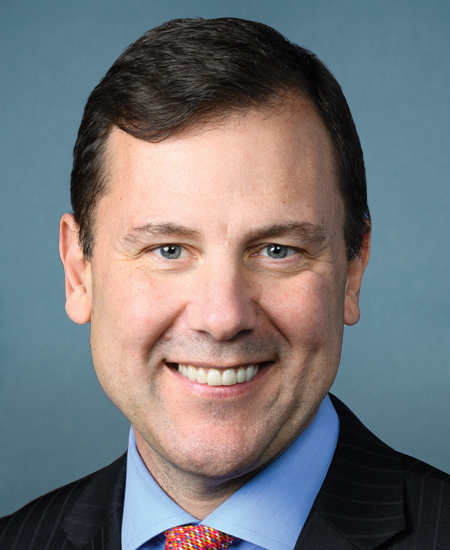
Rep. Thomas H. Kean, Jr.
Sponsored bills
Driving Veterans Success Act This bill requires that at least 10% of the funds under specified infrastructure programs are expended through veteran-owned small businesses.
Maddy summaryThis House resolution (HRES 377) calls for the immediate release of Evan Gershkovich, a U.S. citizen and Wall Street Journal reporter wrongfully detained by Russia since March 2023. It urges the U.S. government to press Russia for his release, demands consular access for him, and condemns Russia's detention of journalists. The resolution specifically references Gershkovich’s arrest on espionage charges without public evidence, aligning with Secretary Blinken’s designation of his detention as wrongful. It also extends similar calls for the release of other detained Americans, including Paul Whelan.
Maddy summaryHR 4069, the Protecting Coasts and Cities from Severe Weather Act, requires the Under Secretary of Commerce to establish a program improving coastal flood and storm surge forecasts through better data collection and technology. It directly affects coastal communities, emergency managers, and infrastructure operators (like dam and power plant staff) by aiming to reduce life and economic losses from severe weather. Key mechanisms include developing a 180-day implementation plan, prioritizing real-time ocean data, testing innovative observations (like acoustic sensors), and creating pilot projects to integrate localized weather data into emergency decisions for cities and infrastructure. The bill also mandates addressing data gaps in under-observed urban areas through new observation tools and workforce training for emergency officials.
Maddy summaryThe Bridge Corrosion Prevention and Repair Act of 2023 requires federal highway and rail bridge projects receiving federal funding to use certified contractors trained in corrosion control. It mandates a corrosion management system covering surface prep, protective coatings, materials selection, and environmental protection, and requires contractors to employ personnel certified through qualified training programs. The bill also expands federal grant funding eligibility to include corrosion control work on rail bridges and directs the Transportation Secretary to study best practices for inspecting and repairing weathering steel bridges within 18 months. These changes directly affect contractors, state transportation departments, and local governments managing federally funded bridges.
Maddy summaryThe Telehealth Expansion Act of 2023 modifies the Internal Revenue Code to require health insurance plans to cover telehealth services without applying deductibles. It directly affects high deductible health plans (HDHPs) and their enrollees, ensuring telehealth visits aren’t counted toward annual deductibles. The key provision creates a "safe harbor" (Section 223(c)(2)(E)) so plans won’t lose HDHP status for excluding telehealth deductibles. This change applies immediately upon enactment and affects all plans offering telehealth services. It does not create new funding or services but adjusts tax code requirements for existing coverage.
Maddy summaryThe Drone Safety and Efficiency Act (HR 3983) streamlines the Federal Aviation Administration's process for approving drone operation waivers under current rules. It requires the FAA to use risk-based reviews, standardize applications to avoid vague questions, and leverage past waiver data with analytics - while considering whether operators control property access for safety. The bill mandates public posting of waiver terms (with privacy safeguards) and allows faster approvals for similar past waivers, plus expedited modifications for existing waivers. This directly affects drone operators (like delivery services or survey companies) by reducing application complexity and improving regulatory predictability.
Maddy summaryHR 3980 establishes the National Oceanic and Atmospheric Administration (NOAA) as an independent agency within the executive branch, headed by an Administrator appointed by the President with Senate confirmation. The bill defines NOAA's core functions, including conducting scientific research across atmospheric, oceanic, climate, and space weather domains, maintaining the National Weather Service, and managing oceanic and coastal resources. It requires the Administrator to develop a reorganization plan within 18 months to improve efficiency and coordination across NOAA's operations, and mandates a study on consolidating Endangered Species Act and Marine Mammal Protection Act management functions. The bill also creates a Science Advisory Board to provide scientific advice to NOAA and Congress, while ensuring existing NOAA functions and authorities continue without disruption.
This resolution states that BridgeUSA programs are vital to the economy and to U.S. national interests. The resolution also states that U.S. embassies and consulates should prioritize processing J-1 visas for such programs. (BridgeUSA is the name for what was formerly known as the Exchange Visitor Program. Participants from other countries come to the United States to participate in various exchange programs, such as exchange programs for professors, trainees, interns, and au pairs.)
Maddy summaryThis bill establishes a non-paid, two-year Middle School Mental Health Task Force within the Education and Health and Human Services departments. The Task Force, composed of federal secretaries, regional educators, school counselors, and parent representatives, will study existing resources (like online tools and community services) available to middle school educators and parents for supporting students with mental health needs. It requires the Task Force to submit an annual report to Congress detailing its findings on these resources, without creating new programs or funding. The bill directly affects middle school educators, parents, and school administrators by examining current support systems, not by changing policy or providing new services.