

Maddy summaryHR 6831, the VERDAD Reauthorization Act, extends existing U.S. sanctions and restrictions on Venezuela until December 31, 2025. It modifies four separate laws (the Russian-Venezuelan Threat Mitigation Act, Venezuelan Arms Restriction Act, Venezuela Emergency Relief Act, and Venezuela Defense of Human Rights Act) by updating their expiration dates from 2023 to 2025. The bill does not create new policies but ensures current measures remain in effect. This directly affects U.S. foreign policy enforcement toward Venezuela, maintaining economic restrictions and arms limitations. The key change is simply extending the sunset dates for these existing provisions.
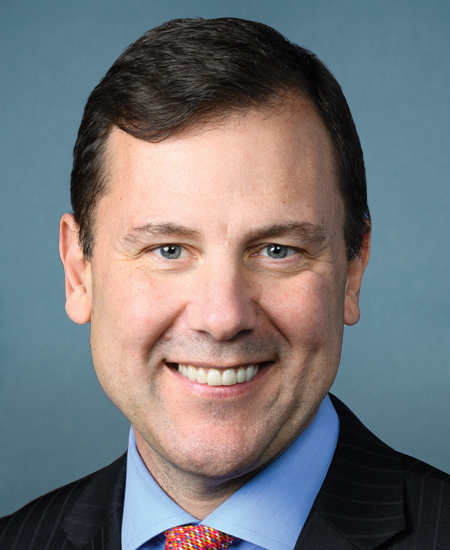
Rep. Thomas H. Kean, Jr.
Sponsored bills
Maddy summaryHR 6727 establishes the United States Foundation for International Conservation, a nonprofit organization that will provide grants to support long-term management of protected and conserved areas in eligible countries. The Foundation requires a 2:1 cost match from other sources, demands host country and community consent through binding agreements, and prioritizes areas with high biodiversity or species of significant importance. It will be governed by a Board of Directors including government officials and private sector experts, operate for 10 years with $1 million authorized for 2024 and $100 million annually from 2025-2035, and must follow international conservation standards while prohibiting funding for countries supporting terrorism or violating human rights.
Maddy summaryThis bill sets a $100,000 lifetime limit on VA educational benefits for flight training at public colleges or universities under the Post-9/11 GI Bill, adjusted annually for inflation based on the Consumer Price Index. It directly affects veterans pursuing flight training programs at public institutions of higher learning, capping their total benefit for such training at $100,000 (adjusted yearly). The annual adjustment calculates the increase using the previous year's inflation rate (CPI change between June 30 and the prior year's June 30). The limit applies only to flight training programs at public institutions and begins for veterans starting such programs on or after August 1, 2025.
Maddy summaryHR 6610, the Passport System Reform and Backlog Prevention Act, aims to reduce delays in U.S. passport processing for citizens applying for routine new or renewal passports. It mandates a 30-day processing standard from document submission to mailing, requires technology upgrades like digital tracking dashboards and mobile apps for applicant updates, and authorizes hiring up to 100 temporary staff annually for passport offices. The bill also sets cybersecurity standards, maintains affordable fees, and requires regular progress reports to Congress on implementation. These changes directly affect U.S. citizens seeking passports, particularly those in remote areas with limited access to processing centers.
Maddy summaryHR 4723 requires the U.S. President to impose sanctions on foreign individuals and entities that threaten Bosnia and Herzegovina's territorial integrity, democratic institutions, or the Dayton Peace Agreement. The President must submit a list of such persons every 90 days, triggering sanctions that block their U.S. assets and ban entry into the United States. The bill codifies existing sanctions from two executive orders and allows limited national security waivers (up to 180 days each, expiring after two years). It specifically targets actions like forming unauthorized government structures that disrupt Bosnia's central authority, violating court rulings, or engaging in government corruption.
Maddy summaryThis resolution (HRES 1086) is a symbolic gesture expressing the House's support for designating March 19, 2024, as "National Agriculture Day." It does not create new laws or policies, but instead formally recognizes agriculture as a vital industry in the U.S. economy. The resolution celebrates agriculture's broad economic impact without imposing any requirements or changes on farmers, consumers, or government programs. It is a commemorative statement, not a substantive legislative action.
Maddy summaryThis bill amends an existing provision of the Omnibus Crime Control Act to explicitly authorize federal grant funds to cover the purchase of fentanyl testing kits and opioid reversal agents. It directly affects state and local law enforcement and public health agencies that receive federal grants under this program. The key change allows current grant funding to be used for these specific harm reduction tools without requiring new legislation or appropriations.
Maddy summaryHR 7629, the Protect Our Letter Carriers Act of 2024, allocates $1.4 billion annually (2025-2029) to the U.S. Postal Service for high-security collection boxes and replacing physical universal mailbox keys with electronic versions, directly affecting USPS operations and letter carriers. It requires the Attorney General to appoint specialized prosecutors in each district to coordinate investigations and prosecutions of postal-related crimes, such as assaults on carriers or mail theft. The bill also mandates the U.S. Sentencing Commission to adjust guidelines so that assaults or robberies against postal employees are treated with the same severity as assaults against law enforcement officers. These provisions aim to enhance safety through infrastructure upgrades, improved prosecution, and stricter sentencing for crimes targeting postal workers.
Maddy summaryThis non-binding resolution expresses the House's support for in vitro fertilization (IVF) access, noting that 19% of women in the U.S. face infertility challenges. It states IVF is necessary for those unable to conceive naturally, emphasizes policies enabling family growth, and recognizes "life is precious." The resolution does not create new laws or change regulations but symbolically affirms the House's position on IVF as a vital medical option for individuals struggling with infertility. It was introduced by Rep. Chavez-DeRemer and others on February 29, 2024.
Maddy summaryThis House resolution (HRES 1036) expresses the U.S. House of Representatives' support for designating February 29, 2024, as "Rare Disease Day." It acknowledges the global observance of Rare Disease Day - first recognized in the U.S. in 2009 - and highlights the challenges faced by the over 25 million Americans living with rare diseases (affecting fewer than 200,000 people in the U.S. each). The resolution recognizes the importance of improving awareness, encouraging early diagnosis, and supporting efforts to develop treatments for rare diseases. It is a symbolic gesture with no new policies or funding, aligning with the annual global observance of Rare Disease Day.