

Maddy summaryHR 9997 designates the Department of Veterans Affairs community-based outpatient clinic in Toms River, New Jersey, as the "Leonard G. 'Bud' Lomell, Jr. VA Clinic." This ceremonial bill names the facility after Second Lieutenant Leonard G. Lomell, Jr., a D-Day hero who led a critical mission at Pointe-du-Hoc during World War II and later served his community in Toms River. The bill has no policy provisions - it simply changes the clinic's official name for recognition purposes. The naming honors Lomell's military service, post-war civic contributions, and connection to the Toms River area.
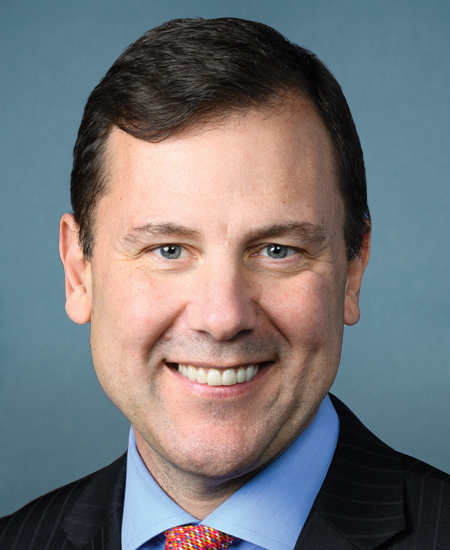
Rep. Thomas H. Kean, Jr.
Sponsored bills
Maddy summaryHRES 609 is a House resolution expressing opposition to New York City's proposed Central Business District Tolling Program, which would charge drivers up to $23 daily to enter Manhattan south of 60th Street. The resolution highlights that this fee could cost daily commuters about $5,000 annually and disproportionately burden small businesses (still recovering from pandemic lockdowns), low-income families, and students. It disapproves of the program, calls for a public economic impact report, and urges federal and state authorities to halt its implementation. The resolution notes the program is intended to generate $1 billion yearly for the MTA’s capital projects and operations, following the agency’s $690 million 2022 revenue loss.
Maddy summaryThe "Think Differently About Emergencies Act" (HR 6249) requires the Federal Emergency Management Agency (FEMA) to report to Congress within 120 days on how it supports individuals with intellectual or developmental disabilities and their families during major disasters. The report must detail FEMA’s resources, training, programs, and outreach efforts to states, localities, and nonprofits for these individuals. Within one year, FEMA and the Comptroller General must also review current assistance, identify legal barriers, and propose recommendations to improve support and streamline disaster recovery processes for people with disabilities.
Maddy summaryThe Working Dog Commemorative Coin Act (HR 807) directs the U.S. Treasury to mint three types of commemorative coins honoring working dogs' service: $5 gold coins, $1 silver coins, and half-dollar coins with specific weight and composition requirements. Each coin will carry a surcharge ($35 for $5 coins, $10 for $1 coins, $5 for half-dollars) that will be paid directly to America's VetDogs to support their programs providing service dogs for veterans, the disabled, and others. The coins will be issued in 2027 with designs reflecting working dogs' roles in military, detection, therapy, and assistance work. The legislation specifies that all surcharge revenue must fund America's VetDogs' operations without creating new government programs. This is a commemorative measure focused on honoring working dogs' contributions through coin sales, with all surcharge funds going to a specific nonprofit organization.
Maddy summaryThis resolution urges Ukraine to reverse its 2022 suspension of adoptions by foreign nationals, including U.S. citizens. It specifically asks Ukraine to review its decision and resume such adoptions, prioritizing cases where U.S. prospective parents had already completed Ukrainian adoption requirements before the suspension or where children were part of pre-existing Ukrainian hosting programs. The resolution does not change U.S. law but formally requests Ukraine address mutual concerns to protect children's best interests. It directly affects U.S. families seeking to adopt Ukrainian children and Ukraine's adoption policies.
Maddy summaryThis bill (HR 10201) amends U.S. Code provisions to move the National Woman's Relief Corps' legal incorporation and domicile from the District of Columbia to Illinois, and its principal office from Springfield to Murphysboro, Illinois. It updates the legal address for service of process to Illinois officials (Secretary of State or designated office) instead of District of Columbia entities. The bill directly affects the National Woman's Relief Corps' administrative and legal operations, requiring no new policy changes or funding. It is purely procedural, adjusting the organization's official location in federal law.
Maddy summaryThis bill enhances the existing American Battlefield Protection Program by expanding eligibility for grants to include Tribes, nonprofit organizations, and educational institutions, alongside States and local governments. It clarifies that eligible sites must be identified in the 1993 Civil War battlefield report or 2007 Revolutionary War/War of 1812 report, excluding sites already within National Park boundaries. The bill also requires the Secretary to submit updated battlefield condition reports to Congress every 10 years, starting two years after enactment, tracking preservation efforts and battlefield changes. These changes streamline program administration and ensure ongoing assessment of historic battlefield sites.
Maddy summaryHR 3012 reauthorizes U.S. programs under the North Korean Human Rights Act of 2004 through 2028, extending funding and reporting requirements for existing initiatives. It directs the U.S. Agency for Global Media to continue broadcasting independent news into North Korea, supports transparent humanitarian aid delivery, and urges China to halt forcible repatriation of North Korean refugees. The bill directly affects North Korean citizens by promoting information access and refugee protection, and North Korean refugees in China by advocating for UNHCR access and refugee rights. Key provisions include extending program deadlines, reinforcing U.S. diplomatic efforts on human rights, and calling for swift confirmation of the Special Envoy on North Korean Human Rights Issues.
Maddy summaryHRES 1590 is a symbolic resolution expressing congressional support for designating November 20, 2024, as "Carbon Monoxide Poisoning Awareness Day." It references CDC data showing over 400 annual deaths and 20,000 emergency visits from carbon monoxide poisoning, and honors Suzan Hanna, a New Jersey resident who died from CO poisoning in 2021. The resolution does not create new laws or requirements but aims to raise public awareness about the dangers of carbon monoxide, which is odorless and can build up in enclosed spaces from fuel-burning devices like vehicles and heaters. It was introduced by Representative Kean of New Jersey and referred to the Oversight Committee.
Maddy summaryThis resolution condemns the global rise of antisemitism and urges all countries and international organizations to adopt the Global Guidelines for Countering Antisemitism, which were developed by the U.S. and partners in Buenos Aires. The guidelines include specific policies for protecting Jewish communities, collecting data on antisemitism, and promoting Holocaust education. As a non-binding resolution, it does not create new laws but calls for formal endorsement of these international standards. The House emphasizes strengthening global cooperation to counter antisemitism, referencing the U.S. National Strategy to Counter Antisemitism and over 40 nations that have already supported the guidelines.