

Maddy summaryHR 1502 authorizes the creation of a Congressional Gold Medal to honor the volunteers and communities (primarily from Nebraska, Colorado, and Kansas) who supported the North Platte Canteen during World War II. The bill directs the Treasury Secretary to design and strike the medal, which will be presented to the individuals who contributed to the canteen’s operations and then permanently displayed at the Lincoln County Historical Museum in North Platte, Nebraska. It also permits the sale of bronze duplicates to cover production costs, with proceeds going to the U.S. Mint. This is a commemorative measure recognizing historical service, not a policy change affecting current laws or programs.
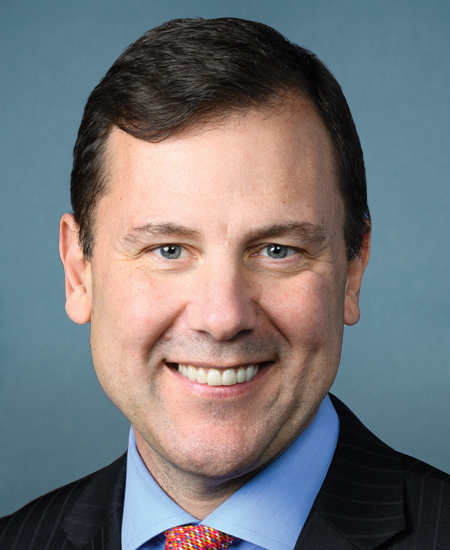
Rep. Thomas H. Kean, Jr.
Sponsored bills
Maddy summaryHR 1478, the One Seat Ride Act, requires the U.S. Department of Transportation to study commuter rail service improvements that eliminate transfers for passengers (single-seat trips), focusing on economic, logistical, and quality-of-life factors. The study specifically analyzes the costs, benefits, and impacts of implementing such trips on the New Jersey Transit Raritan Valley line during peak hours and other New Jersey Transit lines. The Secretary must submit a report to Congress within one year of the bill's enactment, but the bill itself does not fund or implement any changes. This is a procedural study bill with no direct policy impact or affected constituencies.
Maddy summaryHR 1505, the Public Safety Employer-Employee Cooperation Act, establishes federal standards for collective bargaining rights for public safety officers (including police, firefighters, and emergency medical personnel) in states that do not meet minimum requirements. The Federal Labor Relations Authority (FLRA) will determine after 180 days whether a state law "substantially provides" key rights, such as forming unions, negotiating wages/hours, and using binding arbitration to resolve disputes. If a state fails this assessment, federal bargaining rules apply within two years, but existing state laws with stronger protections remain valid. The bill explicitly respects state laws that exceed its standards and exempts small jurisdictions (under 5,000 population or 25 full-time employees).
Maddy summaryHR 1477 creates a new Animal Cruelty Crimes Section within the Justice Department's Environment and Natural Resources Division to enforce federal animal cruelty laws. This unit will coordinate with agencies like the FBI, USDA, and U.S. Marshals to investigate and prosecute cases, addressing current gaps in enforcement. The bill requires the unit to submit annual reports to Congress detailing prosecutions, convictions, and investigations where charges weren't filed. It does not change existing animal cruelty laws but establishes a dedicated federal unit to improve enforcement of current statutes.
Maddy summaryHR 1492 amends the Social Security Act to extend the negotiation period for standard drug manufacturers under the federal drug pricing program. Specifically, it changes the timeframe from 7 years to 11 years for small-molecule drugs (like traditional pills) to negotiate prices with the government, aligning it with the existing 12-year period for complex biologic drugs (like insulin or monoclonal antibodies). This adjustment directly affects pharmaceutical companies that produce small-molecule drugs, giving them a longer window to negotiate pricing terms. The bill makes this change effective as if it had been part of the 2022 law that established the program.
Maddy summaryHR 1438, the *Protecting America’s Agricultural Land from Foreign Harm Act of 2025*, prohibits foreign governments of Iran, North Korea, China, and Russia (and entities they control) from purchasing or leasing U.S. agricultural land, including both public land managed by federal agencies and private land. It also bans such entities from participating in most U.S. Department of Agriculture (USDA) programs if they own or lease agricultural land, with limited exceptions for food safety and health programs. The bill expands disclosure requirements under the Agricultural Foreign Investment Disclosure Act to include leases and security interests, and mandates public data sets showing foreign ownership details and land values. These changes aim to increase transparency around foreign ownership of U.S. farmland while targeting specific foreign governments deemed national security concerns.
Maddy summaryHR 1421, the "Make American Flags in America Act of 2025," requires all flags of the United States displayed on federal property or procured by federal agencies to be 100% manufactured in the United States. This directly affects federal agencies (including executive departments, military branches, and legislative/judicial offices) by banning the use of foreign-made flags for official displays or purchases. The bill sets a 90-day deadline for procurement changes and a two-year timeline for display requirements, while excluding private entities from these rules. It also mandates a Federal Trade Commission study on enforcing country-of-origin labeling for flags, with a report due within one year of enactment.
Maddy summaryHR 1414, titled "Cameron’s Law," increases the tax credit for pharmaceutical companies developing orphan drugs (medicines for rare diseases) from 25% to 50% of qualified research expenses. This change directly affects drug manufacturers investing in treatments for conditions affecting fewer than 200,000 people in the U.S. The bill amends the Internal Revenue Code to implement this higher credit rate, effective for taxable years starting after the law’s enactment. It provides a concrete financial incentive to encourage research into rare disease treatments without altering eligibility criteria or adding new requirements.
Maddy summaryHR 1410 expands access to mental health care for 9/11 responders and survivors by allowing licensed mental health providers (not just physicians) to conduct initial health evaluations and certifications under the World Trade Center Health Program. It adjusts the program’s funding formula to account for changing enrollment numbers by linking annual funding to the previous year’s enrollment ratio, and clarifies that deceased individuals are excluded from enrollment counts. The bill also extends the timeframe for adding new health conditions to the program’s list and requires a 2028 report assessing long-term funding needs through 2090. These changes aim to streamline eligibility, improve care access, and ensure sustainable funding for the program.
Maddy summaryHR 1411, the "No Veteran Should Go Hungry Act of 2025," requires the military's Transition Assistance Program (TAP) to provide veterans with information and counseling about federal food assistance programs. Specifically, it mandates that TAP include details on the Supplemental Nutrition Assistance Program (SNAP) and the Women, Infants, and Children (WIC) program, developed in consultation with the Secretary of Agriculture. This change directly affects transitioning veterans by connecting them to existing nutrition support resources during their military-to-civilian transition. The bill does not create new benefits but ensures veterans receive clear guidance on accessing current federal food assistance programs.