

Maddy summaryThis non-binding resolution (HRES 844) expresses the U.S. House of Representatives' support for designating October 2025 as "Crime Prevention Month." It encourages federal agencies to fund evidence-based crime prevention programs - like youth mentorship, mental health services, and neighborhood safety initiatives - and urges state/local governments to adopt strategies such as Crime Prevention Through Environmental Design. The resolution also commends community workers and calls on all citizens to participate in public safety activities during October. It has no legal effect but aims to raise awareness and foster collaboration across communities, government, and private sectors to reduce crime.
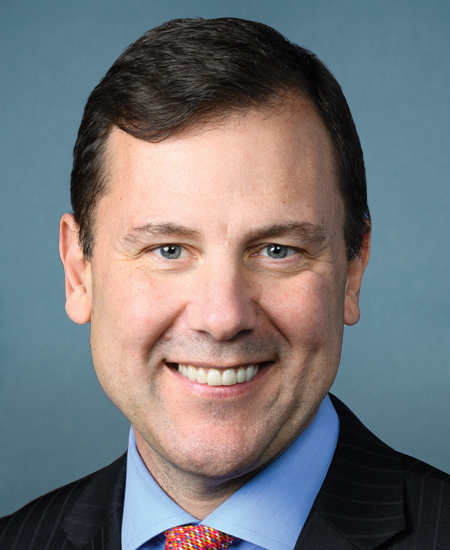
Rep. Thomas H. Kean, Jr.
Sponsored bills
Maddy summaryHR 5852 authorizes a study to evaluate the Upper Raritan River Watershed in New Jersey for potential inclusion in the National Wild and Scenic Rivers System. The bill designates specific segments of the North Branch Raritan River, South Branch Raritan River, and Lamington-Black River, along with their tributaries, for this study. The Secretary of the Interior must complete the study within three years of funding and submit a report to Congress detailing the findings. This bill does not protect the rivers directly but initiates a process to assess their eligibility for future conservation designation under federal law. The study would specifically cover the Upper Raritan River watershed in New Jersey.
Maddy summaryHR 5835, the REPO Implementation Act of 2025, establishes a mechanism to use frozen Russian sovereign assets held abroad for Ukraine's benefit. It creates a "Ukraine Support Fund" to hold these assets without confiscation and requires the U.S. Treasury to invest them in U.S. government obligations. The bill mandates quarterly transfers of at least $250 million from the fund to Ukraine for assistance, with final amounts spent when less remains. It also requires the President to report to Congress on Russian assets held by foreign countries (including G7/EU members) and urges diplomatic efforts to secure similar asset repurposing from those nations.
Maddy summaryThis bill ensures SNAP (food stamp) benefits continue uninterrupted during government funding gaps in fiscal year 2026. It directs the USDA to use existing Treasury funds to pay SNAP benefits if Congress fails to pass a full-year budget for the Department of Agriculture by September 30, 2025. The bill also covers retroactive payments for missed benefits starting September 30, 2025, through the bill's enactment date. Benefits funded this way stop once Congress enacts a full FY2026 budget for the USDA. It directly affects SNAP recipients who rely on these benefits during budget delays.
Maddy summaryHRES 826 is a symbolic resolution supporting the designation of October 20-24, 2025, as "Careers in Energy Week." It raises awareness about energy sector job opportunities - spanning traditional and renewable energy fields, technical roles, and STEM education - to encourage students and young professionals to pursue these careers. The resolution does not create new laws or funding but urges educational institutions, industry groups, and communities to host events during this week. It directly affects public awareness of energy workforce pathways, not specific individuals or regulations.
Maddy summaryHR 5772, the "Remembering American Hostages Act of 2025," amends federal law to require the display of a special flag on designated dates at specific locations. It adds key dates to the existing flag display protocol, including November 4 and January 20 (Iranian hostage crisis), August 19 (James Foley's death), and October 7 (Hamas attack with American hostages). The bill mandates this flag be flown at all U.S. federal buildings, embassies, consulates, Department of Justice offices, and passport offices on these dates. It also encourages state/local governments and airports to fly the flag on these dates through a non-binding Congressional sense of the matter.
Maddy summaryHR 5791, the BLOOD Centers Act, creates a 30-day expedited approval process for blood centers seeking to add apheresis collection devices to existing biologics licenses. It directly affects blood centers operating under FDA biologics licenses that already manage multiple locations or hold accredited status. The bill requires the FDA to approve such applications within 30 days unless safety concerns exist at the specific location or the center has systemic safety failures elsewhere. This streamlines the process for expanding blood collection capabilities without compromising safety standards.
Maddy summaryThis bill establishes the New York-New Jersey Watershed Restoration Program to coordinate and fund habitat restoration and water quality improvements across the shared watershed region. It creates a competitive grant program providing federal matching funds (up to 90% for small/rural/disadvantaged communities) to state/local governments, nonprofits, and tribes for projects advancing habitat restoration, climate resilience, and public access. The program prioritizes communities facing environmental injustice and requires coordination with existing regional conservation plans like the Hudson River Estuary Program. Funding of $20 million annually (2026-2031) will support these activities, with 75% dedicated to the grant program and all projects supplementing existing conservation efforts.
Maddy summaryHRES 795 is a non-binding resolution condemning Hamas for the October 7, 2023, attacks that killed over 1,200 people, took 251 hostages (including Americans), and involved sexual violence. It demands Hamas immediately surrender and release all remaining hostages - specifically noting 48 people still held, including two U.S. citizens. The resolution also affirms Israel’s right to self-defense, calls for humanitarian aid to reach Palestinians, and condemns global antisemitism following the attacks. As a symbolic congressional statement, it does not create new laws or alter policies.
Maddy summaryThis bill adds Medicare coverage for multi-cancer early detection screening tests (blood or biological tests analyzing cell-free DNA) starting January 1, 2028. It directly affects Medicare beneficiaries aged 68 and older (starting in 2028, with the age limit increasing by 1 year annually), requiring tests to be FDA-cleared and deemed reasonable/necessary by the Secretary for early cancer detection across multiple organ sites. Payment will initially match current stool DNA test rates before 2031, then shift to a lower rate or new payment system after 2031, with limits preventing more than one test per year. The bill explicitly states it does not alter coverage for existing cancer screenings like breast, colorectal, or prostate cancer tests.