

Maddy summaryHR 4837, the Written Informed Consent Act, requires the Veterans Health Administration (VHA) to update its existing directive on informed consent to include additional medication classes. Specifically, it mandates that written informed consent must be obtained before prescribing antipsychotics, stimulants, antidepressants, anti-anxiety medications (anxiolytics), and narcotics (opioids) to veterans. This expansion directly affects veterans receiving these medications through the VA system, ensuring they are informed about specific treatment risks and alternatives. The key mechanism is amending VHA Directive 1005 to broaden its application beyond long-term opioid therapy to cover the newly listed medication types.
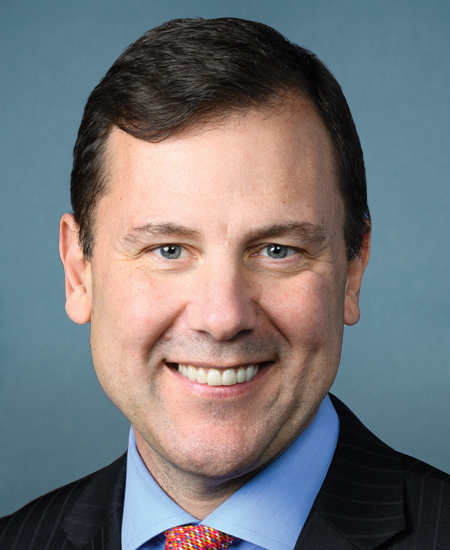
Rep. Thomas H. Kean, Jr.
Sponsored bills
Maddy summaryHR 4663, the Saving Vet Halls Act of 2025, authorizes the Department of Veterans Affairs to provide grants to eligible veterans service organizations for repairing existing facilities or upgrading technology at their locations. Organizations must submit detailed improvement plans, and grants are limited to $75,000 per year per organization, with recipients ineligible for another grant for five years. The bill explicitly prohibits using funds for new construction or facility acquisition and requires the VA to prioritize organizations based on need, plan quality, and capacity. This program, funded by $10 million annually, directly supports chartered veterans service organizations under 36 U.S.C. § 3621.
Maddy summaryThe PEERS Act of 2025 requires Medicare to cover peer support services provided by certified specialists at community mental health centers, rural health clinics, and other specified facilities. It directly affects Medicare beneficiaries with mental health or substance use disorders who receive these services, and providers like community mental health centers that will now bill Medicare for this care. The bill defines peer support services as non-clinical assistance focused on recovery, community integration, and self-empowerment, delivered by individuals certified after recovering from similar conditions. Coverage begins January 1, 2027.
Maddy summaryThe "Peace Through Strength Against Russia Act of 2025" proposes to significantly expand and strengthen U.S. sanctions against the Russian Federation and its supporters. The bill mandates blocking property and restricting visas for Russian government officials, state-owned financial institutions, and entities supporting Russia's defense industrial base or war efforts in Ukraine, including those involved in kidnapping Ukrainian children. Key provisions prohibit U.S
Maddy summaryAlyssa's Act of 2025 expands the Federal Clearinghouse on School Safety Evidence-based Practices to collect and analyze school safety data, including information on school shootings and emergency response effectiveness. The bill creates a National School Safety Data Center to track incidents, injuries, and response methods, while requiring emergency response maps for schools to meet specific digital standards for accessibility and real-time updates. It also establishes a program to develop and test panic alarm technology for schools, and mandates annual reports on school safety master plans developed by states and local educational agencies. The legislation requires coordination with the U.S. Secret Service's National Threat Assessment Center to align school safety practices with evidence-based approaches.
Maddy summaryThis bill establishes a digital system for TRICARE members to electronically file and track complaints about access to care at military medical facilities. It requires the Defense Department to create a system where beneficiaries can submit complaints online, view their status in real time, and have complaints automatically aggregated quarterly for review. The system mandates annual reports to Congress comparing complaint types (e.g., specialty vs. primary care, pediatric vs. non-pediatric, administrative hurdles) and detailing facility-level actions taken to address issues. The goal is to improve transparency and accountability in military healthcare access.
Miracle on Ice Congressional Gold Medal Act This act provides for the award of Congressional Gold Medals to the members of the 1980 U.S. Olympic men's ice hockey team in recognition of the team's achievement at the 1980 Winter Olympic Games.
Maddy summaryHR 6647, the Drone Safety Enhancement Act, requires NASA to collaborate with the FAA and other agencies on research into drone technology and advanced air mobility systems. It mandates NASA to brief Congress within 18 months on progress related to unmanned aircraft systems, traffic management (UTM), and autonomous capabilities. The bill directly affects NASA, the FAA, and industry stakeholders developing urban/regional air mobility systems using drones or autonomous aircraft. It focuses on research coordination rather than imposing new regulations, defining terms like "urban air mobility" (e.g., passenger drones under 1,320 lbs) and "regional air mobility" (e.g., larger cargo drones).
Maddy summaryThe Safer Schools Act of 2025 establishes a 5-year federal pilot program providing grants to public schools for security risk assessments and physical security upgrades. Public schools that have experienced violent incidents involving multiple people are prioritized for both types of grants. Schools receiving assessment grants must first identify vulnerabilities, while improvement grants fund specific security measures like panic alarms linked to local police, with federal funds covering up to 50% of costs. The program allocates $600 million total ($100M-$300M annually), requiring schools to submit financial reports and post-implementation safety surveys, with annual congressional reports tracking outcomes.
Maddy summaryThe Safer GAMING Act requires online video game providers to give parents default-enabled tools to limit communication between their minor children (under 18) and other players (including adults) within interactive online games. Providers must make these privacy and safety controls easy to use, automatically active on minors' accounts, and only adjustable by parents. The Federal Trade Commission enforces these requirements as deceptive practices, and states can also take action to stop violations. This directly affects parents of minors who play online games with chat or voice features, aiming to reduce exposure to inappropriate interactions.