

Maddy summaryThe Railway Safety Act of 2026 establishes new safety requirements for trains transporting hazardous materials, including speed limits, enhanced reporting, and stricter tank car standards. It mandates that high-hazard trains carrying flammable liquids or toxic materials be limited to 40 mph in urban areas, while requiring railroads to provide real-time information to emergency responders. The bill also increases penalties for safety violations, requires more frequent inspections of rail equipment, and creates a new emergency response assistance program to help communities affected by hazardous materials incidents. Additionally, it authorizes funding for research into safer tank cars and defect detection systems, and requires the Federal Railroad Administration to improve its safety workforce management.
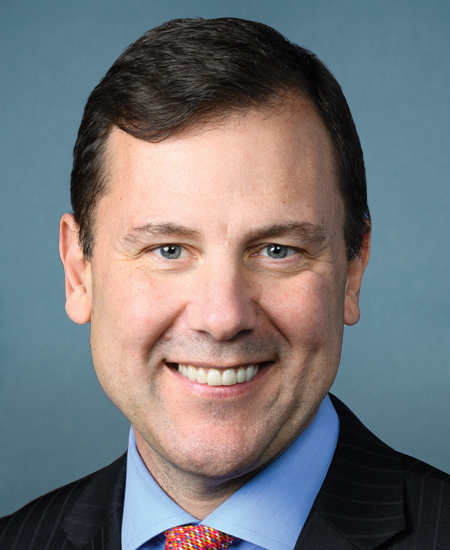
Rep. Thomas H. Kean, Jr.
Sponsored bills
Maddy summaryThis bill, known as the Quantum in Practice Act, amends the National Quantum Initiative Act to formally include quantum modeling and simulation as a core area of research. It directly affects federal agencies and researchers involved in quantum information science by updating the legal definition and adding specific funding priorities for quantum molecular modeling. The legislation aims to support scientific work that could lead to breakthroughs in areas like fertilizer production, drug development, battery technology, and new materials. By making these changes, the bill ensures that federal quantum research programs explicitly cover the development and study of quantum simulations for practical applications.
Accessing Satellite Capabilities to Enable New Discoveries Act or the ASCEND Act This bill provides statutory authority for the Commercial SmallSat Data Acquisition (CSDA) program run by the National Aeronautics and Space Administration (NASA). Through the CSDA program, NASA acquires remote sensing data and imagery from commercial satellites to support its Earth science research. ( Remote sensing generally refers to the collection of data by instruments in Earth’s orbit, such as satellites, that can be processed into imagery of Earth’s surface.) Under the bill, NASA may establish or modify end-use agreements to allow for broad use of data and imagery acquired under the program, including by individuals outside of NASA (e.g., other federal agencies). The terms of any data or imagery acquisition may not prevent the publication of such data or imagery for scientific purposes or the publication of information derived from it. To the extent practicable, NASA must acquire such data and imagery from U.S. vendors.
Law-Enforcement Innovate to De-Escalate Act This bill removes less-than-lethal projectile devices (e.g., certain TASERs) from regulation under the Gun Control Act. The term less-than-lethal projectile device means a device that (1) is not designed or intended to expel (and may not be readily converted to discharge) commonly used ammunition or projectiles exceeding a velocity of 500 feet per second; (2) is designed and intended to be used in a manner not likely to cause death or serious bodily injury; and (3) does not accept (and cannot be readily modified to accept) an ammunition feeding device. The bill also requires the Bureau of Alcohol, Tobacco, Firearms and Explosives to determine whether a device satisfies the definition of a less-than-lethal projectile device within 90 days of a request.
Maddy summaryThis bill increases the annual stipend for books, supplies, and educational materials under the Post-9/11 GI Bill from $1,000 to $1,400, effective immediately. It also establishes a new automatic annual adjustment starting in fiscal year 2026, tying stipend increases to inflation using the Consumer Price Index (CPI). Specifically, the stipend will rise each year by the percentage difference between the current CPI and the previous year’s CPI. This directly affects veterans using the Post-9/11 Educational Assistance Program for their education expenses.
Maddy summaryHR 7648, the Local Taxpayer Protection Act of 2026, provides federal grants to municipalities hosting or developing U.S. Immigration and Customs Enforcement (ICE) processing or detention facilities. The bill directly affects these municipalities by covering their lost property tax revenue and costs for public utilities (like water, electricity, and sewer systems) used by the ICE facilities. Grants, capped at the prior year's combined lost revenue and utility costs, are for 5 years with renewal options, and require applications detailing financial need, cost-benefit analysis, and other funding sources. Funds must offset specific costs, with a goal of making the facilities self-sufficient for utility use over time.
Maddy summaryThis bill directs U.S. agencies to support Iranian people's access to uncensored information and hold Iranian officials accountable for human rights abuses. It requires the State Department and FCC to report on technologies (like satellite networks and mesh systems) that could bypass internet restrictions in Iran, and authorizes $2 million annually to develop such tools. The bill also establishes a new "Iran Kleptocracy Initiative" at FinCEN to track corruption, freeze assets of Iranian regime officials and state-owned businesses, and coordinate with international partners. These measures apply to U.S. policy toward Iran but do not alter Iran's domestic laws; they focus on U.S. sanctions, technology development, and anti-corruption efforts targeting the Iranian regime.
Maddy summaryHR 1320, the Modern Worker Security Act, changes how federal law determines if a worker is an employee or independent contractor. It prohibits considering whether a worker has access to "portable benefits" (like health insurance, retirement savings, or paid leave that they can keep after leaving a job) when making this classification. This directly affects workers who might currently be misclassified as independent contractors, denying them employee benefits. The key mechanism is removing portable benefits from the employee status determination process, aiming to ensure workers who perform regular work for an employer qualify for standard employee protections.
This bill specifies a legal standard for determining whether an individual is considered an independent contractor rather than an employee for the purposes of federal labor laws that address issues such as the federal minimum wage, overtime compensation, and collective bargaining. The rights and protections provided by these laws exclusively apply to employees. Under the bill, an individual is considered an independent contractor if (1) another individual or entity does not exercise significant control over the details of how the individual's work is performed, without regard to any control the other individual or entity may exercise over the final result of the work performed; and (2) while performing such work, the individual has opportunities and risks inherent with entrepreneurship (for example, the discretion to exercise professional judgment). The bill also sets forth factors that may not be used to determine whether an individual is an employee. Specifically, factors such as whether another individual or entity requires the individual to meet certain legal, health and safety, insurance, or performance requirements may not be used to make such a determination.
Maddy summaryThis bill establishes the United States-Israel Defense Technology Cooperation Initiative to accelerate joint development and integration of defense technologies between the two countries. It directs the U.S. Secretary of Defense, with Israel’s agreement, to identify Israeli-origin technologies for rapid adoption into U.S. military systems, focusing on areas like counter-drone systems, missile defense (including "Golden Dome for America"), AI, cyber defense, and directed energy. The initiative requires annual congressional reporting on progress, partnerships with industry, and technology transitions, while authorizing $150 million annually for fiscal years 2027-2029. It aims to strengthen bilateral defense innovation and streamline the use of Israeli technologies within U.S. military programs.