

Maddy summaryThe FAIR Act of 2025 would prohibit companies from requiring pre-dispute arbitration agreements or waivers that prevent individuals from joining class or collective lawsuits in employment, consumer, antitrust, or civil rights cases. This directly affects workers, consumers, and small businesses who currently face forced arbitration for issues like workplace discrimination, product defects, or unfair business practices. The bill makes such agreements unenforceable while allowing voluntary arbitration after disputes arise and leaving collective bargaining agreements unaffected. It applies to all disputes occurring after the law takes effect, without changing how voluntary arbitration works post-dispute.
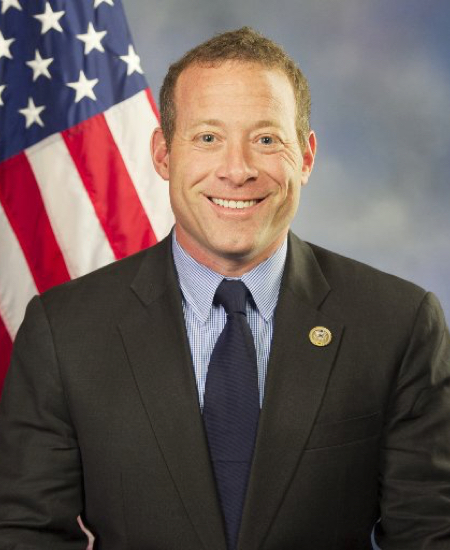
Rep. Josh Gottheimer
Sponsored bills
Maddy summaryThis bill would establish September 11 as a permanent legal public holiday for federal employees and agencies. It amends Title 5 of the U.S. Code to add "September 11 Day of Remembrance" to the list of designated federal holidays, following Labor Day. The change would require federal offices to close on September 11 each year, directly affecting federal workers and government operations.
Maddy summaryThis bill (HR 5332) mandates a federal review of liquid cooling technologies for data centers, requiring the Government Accountability Office (GAO) to assess their research needs, costs, benefits, and market adoption within 90 days. The study will evaluate how liquid cooling compares to air cooling for efficiency, safety, and heat reuse, including waste heat capture for secondary uses. It directly affects federal agencies operating data centers (like the Department of Energy) by informing future infrastructure decisions. The GAO report and subsequent Department of Energy assessment will guide potential policy but do not fund or require adoption of liquid cooling.
Maddy summaryHR 5309, the Congressional Tribute to Constance Baker Motley Act of 2025, authorizes a posthumous Congressional gold medal for Constance Baker Motley, a pioneering civil rights attorney and judge. The bill directs the Treasury Secretary to strike the medal with her image and name, to be presented to her son, Joel W. Motley III, and her niece, Constance Royster. It also permits the sale of bronze duplicates at cost to cover expenses, with proceeds going to the U.S. Mint fund. This is a commemorative measure with no substantive policy changes, honoring Motley’s legacy as the first African-American woman appointed to a federal judgeship.
Maddy summaryHR 5321 extends the deadline for allowing low-emission and energy-efficient vehicles to use high-occupancy vehicle (HOV) lanes from September 30, 2025, to December 31, 2026. It also requires the Transportation Secretary to conduct a study within 180 days of enactment on whether electric vehicle exemptions in HOV lanes reduce traffic congestion, with results reported to Congress. The bill directly affects state and local transportation agencies managing HOV facilities and the Department of Transportation. Key provisions include the deadline extension and the mandated study, with no changes to vehicle eligibility rules.
Maddy summaryHRES 697 is a symbolic House resolution recognizing suicide as a preventable public health issue and supporting the designation of September as "National Suicide Prevention Month" and September 10, 2025, as "World Suicide Prevention Day." It does not create new laws or allocate funds but formally expresses congressional support for these designations to raise awareness. The resolution cites statistics showing suicide as a leading cause of death across age groups, including among veterans and adolescents, and emphasizes mental health as equally important as physical health. It acknowledges the need for diverse prevention strategies without specifying new policies or programs. This resolution is purely declarative, aiming to bolster public awareness rather than enact concrete changes.
Maddy summaryHRES 692 is a non-binding resolution urging all 50 U.S. states to incorporate the events of the September 11, 2001, terrorist attacks into K-12 school curricula. It directly addresses state education systems, calling for mandatory inclusion of this history in public school lessons to ensure future generations remember the attacks. The resolution does not create new laws or funding but expresses the House's view that this education is essential for honoring victims and first responders. It cites that only 14 states currently require such instruction and emphasizes preserving this historical context for national security awareness.
Maddy summaryThe SAFE Ride Act of 2025 establishes a federal grant program to fund state-level electric bike safety initiatives. States must demonstrate compliance with specific requirements to qualify, including enforcing helmet laws for riders under 18, collecting e-bike accident data by demographics, and providing public safety education on helmet use. The bill mandates the creation of national helmet safety standards for minors and requires the development of public safety curricula for e-bike users. It directly affects states receiving grants and local law enforcement agencies implementing these safety measures.
Maddy summaryThis bill reauthorizes the existing program providing support and treatment services for law enforcement officers experiencing mental health crises. It extends the funding authorization period from 2020-2024 to 2025-2029 under the Omnibus Crime Control and Safe Streets Act of 1968. The bill directly affects law enforcement officers who access these crisis support services through participating state and local programs. It makes no new policy changes but ensures the current program continues operating without interruption for five additional years.
Maddy summaryThis bill amends Medicare regulations to include "blood culture contamination" as a hospital-acquired condition starting in fiscal year 2026. It directly affects Medicare-participating hospitals, requiring them to maintain blood culture contamination rates below 1% to avoid penalties. The key provision establishes a specific 1% threshold for contamination rates that hospitals must meet under Medicare's quality reporting system. This change aims to improve diagnostic accuracy by holding hospitals accountable for preventing contamination in sepsis testing.