

Maddy summaryThe Pray Safe Act of 2025 establishes a federal Clearinghouse within the Department of Homeland Security to provide houses of worship, faith-based organizations, and nonprofit groups at risk of threats with evidence-based safety resources. The Clearinghouse will publish online best practices for security planning, facility safety, and incident response, while listing existing federal and state grant programs to help these organizations implement these measures. It requires annual updates based on user feedback and includes a centralized resource section for contacts like Protective Security Advisors and Fusion Centers. The program expires four years after enactment and does not create new funding but coordinates existing federal and state safety resources.
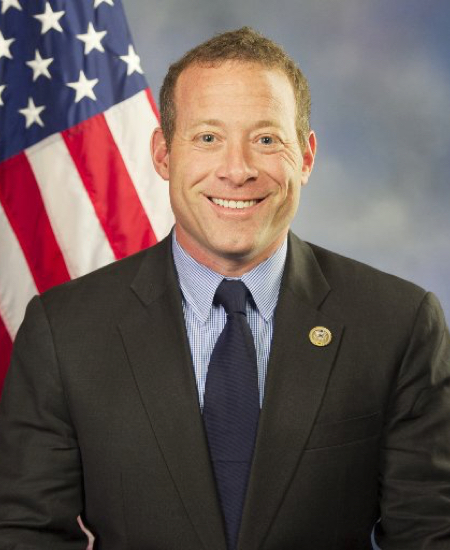
Rep. Josh Gottheimer
Sponsored bills
Maddy summary# Summary of Digital Commodities and Blockchain Technology Regulatory Framework This comprehensive legislation establishes a new regulatory framework specifically for digital commodities and blockchain technology, creating a balanced approach that protects investors while fostering innovation. ## Key Components 1. **New Regulatory Structure**: - Creates new categories for digital commodity exchanges, brokers, and dealers under the Commodity Futures Trading Commission (CFTC) - Establishes "qualified digital asset custodians" as a new regulatory category - Defines "mature blockchain systems" with special regulatory treatment 2. **Core Requirements**: - Mandates segregation of customer assets and strict custody requirements - Requires robust risk management systems - Sets capital requirements for digital commodity brokers and dealers - Establishes new disclosure and reporting obligations - Defines "blockchain control persons" with special restrictions on selling digital commodities 3. **Innovation-Focused Provisions**: - Creates a "Strategic Hub for Innovation and Financial Technology" (FinHub) at the SEC - Establishes "LabCFTC" as a dedicated innovation lab within the CFTC - Provides exemptions for SEC-registered entities from certain CFTC requirements - Includes provisions for expedited hiring of digital commodities experts 4. **Studies and Research**: - Mandates studies on decentralized finance (DeFi) - Requires a study on non-fungible tokens (NFTs) - Directs a study on financial literacy among digital commodity holders - Requires a study on tokenized securities and derivatives 5. **Exclusions**: - Excludes decentralized finance activities from regulation - Excludes certain blockchain-related activities from regulatory requirements The legislation aims to create a functional regulatory framework that acknowledges the unique benefits and risks of digital commodities while ensuring investor protection, preventing market manipulation, and promoting the responsible development of this emerging technology within the United States. It seeks to prevent the shift of digital commodity development to less regulated countries by establishing a clear, balanced regulatory path.
National Law Enforcement Officers Remembrance, Support and Community Outreach Act. [ sic ] This bill temporarily directs the Department of the Interior to award a grant to the National Law Enforcement Officers Memorial Fund for the expenses associated with operating and enhancing the community outreach, public education, and officer safety and wellness programs of the National Law Enforcement Museum.
Maddy summaryThe No Grounds for Discrimination Act requires coffee shops, cafes, tea houses, and similar informal dining establishments to provide equal access to their goods and services without discrimination based on factors such as race, religion, sex, or disability. The bill directly affects these businesses by prohibiting segregation or refusal of service on the listed protected grounds. Enforcement of these rules would follow the same procedures used for violations of Title II of the Civil Rights Act of 1964.
Maddy summaryThe Stop Rogue AI Act requires the National Institute of Standards and Technology to develop security standards for organizations that deploy artificial intelligence agents. These standards mandate that companies maintain a continuous inventory of their AI agents, verify their identities using cryptographic methods, and monitor their activities to detect unauthorized actions or data theft. The bill also updates federal procurement rules to require government contractors to comply with these new security measures when building or deploying AI systems. By establishing these technical requirements, the legislation aims to ensure that organizations can identify and control the AI agents operating within their digital environments.
Maddy summaryThis bill requires U.S. colleges and universities receiving federal student aid (Title IV) or specific grants (Title VI) to annually certify by July 31 that they will not engage in "nonexpressive commercial boycotts" of countries designated as strategic partners of the U.S. (such as Israel under existing law). The certification must confirm these institutions will permit equal academic exchanges - like study abroad programs, conferences, and research - with strategic partner countries as they do with other nations. Failure to submit the certification results in loss of federal funding eligibility for the following fiscal year. It directly affects all higher education institutions relying on federal financial aid programs.
Maddy summaryHR 1869 creates a new DOJ task force within the Criminal Division to investigate and prosecute international trade crimes, such as customs evasion, smuggling, and trade-based money laundering. It requires the DOJ to hire specialized prosecutors, coordinate with agencies like U.S. Customs and Border Protection, and focus on specific violations covered under statutes like 18 U.S.C. §§ 541-546 and 21 U.S.C. § 331. The bill authorizes $20 million in funding for fiscal year 2026 (with 80% dedicated to criminal prosecutions), mandates annual reports to Congress on enforcement activities, and requires the DOJ to develop multi-agency partnerships to address these crimes. This directly affects federal prosecutors, border enforcement agencies, and industries impacted by trade violations.
Maddy summaryThis bill designates the U.S. Postal Service facility at 2407 State Route 71, Suite 1, in Spring Lake, New Jersey, as the "James J. Howard Post Office." All federal references to this location in laws, documents, or records will now use the new name. The bill is purely procedural and does not create new policies or affect any services or individuals.
Maddy summaryThis House resolution formally recognizes suicide as a serious public health problem in the United States and expresses support for designating September 2026 as National Suicide Prevention Month and September 10, 2026, as World Suicide Prevention Day. The bill cites data from the CDC, SAMHSA, and the VA to highlight that suicide is a leading cause of death among young people, veterans, and during the postpartum period, while also noting the significant economic costs associated with it. It declares suicide prevention a national priority and emphasizes that mental health is as important as physical health. The resolution supports the development of strategies to improve access to quality mental health, substance abuse, and suicide prevention services for all communities.
Maddy summaryThis House resolution formally recognizes New Jersey's law enforcement officers, firefighters, and emergency medical personnel for their roles in the rescue and recovery efforts following the September 11, 2001 attacks. It highlights specific contributions, such as the large-scale waterborne evacuation across the Hudson River and the deployment of the state's urban search and rescue team to Ground Zero. The measure also honors those who have died from 9/11-related illnesses in the years since the attacks. Finally, it reaffirms the federal commitment to funding the World Trade Center Health Program and the September 11th Victim Compensation Fund.