

Safe Schools Improvement Act of 2021 This bill requires states to direct their local educational agencies (LEAs) to establish policies that prevent and prohibit bullying and harassment of elementary and secondary school students. In particular, these policies must prohibit bullying and harassment based on race, color, national origin, sex, sexual orientation, gender identity, disability, or religion. Further, LEAs must provide (1) students, parents, and educational professionals with annual notice of the conduct prohibited in their disciplinary policies; (2) students and parents with grievance procedures that target such conduct; and (3) the public with annual data on the incidence and frequency of that conduct at the school and LEA level. The Department of Education must conduct and report on an independent biennial evaluation of programs and policies to combat bullying and harassment in elementary and secondary schools. The National Center for Education Statistics must collect state data to determine the incidence and frequency of the conduct prohibited by LEA disciplinary policies.
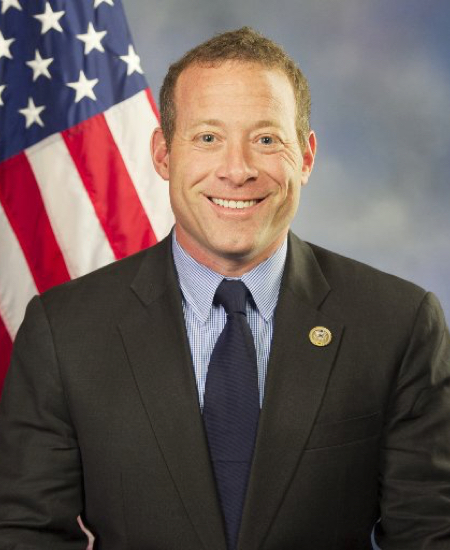
Rep. Josh Gottheimer
Sponsored bills
Women and Minorities in STEM Booster Act of 2021 This bill requires the National Science Foundation to award competitive grants to enable eligible entities to carry out the activities specified below in order to increase the participation of women and underrepresented minorities in the fields of science, technology, engineering, and mathematics (STEM). An eligible entity that receives a grant shall use grant funds to carry out one or more of the following activities designed to increase the participation of women or minorities underrepresented in science and engineering, or both: online workshops, mentoring programs that partner STEM professionals with students, internships for undergraduate and graduate students in STEM fields, outreach programs providing elementary and secondary school students with opportunities to increase their exposure to STEM fields, and programs to increase the recruitment and retention of underrepresented faculty.
Sustainable Shark Fisheries and Trade Act of 20 21 This bill revises provisions regarding shark conservation and fishery management. The bill requires any country that seeks to import shark products into the United States to obtain a certification from the Department of Commerce that the country has a regulatory program in effect to provide for the conservation and management of sharks, including measures to prohibit the removal of any of the fins of a shark (including the tail). Commerce must revise its regulations to include rays and skates as species that are subject to the Seafood Traceability Program. The Seafood Traceability Program has data reporting and recordkeeping requirements at the time of entry for imported fish or fish products entered into U.S. commerce.
Excellence in Mental Health and Addiction Treatment Act of 2021 This bill increases the number of states that may participate in two-year Medicaid demonstration programs that improve access to community mental health services. It also provides for additional grants to certified community behavioral health clinics.
Crisis Care Enhancement Act This bill requires states to support evidence-based crisis care services, such as crisis call centers, through the Community Mental Health Services Block Grant (MHBG). In addition, for each year in which the appropriations for that grant exceed a specified amount, states must expend a certain percentage of their MHBG allotment on crisis care services. Additionally, the Substance Abuse and Mental Health Services Administration may permit states and territories to use MHBG funding on crisis care services for individuals who are not part of the grant's target population. Currently, the MHBG targets adults with serious mental illnesses and children with serious emotional disturbances.
Medicare Dental, Vision, and Hearing Benefit Act of 2021 This bill provides for Medicare coverage of dental, vision, and hearing care. Coverage includes (1) routine dental cleanings and exams, basic and major dental services, emergency dental care, and dentures; (2) routine eye exams, eyeglasses, and contact lenses; and (3) routine hearing exams, hearing aids, and exams for hearing aids. With respect to such care, the bill establishes special payment rules, limitations, and coinsurance requirements.
Patient Parity Protection Act of 2021 This bill allows certain off-campus departments of providers to be included in the Medicare prospective payment system for hospital outpatient department services. Providers must attest that the department was previously considered on-campus or otherwise met applicable requirements, but is now off-campus due to the provider's forced relocation to meet patient needs.
Pet Safety and Protection Act of 2021 This bill revises requirements concerning the sources of dogs and cats used by research facilities. Specifically, the bill revises the list of permissible sources of dogs and cats used by research facilities to include dogs and cats obtained (1) from a licensed dealer, (2) from a publicly owned and operated pound or shelter that meets specified requirements, (3) by donation from a person who bred and raised the dog or cat or owned it for not less than one year, or (4) from a research facility licensed by the Department of Agriculture. The requirements pertaining to sources apply to dogs and cats obtained through sales, donations, or offers. Monetary penalties are established for violations.
Federal Retirement Fairness Act This bill modifies the federal civilian service that is creditable service under the Federal Employees Retirement System (FERS). Specifically, it expands the nondeduction service that may be creditable under FERS. Nondeduction service is federal service where an employee's pay is not subject to retirement deductions (e.g., service under a temporary appointment). Currently, nondeduction service performed before January 1, 1989, is creditable under FERS so long as a deposit is made into the retirement fund to cover the period of nondeduction service. This bill allows nondeduction service performed on or after January 1, 1989, to be creditable under FERS so long as a deposit is made into the retirement fund.
Tax Deadline Simplification Act This bill requires individual estimated income tax to be paid on a quarterly basis.