

Anti-Congestion Tax Act This bill prohibits the Department of Transportation (DOT) from awarding capital investment grants to the Metropolitan Transportation Authority for projects in New York until DOT certifies that drivers using certain vehicular crossings (Holland Tunnel, Lincoln Tunnel, or George Washington Bridge) to enter into Manhattan receive exemptions from congestion fees. Drivers entering Manhattan using any of the three crossings receive a federal tax credit at the end of the year equal to the amount paid in congestion fees.
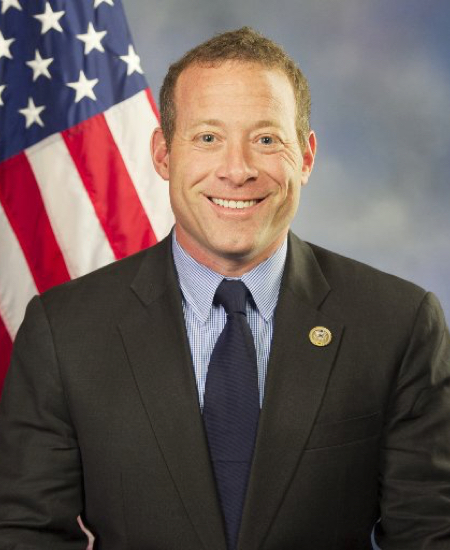
Rep. Josh Gottheimer
Sponsored bills
Information Sharing And Advanced Communication Alerting Act or the ISAAC Alerting Act This bill requires the Technological Advisory Council of the Federal Communications Commission, in consultation with relevant stakeholders, to submit a report that identifies measures, barriers, and recommendations for implementing a 9–1–1 disability alerting system. The alerting system must allow an individual to register and create a profile associated with an individual who has a disability that includes information such as whether the individual is a wandering risk, nonverbal, or physically limited. The alerting system then transmits such information to public safety answering points to be conveyed to first responders.
Migratory Bird Protection Act of 2021 This bill prohibits the incidental taking (e.g., capturing or killing) of migratory birds by commercial activities unless the activity is authorized under a permit or is identified as posing de minimis risk to migratory birds. The U.S. Fish and Wildlife Service (USFWS) must regulate such incidental taking, including by (1) issuing general permits for certain industries, (2) creating a mitigation fee for any incidental taking of migratory birds, and (3) identifying categories of de minimis risk activities that are exempt from liability for the taking of migratory birds. In addition, the USFWS must establish and maintain a research program (1) to evaluate the impacts of commercial activities on birds, (2) to evaluate the effectiveness of best management practices and technologies to avoid or minimize such impacts, and (3) to develop new or improved best management practices and technologies.
School Food Modernization Act This bill provides for loan guarantees and grants to support healthy meals under the National School Lunch Program and School Breakfast Program. The bill directs the Department of Agriculture (USDA) to issue loan guarantees to local educational agencies (LEAs), school food authorities, tribal organizations, and other eligible entities to finance infrastructure improvements or equipment purchases to facilitate their provision of healthy meals through the school meal programs. USDA must also award competitive matching grants to assist LEAs, school food authorities, and tribal organizations in purchasing the durable equipment and infrastructure they need to serve healthier meals and improve food safety. USDA must give preference under both programs to applicants that demonstrate a substantial or disproportionate need for food service infrastructure or durable equipment, and shall establish fees for the loan guarantee program. In addition, USDA must award competitive matching grants to experienced third-party training institutions to provide school food service personnel with the training and technical assistance they need to (1) meet or exceed nutrition standards under the school meal programs, and (2) improve the efficacy and efficiency of the school meal programs.
9/11 Responder and Survivor Health Funding Correction Act This bill increases funding for and otherwise modifies a federal program that provides medical monitoring and treatment to responders and survivors who suffer from health conditions related to the September 11, 2001, attacks on the World Trade Center. Among the changes, the bill allows certain health care providers other than physicians to determine whether an individual's health condition is related to the attacks, and it establishes a research program to study the impacts of the attacks on health and educational outcomes of individuals who were 21 years of age or younger when the attacks occurred.
Leadership in Global Tech Standards Act of 2021 This bill requires the Small Business Administration (SBA) to establish a program that supports the participation of U.S. small businesses in meetings and proceedings of standards development organizations to develop voluntary technical standards. To carry out this program, the SBA must award grants to small businesses for the reasonable costs of participation in standards development organizations. These grants may only be awarded to small businesses that (1) demonstrate technical expertise in key emerging technologies and technical standards (e.g., artificial intelligence), (2) commit personnel with such expertise to regular participation in global bodies responsible for developing standards for those technologies, (3) agree to coordinate between the public and private sectors to ensure protection of national security interests in the setting of global standards, and (4) provide a plan detailing the relationship between the above activities and the proposed standards to be adopted.
This resolution condemns the Chinese Communist Party and its violation of the human rights of the people of China.
Revamping Appropriate Incentives for Solar Energy for the Roof Act or the RAISE the Roof Act This bill expands the residential energy efficient property and energy tax credits to include expenditures in new and existing solar roofs.
The Pioneering Antimicrobial Subscriptions To End Up surging Resistance Act of 2021 or the PASTEUR Act of 2021 This bill authorizes the Department of Health and Human Services (HHS) to enter into subscription contracts for critical-need antimicrobial drugs, provides $11 billion in appropriations for activities under the bill, and contains other related provisions. A manufacturer of a Food and Drug Administration-approved antimicrobial drug may apply to HHS to have the drug designated as a critical-need antimicrobial, and HHS may enter into a subscription contract for such a critical-need antimicrobial. The bill imposes certain requirements related to such contracts, including a mechanism to lower payments under the contract in certain instances to limit the manufacturer's revenue from the drug. Furthermore, HHS and the Centers for Disease Control and Prevention (CDC) shall award grants to support efforts to encourage the appropriate use of antimicrobial drugs and efforts to combat antimicrobial resistance. The CDC shall also track and assess data relating to antibacterial resistance and human antibiotic use and make such data publicly available. HHS shall also establish a Committee on Critical Need Antimicrobials. The committee shall develop a list of prioritized infections for which new antimicrobial drug development is needed, among other duties. Within six years of the bill's enactment, the Government Accountability Office shall report to Congress a study on the bill's effectiveness in developing priority antimicrobial drugs.
Supporting Trucking Efficiency and Emission Reductions Act or the STEER Act This bill requires the Department of Energy to establish a voucher program for expenses associated with retrofitting certain heavy-duty trucks with emission-reducing technologies.