

Maddy summaryThis bill, known as Gwenn's Law, directs the National Institutes of Health to launch public awareness campaigns aimed at increasing women's participation in clinical trials, with a specific focus on research for rare diseases. It authorizes $10 million annually from 2027 to 2031 to fund these outreach efforts at hospitals, clinics, and other healthcare locations. The legislation also establishes a permanent interagency task force within HHS to coordinate rare disease research and requires the department to submit a public action plan within 180 days outlining how to improve treatment options for rare conditions that disproportionately affect women.
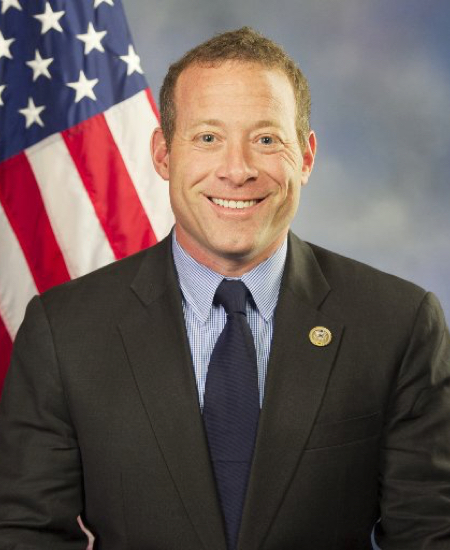
Rep. Josh Gottheimer
Sponsored bills
Maddy summaryHR 7693, "Leo’s Law," extends existing exclusivity protections for certain orphan drugs by 180 days to address pandemic-related delays. It applies to drugs designated for rare diseases that had applications submitted during the COVID-19 emergency period (Dec 2019-March 2023), were approved under specific pathways, and have no non-rare disease indications. Key provisions extend periods like the 12-year market exclusivity under the Public Health Service Act and 5-year protections under the Federal Food, Drug, and Cosmetic Act. The bill does not create new incentives but temporarily lengthens existing protections for drug developers already navigating pandemic disruptions. This change applies only to qualifying orphan drugs meeting all specified criteria during the defined emergency period.
Maddy summaryThis bill updates administrative procedures for the Public Safety Officers' Benefits Program to speed up claim processing and expand disability coverage. It requires the Bureau of Justice Assistance to notify claimants about missing information within 90 days and issue interim payments if claims aren't resolved within 270 days, while also mandating annual audits of backlogged claims. The legislation adds benefits for permanent partial disabilities that prevent officers from working in their previous capacity and creates a faster approval process for claims supported by World Trade Center health certifications.
Maddy summaryThis bill requires federal banking regulators to publish annual reports tracking the status of bank and credit union charter applications. Specifically, it mandates the Comptroller of the Currency, Federal Reserve, FDIC, and National Credit Union Administration to report application volumes, approval timelines, and common reasons for denials or withdrawals for national banks, credit unions, holding companies, and state-chartered institutions. The reports must include state-level breakdowns for state-chartered banks and credit unions. This law increases transparency in the chartering process without changing banking regulations or affecting financial institutions directly.
Maddy summaryHR 6552, the Bank-Fintech Partnership Enhancement Act, mandates a study by the Federal Reserve, Comptroller of the Currency, and FDIC into how partnerships between banks and financial technology companies support new banking formations and community bank health. The study must examine specific benefits like reduced time-to-market for products, lower compliance costs, and improved technological capabilities, then identify potential legal or regulatory changes to foster such partnerships. The regulators must submit a report to Congress within six months of the bill's enactment. This is a procedural bill focused on research, not direct policy changes affecting businesses or consumers.
Maddy summaryThis bill requires the Comptroller of the Currency and the Federal Deposit Insurance Corporation (FDIC) to jointly study how "shelf charters" (pre-approved bank charters) and the "modified bidder qualification process" (a method allowing non-bank buyers to participate in acquiring failed banks) have been used since 2008. The study specifically examines their role in 2023 bank failures and assesses whether wider use could expand bidder pools, boost competition, protect the Deposit Insurance Fund, or reduce reliance on emergency Treasury actions. Regulators must submit a report within 270 days detailing findings, identifying regulatory barriers, and recommending changes to improve these tools. The bill directly affects federal banking regulators and the resolution process for failed banks, aiming to enhance how such institutions are handled.
Maddy summaryThis bill permanently exempts fixed-income securities (like bonds, notes, and certificates of deposit) from a specific SEC disclosure rule (Rule 15c2-11) that was being applied to debt markets without proper regulatory process. It directly affects businesses raising capital through fixed-income markets, which the bill states are critical for thousands of companies. The exemption removes requirements originally designed for equity markets but mistakenly applied to debt markets. This change makes permanent an existing SEC exemption granted in 2023 and 2024. The bill aims to maintain clear regulatory separation between equity and fixed-income markets.
Small Business Artificial Intelligence Advancement Act This bill directs the National Institute of Standards and Technology (NIST) to develop or identify resources for small businesses to address concerns relating to the use of artificial intelligence (AI). Resources must be generally applicable, technology neutral, and based on relevant voluntary international standards, among other requirements. NIST must coordinate with the Small Business Administration with respect to the distribution of these resources. NIST must also review and update the resources at least biennially.
Law-Enforcement Innovate to De-Escalate Act This bill removes less-than-lethal projectile devices (e.g., certain TASERs) from regulation under the Gun Control Act. The term less-than-lethal projectile device means a device that (1) is not designed or intended to expel (and may not be readily converted to discharge) commonly used ammunition or projectiles exceeding a velocity of 500 feet per second; (2) is designed and intended to be used in a manner not likely to cause death or serious bodily injury; and (3) does not accept (and cannot be readily modified to accept) an ammunition feeding device. The bill also requires the Bureau of Alcohol, Tobacco, Firearms and Explosives to determine whether a device satisfies the definition of a less-than-lethal projectile device within 90 days of a request.
Maddy summaryHRES 1073 is a non-binding resolution designating February 21-28, 2026, as "National FFA Week" to recognize the National Future Farmers of America (FFA) Organization’s role in developing agricultural education leaders and to celebrate the 50th anniversary of Alaska’s State FFA Association. It does not create new laws or affect any specific groups or policies; instead, it formally expresses the House’s support for this commemorative week. The resolution highlights FFA’s mission to prepare students for leadership and careers in agriculture, food, and natural resources. As a symbolic gesture, it has no direct legislative or financial impact on constituents.