

National Discovery Trails Act This bill amends the National Trails System Act to include national discovery trails as part of the national trails system. Such trails (1) shall be extended, continuous, interstate trails located to provide for outstanding outdoor recreation and travel and to connect representative examples of America's trails and communities; (2) shall provide for the conservation and enjoyment of significant natural, cultural, and historic resources and be so located as to represent metropolitan, urban, rural, and back country regions of the Nation; and (3) may be designated on federal lands and, with the owner's consent, on nonfederal lands. The 6,000-mile American Discovery Trail extending from Cape Henlopen State Park in Delaware, to Point Reyes National Seashore in California, splitting into northern and southern routes near Cincinnati, Ohio, and rejoining at Denver, Colorado, is designated as a national discovery trail. The bill sets forth requirements for designation of a trail as a national discovery trail. The appropriate federal department for each national discovery trail shall (1) administer the trail in cooperation with at least one competent trailwide volunteer-based organization; and (2) submit a comprehensive plan for the trail's protection, management, development, and use.
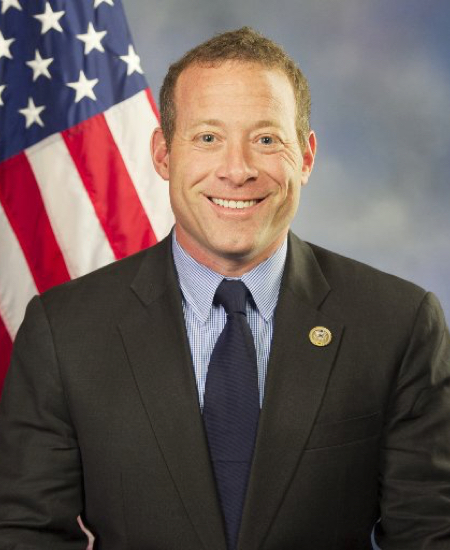
Rep. Josh Gottheimer
Sponsored bills
Highlands Conservation Reauthorization Act of 2022 This bill extends through FY2029 the Highlands Conservation Act, which provides for land conservation in Highlands states (i.e., Connecticut, New Jersey, New York, and Pennsylvania). The bill authorizes the Fish and Wildlife Service to add a municipality to the Highlands region upon the request of a Highlands state, with the concurrence of the municipality. The bill revises the way in which land is identified for conservation to require using the best available science and geographic information systems. The bill allows political subdivisions of states to enter into agreements with the Department of the Interior for land conservation projects. A Highland state that receives funds for a land conservation partnership project may not use more than 5% of the funds to administer that project. The bill extends through FY2029 Forest Service and other Department of Agriculture programs to conserve land and natural resources in the Highlands region. With respect to an appraisal related to a land acquisition carried out under this bill, a Highlands state shall use an appraisal methodology approved by the Department of the Interior.
Armenian Genocide Education Act This bill requires the Library of Congress to maintain a public website and otherwise support educational initiatives to promote understanding about the Armenian Genocide.
Get the Lead Out of Assisted Housing Act of 2022 This bill addresses the removal of lead from drinking water in federally assisted housing. Specifically, the bill requires the Department of Housing and Urban Development (HUD) to require specified testing and remediation with respect to water service lines containing lead; authorizes HUD to inspect all sources of lead contamination in federally assisted housing and to mitigate sources of lead exposure; establishes a grant program for states and local governments to create inventories of water service lines containing lead and to test for lead in the drinking water at child care facilities, schools, and public water fountains; and allows recipients of certain HUD assistance to use such assistance to replace water fixtures and service lines containing lead.
Cut Red Tape Act of 2022 This bill establishes in the legislative branch the Regulatory Improvement Commission to make recommendations and propose legislation for modification, consolidation, or repeal of regulations that have been finalized not later than 10 years before the establishment of the commission for the purpose of reducing compliance costs, encouraging growth and innovation, improving competitiveness, and protecting public safety. The commission must give priority to such regulations that (1) impose disproportionately high costs on a small entity, (2) create substantial recurring paperwork burdens or transaction costs, or (3) could be made more effective while reducing regulatory costs. The bill sets forth reporting requirements for the commission and procedures for congressional consideration of commission reports, recommendations, and proposed legislation.
Servicemembers' Credit Monitoring Enhancement Act This bill applies to uniformed service members free electronic credit monitoring that is currently available to active duty service members.
Public Health and Border Security Act of 2022 This bill requires the Department of Health and Human Services (HHS) to meet conditions related to notification and planning before terminating certain restrictions on imports and individuals entering the United States. Current law authorizes HHS to restrict entries and imports from foreign countries to prevent the introduction of communicable diseases. HHS exercised this authority as part of its COVID-19 response, including to allow for the expulsion of undocumented migrants at the border without any asylum processing. Under this bill, HHS may not terminate the restrictions for (1) at least 60 days after it notifies Congress of the end of the COVID-19 emergency, and (2) at least 30 days after it submits to Congress a plan for addressing the possible influx of migrants or imports resulting from lifting the restrictions.
Maddy summaryHR 7477, the CERTS Tax Exemption Act, ensures that grants provided under the Coronavirus Economic Relief for Transportation Services Act are tax-free for eligible transportation service providers. The bill directly affects companies and organizations providing transportation services that receive these specific federal grants. Key provisions state that grant amounts cannot be counted as taxable income, deductions related to grant-funded costs cannot be denied, and tax attributes (like basis increases) must be treated as tax-free for partnerships and S corporations. This change simplifies tax treatment for recipients by preventing unintended tax liabilities on relief funds.
Postal Service Reform Act of 202 2 This bill addresses the finances and operations of the U.S. Postal Service (USPS). The bill requires the Office of Personnel Management (OPM) to establish the Postal Service Health Benefits Program within the Federal Employees Health Benefits Program under which OPM may contract with carriers to offer health benefits plans for USPS employees and retirees. The bill provides for coordinated enrollment of retirees under this program and Medicare. The bill repeals the requirement that the USPS annually prepay future retirement health benefits. Additionally, the USPS may establish a program to enter into agreements with an agency of any state government, local government, or tribal government, and with other government agencies, to provide certain nonpostal products and services that reasonably contribute to the costs of the USPS and meet other specified criteria. The USPS must develop and maintain a publicly available dashboard to track service performance and must report regularly on its operations and financial condition. The Postal Regulatory Commission must annually submit to the USPS a budget of its expenses. It must also conduct a study to identify the causes and effects of postal inefficiencies relating to flats (e.g., large envelopes). The USPS Office of Inspector General shall perform oversight of the Postal Regulatory Commission.
Veterans' Cyber Risk Awareness Act This bill requires the Office of Public and Intergovernmental Affairs of the Department of Veterans Affairs (VA) to conduct a communications and outreach campaign to educate veterans about cyber risks . These risks can include disinformation, identity theft, scams, and fraud spread via the internet or social media. Additionally, the VA must seek to enter an agreement with a federally funded research and development corporation to perform a study that assesses (1) the vulnerability of veterans to cyber risks, (2) the availability and efficacy of resources to assist veterans in combatting such risks, and (3) the efficacy of the VA's outreach campaign. The study must also recommend ways the VA can reduce cyber risks to veterans.