

Maddy summaryThe "Build More Power Act" expands and extends a federal loan guarantee program to support electric generating facilities, particularly those critical for energy reliability. It makes power plants that are required by government orders to continue generating electricity during emergencies eligible for these loan guarantees, even if they might otherwise cease operations, and mandates the Secretary of Energy to solicit applications from them. The bill extends the program's authority until 2032 and sets aside at least $20 billion in loan guarantee capacity specifically for projects at facilities operating under such emergency directives. This impacts owners and operators of power plants, especially those under emergency orders, and the Department of Energy, which must also report to Congress on the program's impact and recommendations for upgrading aging coal facilities.
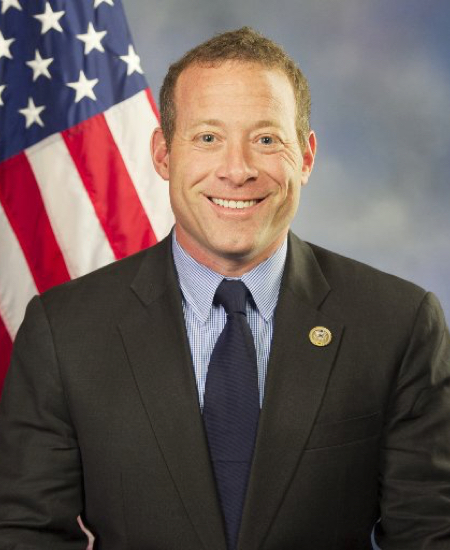
Rep. Josh Gottheimer
Sponsored bills
Maddy summaryThe Parents Decide Act requires operating system providers to collect users' dates of birth when setting up accounts and using the system, with parental verification needed for anyone under 18. The bill mandates that app developers be able to access this information to verify user ages and gives parents control over what their minor children can access on their devices. The Federal Trade Commission is tasked with creating specific regulations within 180 days on how to verify parental consent, protect collected data, and implement these requirements, with enforcement through existing FTC unfair practices laws. The provisions take effect one year after enactment, and the FTC must report to Congress on implementation within 18 months.
Maddy summaryThis bill, known as the Making Reviews Certain Act, modifies how federal agencies prepare environmental documents and how courts review those documents, primarily affecting projects related to energy infrastructure. It restricts the scope of environmental review to effects that have a direct causal relationship to the immediate project, rather than broader secondary impacts. The legislation also limits judicial challenges to energy infrastructure projects by requiring claims to be filed within 180 days and only allowing review from parties who submitted detailed comments during public periods or who will suffer direct harm. Additionally, it narrows when courts can overturn agency decisions, permitting vacatur only when there is a significant risk of substantial environmental harm and no other legal remedy exists. Finally, the bill clarifies that courts should defer to agency expertise when determining what environmental effects are reasonably foreseeable.
Maddy summaryThis bill, known as the Grid Expansion and Reliability Act, shifts authority over siting interstate electric transmission facilities from the Department of Energy to the Federal Energy Regulatory Commission. It allows companies to self-certify and begin building transmission lines in designated national interest corridors without waiting for a full permit, provided they submit specific information about their identity, project details, and timeline. The Federal Energy Regulatory Commission must create regulations for this process within a year, conduct annual audits of certifications, and report to Congress on how well the system works. These changes aim to streamline the approval process for new power grid infrastructure while maintaining oversight through reporting and auditing requirements.
Maddy summaryThe Commonsense Review Act creates a temporary interagency group led by the Secretary of Energy to align how federal agencies handle categorical exclusions under the National Environmental Policy Act. This group includes representatives from the Departments of Energy, Interior, and Agriculture, as well as the Federal Energy Regulatory Commission. Within 360 days of enactment, the group must either adopt existing categorical exclusions used by other members or jointly create new ones for interstate electric energy transmission and battery storage projects that do not significantly impact the environment. The group must also submit a report to Congress detailing its actions or reasons for inaction, along with recommendations for future collaboration, before dissolving.
Maddy summaryThis bill seeks to block a specific rule issued by the Department of Education that affects the William D. Ford Federal Direct Loan Program. If passed, it would prevent the rule from taking effect, meaning the proposed changes to federal student loans would not be implemented. The measure uses a legislative process known as a joint resolution of disapproval to override agency regulations. It directly impacts students, families, and institutions that rely on federal student loans by stopping the Department of Education from enforcing the new policy.
Maddy summaryThis resolution supports the National Day of Silence, an annual event that highlights anti-LGBTQI+ bullying and discrimination in K-12 schools. It calls on communities to demand equal educational opportunities and civil rights protections for all students, with particular focus on LGBTQI+ young people. The bill does not create new laws or regulations but instead expresses official congressional support for awareness efforts and encourages local educational agencies to adopt policies prohibiting discrimination based on sexual orientation, gender identity, or sex characteristics.
Maddy summaryThe SACRED Act adds a new federal crime to protect access to places of religious worship by prohibiting intimidating or harassing conduct within 100 feet of religious buildings. It directly affects individuals who engage in disruptive behavior near religious sites and those seeking to enter or exit them. The law defines prohibited actions as conduct that causes reasonable fear for physical safety or intentionally harasses people within 8 feet, with penalties ranging from fines up to $10,000 for nonviolent first offenses to potential life imprisonment if death results. The bill also establishes civil remedies allowing aggrieved individuals or religious organizations to sue for damages and injunctive relief, while permitting state and federal attorneys general to bring civil actions on behalf of affected persons. Importantly, the legislation explicitly preserves the right to peaceful expressive conduct like picketing and does not override existing state or local laws.
Maddy summaryThis resolution recognizes the 205th anniversary of the War of Greek Independence and extends congratulations to the people of Greece. It highlights the shared democratic values between the United States and Greece, noting historical ties from the American Revolution to modern NATO cooperation. The bill also acknowledges the contributions of the Greek-American community and Greece's strategic role in the Eastern Mediterranean and Balkans. This is a ceremonial measure that does not create new laws or require funding, but rather expresses official appreciation for the historical and ongoing partnership between the two nations.
Maddy summaryThe Maternal Vaccination Act amends the Public Health Service Act to expand a federal campaign focused on increasing vaccination rates among pregnant and postpartum individuals and their children. This legislation directly affects public health programs by updating language to explicitly include these populations and directing funding toward outreach efforts that address disparities among racial and ethnic minority groups. Key provisions modify existing sections of the Public Health Service Act to broaden the campaign's scope and increase the authorized funding amount from $15 million to $17 million per fiscal year for the period 2027 through 2031. The bill aims to improve vaccination equity by ensuring federal resources specifically target maternal and pediatric immunization efforts.