

Maddy summaryHRES 1365 is a non-binding House resolution calling for the immediate termination of Kimberly Cheatle as U.S. Secret Service Director. It directly addresses the Secret Service Director and the executive branch, though it has no legal force to remove her from office. The resolution’s sole provision is a formal request for her termination, reflecting the sponsors' position on her leadership. As a symbolic gesture, it does not change her employment status or require any action from the President or Secret Service.
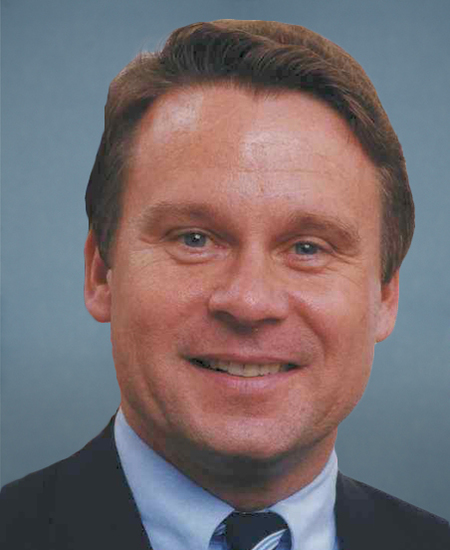
Rep. Christopher H. Smith
Sponsored bills
Maddy summaryHRES 1368 is a House resolution impeaching Kimberly A. Cheatle, Director of the U.S. Secret Service, for alleged failures in her duties. It specifically cites her leadership during the July 13, 2024, assassination attempt on Donald Trump in Butler, Pennsylvania, where the Secret Service reportedly failed to secure a building roof that allowed the shooter an unobstructed view. The resolution also alleges Cheatle diverted agency focus from protectee safety to meet a 2030 goal of 30% female recruits, despite existing staffing challenges. This resolution formally impeaches Cheatle for "high crimes and misdemeanors" and sends the case to the Senate for trial. As a procedural resolution, it does not enact policy but initiates the impeachment process against the Secret Service Director.
Maddy summaryHR 9060 extends tax credits for biodiesel and renewable diesel producers and users through 2025, replacing the previous 2024 expiration date. It amends the Internal Revenue Code to extend the biodiesel credit (Section 40A) and biodiesel mixture credit (Section 6426) for fuels sold or used after December 31, 2024. The bill also adds a provision preventing double benefits by requiring the credit amount to be zero for fuels already claiming another credit under Section 45Z(a). This directly affects biodiesel producers, refiners, and businesses using these fuels for tax purposes.
Maddy summaryHRES 1358 is a resolution passed by the U.S. House of Representatives calling for accountability for Cuba's violations of internationally recognized human rights and its support for activities harming U.S. interests and democratic nations. It urges the U.S. government to maintain sanctions on Cuba until a democratic transition begins, seek Cuba's expulsion from the UN Human Rights Council, and retain Cuba on the State Sponsors of Terrorism list. The resolution also requires the State Department to submit biannual reports to Congress on efforts to promote democracy in Cuba and calls for action against the trafficking of Cuban medical personnel abroad. This resolution expresses congressional policy but does not create binding law.
Maddy summaryThis bill directs the Secretary of State to quickly recover any unspent U.S. federal funds previously allocated to the United Nations Relief and Works Agency for Palestine Refugees (UNRWA). It directly affects UNRWA, the UN agency providing aid to Palestinian refugees, by requiring the withdrawal of funds not yet used as of the bill's enactment date. The key provision mandates the U.S. government to take necessary steps to reclaim these unexpended funds, without altering existing aid programs or future funding decisions. The bill is procedural, focusing solely on recovering unused funds rather than changing aid policies.
Maddy summaryThis bill reauthorizes the United States Commission on International Religious Freedom (USCIRF) through fiscal year 2026. It extends the commission's funding authorization from 2023-2024 to 2025-2026 and delays the expiration date of its statutory authorization from September 30, 2024, to September 30, 2026. The bill directly affects USCIRF by ensuring its continued operation and funding without altering its existing mandate or reporting requirements. It is a procedural extension, not a policy change.
Maddy summaryHRES 1355 is a non-binding resolution supporting the designation of July 10 as Journeyman Lineworkers Recognition Day. It honors lineworkers who maintain electrical infrastructure under hazardous conditions, including during disasters, and commemorates Henry Miller, the first president of the International Brotherhood of Electrical Workers, who died on July 10, 1896, while troubleshooting an electrical outage. The resolution encourages public recognition of these workers' contributions but does not create new laws or policies.
Maddy summaryThe TAKE IT DOWN Act (HR 8989) creates new federal criminal penalties for publishing nonconsensual intimate images or deepfakes without consent, directly affecting platforms hosting user-generated content and individuals who share such material. It defines "deepfake" as AI-generated intimate content falsely depicting someone, and prohibits publishing these without consent - especially when the victim expected privacy - imposing fines or up to 3 years in prison for offenses involving minors. The bill also requires "covered platforms" (like social media sites) to establish a 48-hour removal process for reported nonconsensual content and shields platforms from liability when removing content in good faith. The Federal Trade Commission enforces these provisions as unfair or deceptive practices.
Maddy summaryHRES 1345 is a ceremonial resolution recognizing the 100th anniversary of diplomatic relations between the United States and Ireland, established on October 7, 1924. It commemorates the historical milestone, highlighting the strong cultural ties (with over 30 million Americans claiming Irish heritage), economic partnership (over $1 trillion in annual trade), and shared values supporting peace in Northern Ireland. The resolution does not create new laws or directly affect any individuals or entities, as it is purely symbolic. It affirms congressional support for continued U.S.-Ireland friendship and the enduring people-to-people connections between the two nations.
Maddy summaryThis bill amends the Federal Employees' Compensation Act to include physician assistants and nurse practitioners as eligible providers for injured federal workers. It defines "other eligible provider" as a nurse practitioner or physician assistant within their state-authorized scope of practice. The law updates key sections to replace "physician" with "physician or other eligible provider" for treatment, certification, and claim processes. The Secretary must finalize implementing regulations within six months of enactment.