Maddy summaryThis bill renames a U.S. Postal Service facility at 514 Frelinghuysen Avenue in Newark, New Jersey, as the "Mildred Joyce Coleman Crump Post Office Building." All official references in federal documents, maps, or records to this specific post office location will now use the new name. The bill directly affects the Newark postal facility and its official documentation. (Procedural naming resolution; no policy changes.)
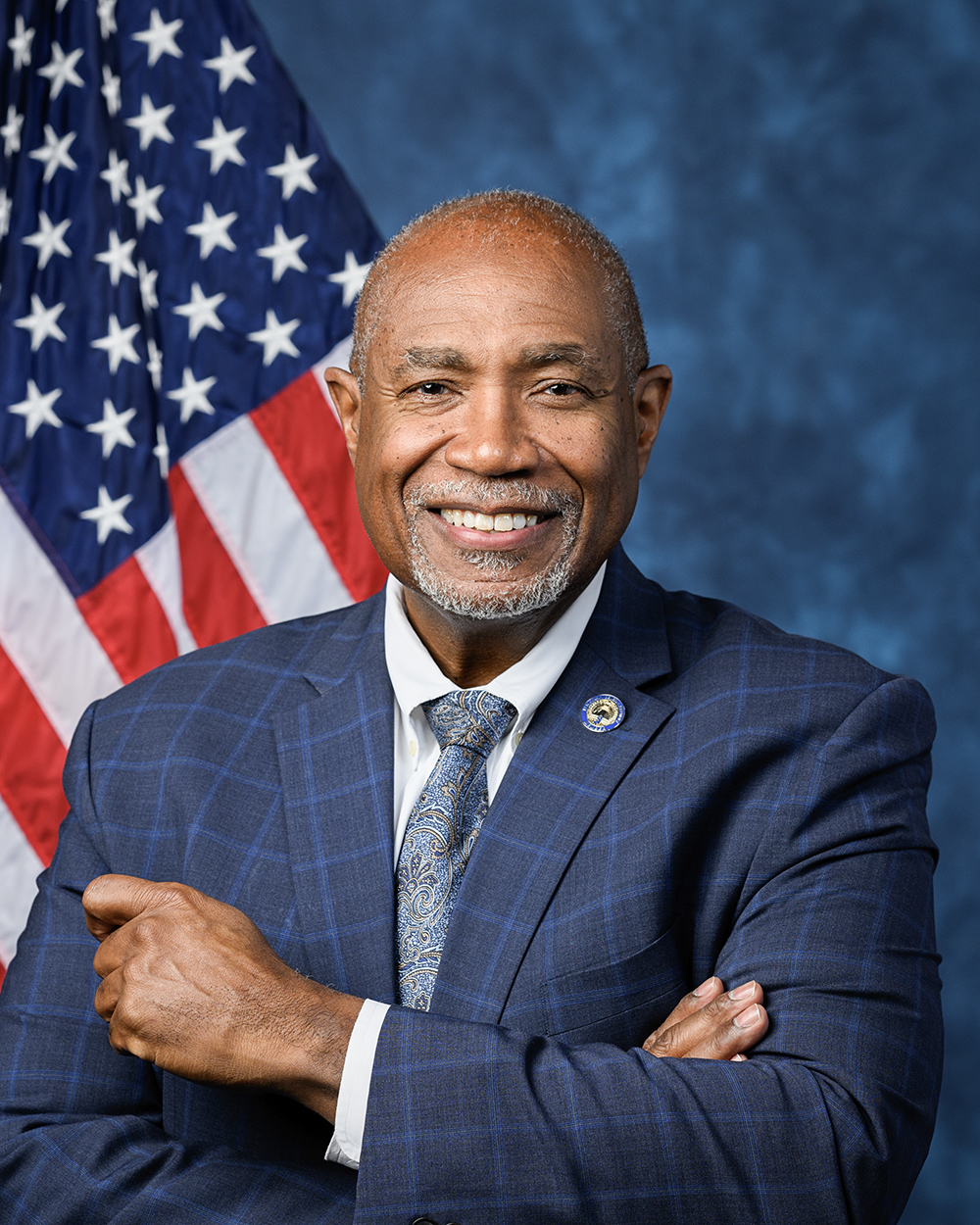
Rep. Herbert C. Conaway, Jr.
Sponsored bills
SBA Fraud Enforcement Extension Act This bill extends the statute of limitations to 10 years for fraud-based criminal and civil offenses with respect to the Shuttered Venue Operators Grant and the Restaurant Revitalization Fund COVID-19 relief programs.
Give Kids a Chance Act of 2025 This bill expands the Food and Drug Administration’s (FDA’s) authority with respect to research on rare pediatric diseases, including by permitting the FDA to take enforcement action against drug sponsors that fail to satisfy pediatric study requirements and by reauthorizing programs that support pediatric research. Specifically, the bill modifies requirements relating to molecularly targeted pediatric cancer investigations to permit research on new drugs in combination with active ingredients that have already been approved, provided certain conditions are met; permits the FDA to take enforcement action against drug sponsors that fail to comply with pediatric study requirements, if such sponsors demonstrated a lack of due diligence in satisfying the requirement; renews the FDA’s authority to award priority review vouchers to sponsors of new products intended to treat rare pediatric diseases through September 30, 2029; and reauthorizes through FY2027 certain funding for the National Institutes of Health to support priority pediatric research. The bill also provides statutory authority for the FDA’s interpretation of the orphan drug exclusivity period. The bill specifies, consistent with FDA regulations, that the seven-year market exclusivity period for drugs for rare diseases or conditions (i.e., orphan drugs) prohibits the approval of the same drug for the same approved use or indication with respect to the disease or condition. (In Catalyst Pharmaceuticals, Inc. v. Becerra , a court rejected the FDA’s interpretation and held that orphan drug exclusivity extends to all uses or indications for the disease or condition.)

Maddy summaryThe ROTOR Act narrows the definition of "sensitive government mission" for aircraft operations, excluding training flights and flights by officials below Cabinet rank. It requires regular reporting to Congress about exceptions to ADS-B Out requirements, establishes deadlines for requiring ADS-B In equipment on most aircraft, and mandates safety reviews for airports with military operations. The bill also improves coordination between the FAA and Department of Defense on airspace management and safety information sharing. These changes increase transparency around aircraft operations that don't broadcast their location while enhancing safety oversight. The bill directly affects Federal agencies operating aircraft, the FAA, and aircraft operators required to equip with ADS-B technology.
Maddy summaryThe Revitalize Our Neighborhoods Act of 2025 creates a competitive grant program administered by the Department of Housing and Urban Development (HUD) to eliminate blight and revitalize neighborhoods. It provides funding specifically for states, local governments, or multi-jurisdictional entities to carry out activities like demolishing deteriorated structures, boarding vacant properties, renovating abandoned buildings, and constructing affordable housing - all limited to low-income communities. Recipients must contribute at least 15% in matching funds (from federal programs, local sources, or property sales) and submit detailed 5-year plans for how the funds will be used. The bill prohibits using funds to acquire occupied homes and requires annual reports on project outcomes, geographic distribution, and populations assisted.
Maddy summaryThis bill (HR 6015) ensures existing labor agreements between the Department of Veterans Affairs (VA) and employee unions remain in full effect through their scheduled terms. It also cancels two executive orders (14251 and 14343) that previously excluded VA from standard federal labor-management programs. The bill directly affects VA employees and their unions by preserving current collective bargaining rights and requiring VA to follow standard federal labor rules. It does not change veterans' benefits or healthcare access; it only modifies VA's internal labor relations procedures. This is a procedural bill focused on labor-management processes, not direct policy changes for veterans.
Maddy summaryThe Global Respect Act (HR 6151) requires the U.S. President to publicly list foreign officials responsible for severe human rights violations against LGBTQI individuals, including torture, prolonged detention, or violence based on sexual orientation or gender identity. It mandates denying visas and entry to listed individuals and requires annual reports on the list's updates and impacts. The bill also directs the State Department to track global violence against LGBTQI people and update annual human rights reports to include discrimination based on sexual orientation or gender identity. These provisions directly affect foreign government officials and entities implicated in such abuses, aiming to increase accountability through U.S. visa restrictions.
Maddy summaryHR 6014, the Right to Representation for Department of Veterans Affairs Workers Act of 2025, gives most VA employees the right to have a chosen representative present during examinations that could lead to disciplinary action. This applies to non-exempt VA workers (excluding senior executives, certain appointed staff, and political appointees) and requires the VA to allow representation during work hours if requested. The bill inserts a new section into VA employment law, mandating that employees be informed of this right and permitting representation at any examination where disciplinary action might result. It directly affects VA employees facing potential disciplinary proceedings, ensuring they can have support during these reviews.
Maddy summaryHR 5998 ensures the Office of Special Counsel's Hatch Act Unit can continue enforcing federal employee conduct rules during a government shutdown. It classifies investigations into alleged violations of Hatch Act provisions (5 U.S.C. §§ 7323-7324) as "emergency services" under federal law, allowing these critical duties to proceed without funding interruption. This specifically protects the unit's ability to handle cases involving prohibited political activities by federal employees. The bill directly affects federal employees who may face Hatch Act violations and ensures oversight continues during budget gaps.
Maddy summaryThis bill, HR 5973, requires federal immigration enforcement personnel to follow strict limits on force use, including proportional application, mandatory de-escalation efforts, and prohibitions on equipment like flash bangs or rubber bullets except for specific public safety threats. It mandates body-worn and vehicle cameras for all operations, with footage retained for one year (three years for force incidents or complaints), and grants affected individuals the right to inspect recordings. The law also requires annual training on force policies, First Amendment compliance, and racial bias avoidance, while demanding detailed quarterly reports to Congress on force usage, assaults on agents, and equipment approvals. These provisions directly affect all federal immigration agents conducting enforcement actions, aiming to increase transparency and accountability during operations.