Maddy summaryThis bill amends the Food and Nutrition Act of 2008 to clarify that households must meet existing income and resource criteria to receive food assistance benefits. It directly affects households applying for or receiving SNAP (Supplemental Nutrition Assistance Program) benefits under the Food and Nutrition Act. The key provision explicitly states that eligibility requires compliance with current income and asset standards, reinforcing existing rules rather than creating new restrictions. The amendment takes effect one year after enactment, with existing benefit certifications unaffected if they began before that date.
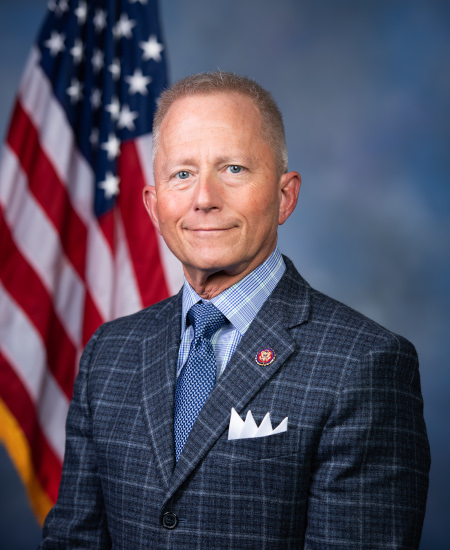
Rep. Jefferson Van Drew
Sponsored bills
Goldie's Act This bill expands enforcement provisions under the Animal Welfare Act (AWA). Specifically, the bill directs the Department of Agriculture (USDA) to document and record detailed descriptions of violations of the act observed during inspections and investigations. USDA must provide a copy of all records documenting violations to state, local, and municipal animal control or law enforcement officials within 24 hours of such inspections or investigations. Inspections must be held at least once a year of each research facility, the premises of each animal dealer, and each exhibitor of animals. If violations are found during inspections, then USDA must conduct any necessary follow-up inspections until all the violations are corrected. Inspectors must confiscate or destroy in a humane manner animals found to be suffering physical or psychological harm as a result of failure to comply with the AWA. Violators are subject to civil penalties as outlined in the bill.
This concurrent resolution declares that Congress should not impose any new performance fee, tax, royalty, or other charge relating to the public performance of sound recordings on a local radio station for broadcasting sound recordings over the air, or on any business for such public performance of sound recordings.
Maddy summaryThis bill requires healthcare facilities to create written policies about patient visitation rights under the Social Security Act. It mandates that facilities inform patients of their right to choose visitors (including spouses, family, or friends) and withdraw consent anytime, while prohibiting restrictions based on race, disability, or other protected characteristics. Facilities must also clearly explain any clinical restrictions on visitation and ensure equal privileges for all visitors. The law directly affects patients in healthcare institutions and the facilities providing their care.
Maddy summaryHR 1301, the Death Tax Repeal Act, would eliminate the federal estate tax and generation-skipping transfer tax for estates of individuals dying on or after its enactment date. It directly affects individuals inheriting significant assets, as it removes taxes on estates exceeding $10 million (adjusted for inflation) and repeals taxes on large transfers between generations. The bill modifies the gift tax by establishing a $10 million lifetime exemption with annual inflation adjustments, replacing previous tax brackets. It applies to estates, gifts, and transfers occurring on or after the bill's effective date.
Maddy summaryHR 1309, the "Protect America’s Lands Act," prohibits national securities exchanges from processing transactions involving securities issued by "natural asset companies." These are defined as companies that hold rights to manage specific land areas for conservation, restoration, or sustainable use, with the primary purpose of maintaining or growing natural assets and ecosystem services. The bill directly affects financial markets by restricting how securities tied to environmental land management are traded, not landowners or conservation efforts. It amends the Securities Exchange Act of 1934 to create this new regulatory barrier for such financial instruments. The bill focuses on securities regulation, not direct land protection or policy changes for land use.
More Homes on the Market Act This bill increases the amount of gain from the sale of a principal residence that an individual may exclude from gross income (for federal tax purposes). Under the bill, an individual may exclude from gross income gain from the sale of a principal residence of up to $500,000 (currently $250,000), and taxpayers who are married and file a joint federal income tax return may exclude up to $1 million (currently $500.000). The bill also requires these amounts to be adjusted annually for inflation.
Maddy summaryHR 1351, the "Promoting American Patriotism In Our Schools Act," requires public elementary and secondary schools receiving federal education funds to implement specific patriotism-related practices. The bill mandates that all students, teachers, and staff recite the Pledge of Allegiance daily (with an exception for religious or personal reasons), prominently display the American flag in every classroom and gymnasium, and incorporate age-appropriate flag history and significance into civics or history curricula. Schools must annually certify compliance with these requirements to state education agencies, which then report to the federal government. This bill directly affects all public K-12 schools receiving funds under the Elementary and Secondary Education Act.
Maddy summaryThis bill reauthorizes the Delaware River Basin Restoration Program through 2032, extending funding for watershed restoration projects. It adds Maryland as a fifth Basin state (previously a 4-State program) and requires the program to prioritize projects benefiting small, rural, or disadvantaged communities. The bill also updates definitions and administrative provisions from the original 2016 program under the Water Infrastructure Improvements for the Nation Act. This affects restoration efforts across the Delaware River Basin states (Delaware, New Jersey, New York, Pennsylvania, and Maryland).
United States-Israel Defense Partnership Act of 2025 This bill requires or authorizes certain actions to increase defense-related cooperation between the United States and Israel. Specifically, the bill requires the Department of Defense (DOD) to establish a cooperative program, with the concurrence of Israel's Ministry of Defense (MOD), to develop and deploy advanced technologies for countering unmanned systems that threaten the United States and Israel; establish in Israel an office of the Defense Innovation Unit (an organization that focuses on rapidly fielding and scaling commercial technology across the U.S. military); and seek to engage Israel's MOD on the ascension of Israel into the national technology and industrial base (currently defined in law as the persons and organizations engaged in research, development, production, integration, services, or information technology activities conducted within the United States, the United Kingdom, Australia, New Zealand, and Canada). The bill authorizes DOD, upon request of Israel's MOD, to jointly conduct research, development, test, and evaluation (RDT&E) of emerging technologies such as artificial intelligence and robotics to meet defense challenges. Additionally, the bill extends the authority for DOD to (1) carry out RDT&E on a joint basis with Israel to establish anti-tunnel and counter unmanned aerial systems capabilities through 2028, and (2) transfer defense articles intended for use as reserve stocks for Israel through January 1, 2029.