

Maddy summaryHR 5800, the SAFE Drivers Act, requires commercial driver's license (CDL) applicants and renewers to pass a standardized English proficiency test approved by the Federal Motor Carrier Safety Administration (FMCSA). The test assesses reading road signs, understanding emergency communications, and writing required documentation - critical for safety in commercial driving. States must administer the test through their DMVs, report pass rates annually to the FMCSA, and face potential federal funding cuts if they fail to comply. The law applies to all new CDL issuances or renewals starting 12 months after enactment, directly affecting commercial drivers seeking or maintaining their licenses.
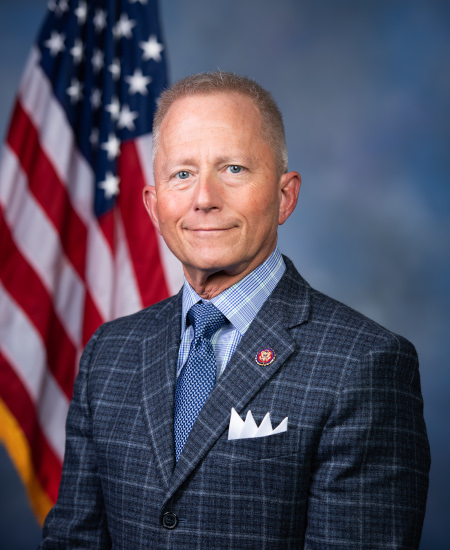
Rep. Jefferson Van Drew
Sponsored bills
Maddy summaryHR 5735, the Coastal Infrastructure Improvement Act, establishes a 6-year federal research program to develop nature-inspired erosion control technologies for coastal areas. The bill directly affects coastal communities vulnerable to flooding and erosion by funding research into alternatives to traditional hard structures like seawalls. Key provisions require the Army Corps of Engineers to study biomimetic methods (such as systems mimicking natural processes) that protect shorelines while supporting ecosystems, with research conducted across diverse geographic locations. The program mandates annual reports to Congress evaluating outcomes and recommending future action, focusing on cost-effective, habitat-friendly solutions.
Maddy summaryHR 5566, the Water Infrastructure Resilience and Sustainability Act, extends deadlines for three existing federal water infrastructure programs by five years. It amends the Clean Water Act to extend the deadline for the Clean Water Infrastructure Resiliency and Sustainability Program from 2026 to 2031, and updates the Safe Drinking Water Act to extend deadlines for both the general Drinking Water System Infrastructure Program and the Midsize/Large Drinking Water System Program from 2026 to 2031. These changes directly affect state and local governments administering these programs, giving them more time to complete eligible projects. The bill makes no new funding commitments or policy changes - only adjusts the timeline for existing program requirements.
Maddy summaryThis bill increases the special pension for living Medal of Honor recipients by tying the payment rate to standard veterans' compensation. It amends law to set the pension equal to the monthly rate for veterans without dependents (under 38 U.S.C. §1114(m)), adjusted to the next intermediate rate. The change automatically updates annually based on changes to the standard rate, with a cap preventing multiple increases in a single year. It directly affects all living Medal of Honor recipients currently receiving the $1,406.73 monthly pension. The law took effect December 1, 2025, after passing both chambers earlier that year.
Maddy summaryThis bill extends the Affordable Care Act's premium tax credit through 2028 (instead of 2026) and raises the household income eligibility cap from 400% to 700% of the federal poverty level. It allows individuals to receive advance credit payments directly into their Health Savings Accounts (HSAs) or to their insurance issuer, depending on their plan type and election. The bill also establishes a minimum monthly premium responsibility amount for coverage and requires federal agencies to verify immigration status for tax credit eligibility. These changes primarily affect low-to-moderate income individuals purchasing health insurance through the ACA marketplace.
Maddy summaryThis bill authorizes Congress to award two gold medals in honor of Charlie Kirk, a conservative activist and founder of Turning Point USA, who was tragically killed in 2025. One medal will go to his family, and the other will be displayed at the Smithsonian Institution to preserve his legacy. The bill does not create new policy or affect any laws - it is purely commemorative, following standard procedures for Congressional Gold Medals. It includes provisions for striking the medals and selling bronze duplicates to cover costs, but contains no substantive legislative changes.
Maddy summaryThis bill would expand Medicare Part B coverage to include medical nutrition therapy for beneficiaries with a wider range of chronic conditions beyond current limits (diabetes and kidney disease). It specifically adds conditions like obesity, hypertension, eating disorders, cancer, gastrointestinal diseases, and HIV to the list of covered illnesses, allowing coverage for prevention, management, or treatment. The bill also allows more healthcare providers - including dietitians, nurse practitioners, and clinical psychologists - to deliver these services. This change would directly affect millions of Medicare beneficiaries managing these conditions who previously lacked coverage for medically necessary nutrition therapy.
Maddy summaryHR 6019 repeals a requirement that Senate offices must be notified when legal requests seek Senate data. Specifically, it removes Section 213 of the 2026 appropriations act, which mandated that Senate offices be informed about legal processes requesting disclosure of Senate data. This change directly affects Senate offices by eliminating a procedural notification step for legal requests involving their data. The bill makes no other policy changes, solely removing this specific administrative requirement.
Maddy summaryThis bill establishes fairer pay and retirement benefits for federal firefighters. It requires that overtime hours worked during a firefighter's regular schedule be included in retirement calculations, improving retirement payouts. The bill also sets a maximum 60-hour regular workweek for federal firefighters, to be defined by the Office of Personnel Management within one year. These changes directly affect federal firefighters by addressing pay disparities with municipal firefighters and enhancing recruitment and retention.
Maddy summaryHRES 581 is a procedural resolution that establishes rules for the House to consider H.R. 185, the Epstein Files Transparency Act. It waives all points of order against the bill, adopts a specific amendment (the full text of the Epstein Files Transparency Act), and limits debate to one hour equally divided between the Judiciary Committee's chair and ranking minority member. The resolution also requires the Attorney General to release unclassified DOJ records related to Jeffrey Epstein within 30 days, with limited exceptions for privacy or national security.